752 · Rome, Italy
Pope-elect Stephen is consecrated as a pope, but dies three days later, leading to debate about whether he should be considered a pope in the official papal lists.
July 17, 0855
Pope Leo IV dies. He was known for strengthening Rome's defenses and leading the rebuilding of the city after the Arab raids on Rome in 846.
Rome, Italy | Roman Catholic Church
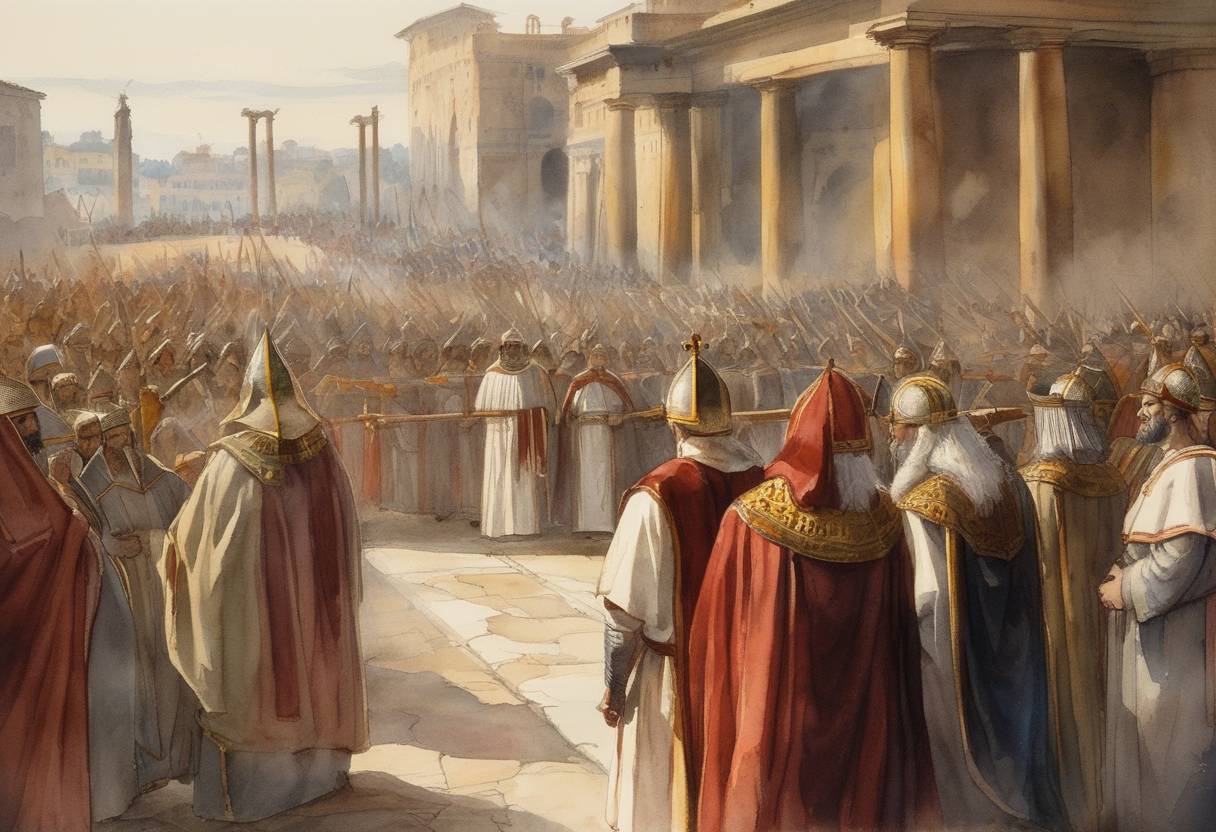
Pope Leo IV passed away on July 17, 855, leaving behind a legacy marked by significant contributions to the security and restoration of Rome. He ascended to the papacy on April 10, 847, during a period of great vulnerability for the city due to repeated Saracen raids. His papacy is distinguished by a decisive focus on fortifying and rejuvenating Rome both physically and spiritually.
Pope Leo IV is particularly remembered for his robust efforts in reinforcing Rome’s defenses following the destructive Arab raids in 846. The raids severely damaged many parts of the city, including St. Peter’s Basilica. In response, Leo spearheaded the construction of the Leonine Wall. Named after him, this wall enclosed the Vatican Hill and parts of what later became known as the Leonine City (Civitas Leonina), effectively securing the area from future attacks. The enclosure extended the city’s boundaries and ensured the protection of key basilicas and monuments.
Aside from the military fortifications, Leo IV is credited for initiating a substantial rebuilding campaign within the city. His efforts led to the reconstruction of churches and important basilicas, alongside the revitalization of Rome’s infrastructure. Leo engaged in a series of synods, not only to address ecclesiastical matters but to solidify and extend papal influence over Rome’s territories.
In addition to his architectural and defensive initiatives, Pope Leo IV was active in diplomatic and religious activities that aimed to reinforce the Church’s influence across the region. He played a critical role in maintaining alliances with other Christian leaders, which was crucial in the united Christian stand against the Islamic advances into European territories.
Upon his death in 855, Pope Leo IV left a more resilient Rome, securing its position as a pivotal center of Christianity for future generations. His contributions ensured that Rome could withstand subsequent challenges, securing his place as a prominent figure in the city’s historical and religious landscape.
Source: en.wikipedia.org