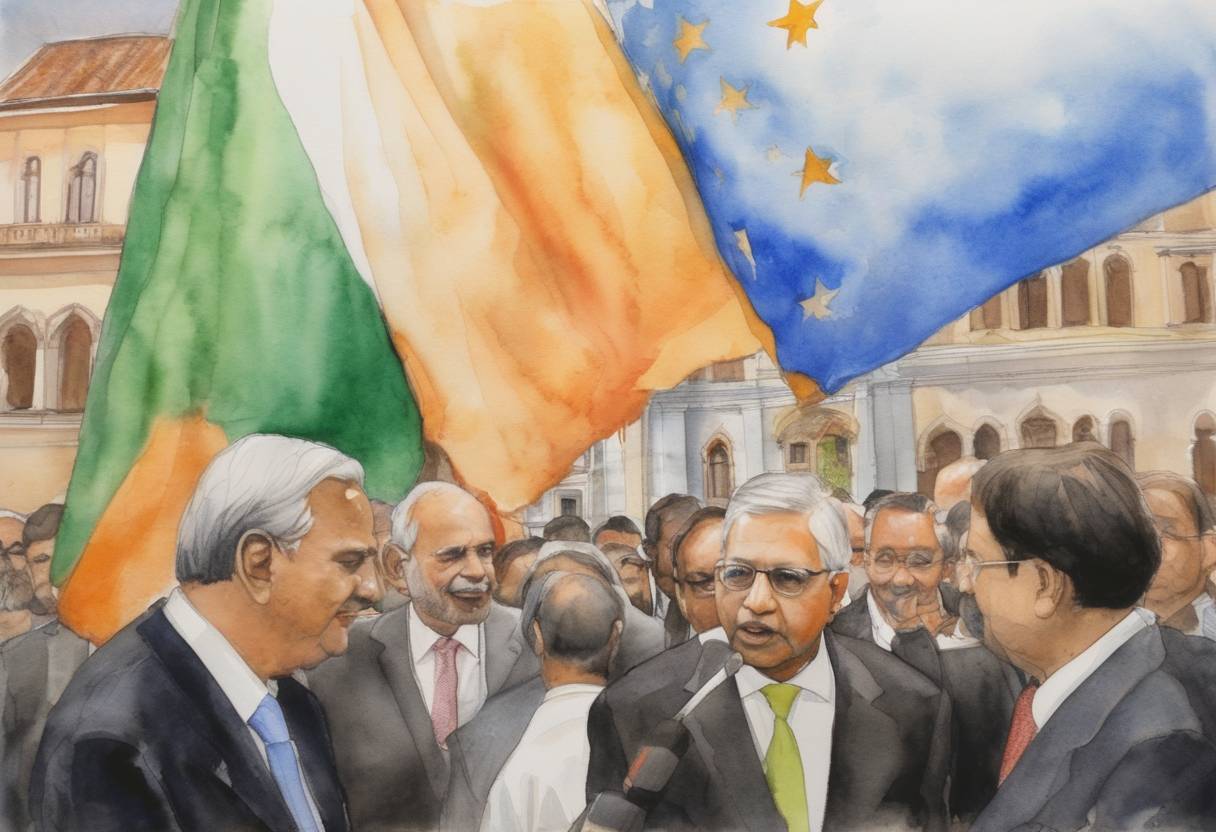
India-EU Summit Agreement - June 9, 2008
On June 9, 2008, leaders from India and the European Union (EU) convened in Ljubljana, Slovenia, for a significant summit focusing on enhancing bilateral trade and economic cooperation. During this meeting, both parties committed to an ambitious goal of doubling their trade by the year 2013.
Context
In the early 2000s, India and the EU had been fostering stronger economic ties, recognizing each other’s potential as key global trading partners. The EU, which consists of 27 member countries, is one of India’s largest trading blocs, while India represents a growing economy with vast potential for expansion and cooperation.
Prior to the 2008 agreement, India and the EU had engaged in consistent dialogue aimed at improving bilateral relations, including negotiations over trade and investment agreements. The discussions in Ljubljana were set against the backdrop of an evolving global economy and the recognition of mutual benefits stemming from increased trade flows.
Key Outcomes of the Summit
Doubling Trade: The central outcome of the summit was the agreement to double trade between India and the EU by 2013. This target was set to build upon existing trade relations and encourage further economic integration.
Strategic Partnership: The leaders reiterated their commitment to a strategic partnership, with economic ties being a crucial component. This included possible collaborations in sectors such as technology, energy, and transport.
Negotiations on a Free Trade Agreement (FTA): The summit also laid the groundwork for continued negotiations towards a comprehensive Free Trade Agreement, which was hoped to address barriers in both goods and services sectors, improve market access, and establish regulatory frameworks conducive to business.
Significance
Economic Growth: By aiming to double trade, the summit highlighted the importance placed by both India and the EU on mutual economic growth and prosperity. Such a target was expected to spur job creation and broaden the economic base in both regions.
Political and Diplomatic Ties: The summit underscored a deepening of political and diplomatic relations, aiming to align more closely on global issues such as climate change, security, and development.
Influence in Global Trade: Strengthened trade ties between India and the EU would not only benefit their economies but also position them as significant players within the global trade architecture, potentially influencing discussions in larger multilateral trade negotiations.
As both regions continued to navigate the complexities of international trade laws and frameworks, this agreement in 2008 marked a crucial step towards achieving more integrated and cooperative economic relations.