The Commissioning of USS Langley (CV-1)
1922 · Norfolk, United States
The USS Langley (CV-1), the United States Navy's first aircraft carrier, was commissioned, marking a significant development in naval aviation.
March 29, 1936
The Aircraft Carrier USS Yorktown (CV-5) was commissioned. It was one of the Navy's first fast carriers in the Yorktown class and played a significant role in early World War II naval battles, including the Battle of Midway.
Norfolk, United States | United States Navy
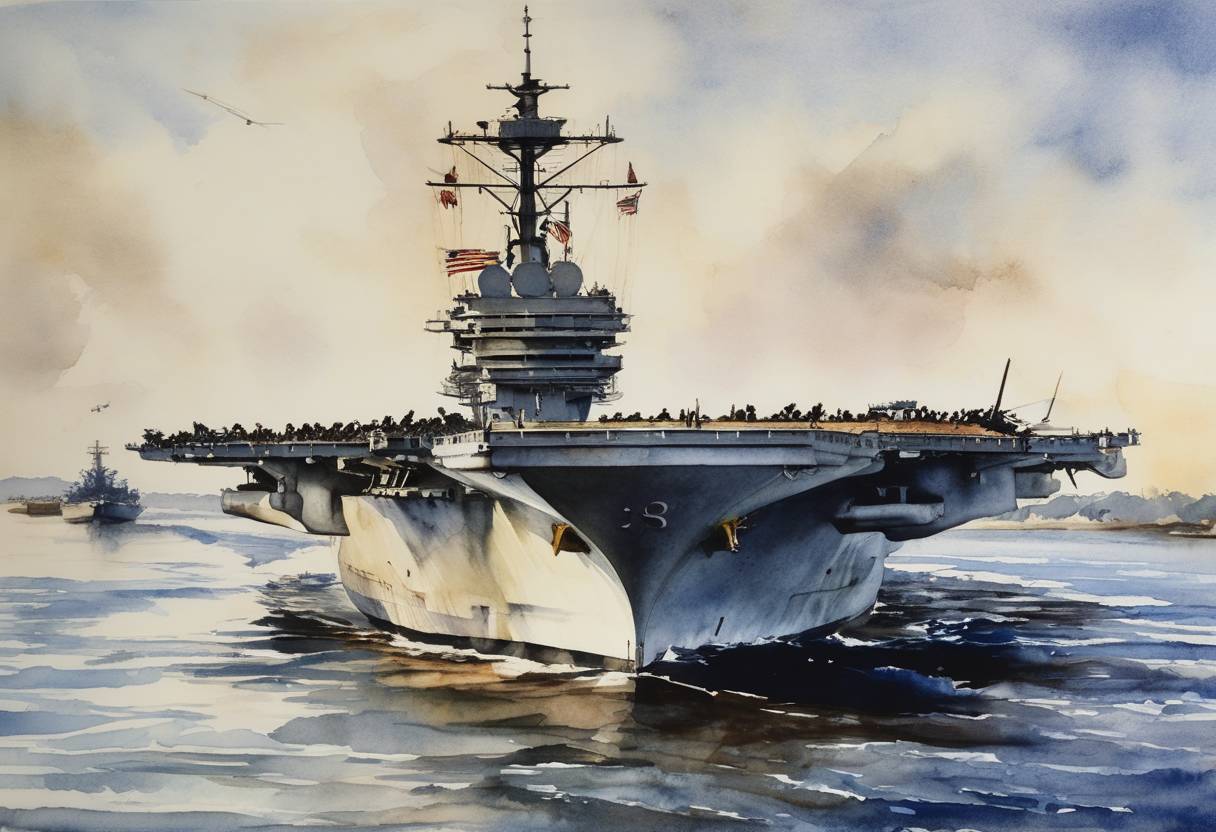
On March 29, 1936, the USS Yorktown (CV-5) was commissioned into the United States Navy. It was one of the first fast aircraft carriers of the Yorktown class, marking a significant advancement in naval aviation and naval power projection capabilities.
The USS Yorktown was built at the Newport News Shipbuilding facility in Virginia. Her construction was a direct response to the limitations imposed by the Washington Naval Treaty and reflected the urgent need for a new class of fleet carriers that could keep pace with the demands of modern naval warfare. The Yorktown-class carriers were designed to be fast, capable of launching and recovering airplanes quickly, and heavily armed to protect against aerial attacks.
The design of the Yorktown emphasized speed and versatility. It featured an aircraft hangar below the flight deck, an innovation that allowed for rapid deployment of aircraft. The carrier was equipped with eight 5-inch guns and a variety of anti-aircraft weapons, with a capacity to carry around 90 aircraft. The introduction of this class of carrier was pivotal to transforming naval tactics and expanding the strategic reach of the U.S. Navy.
The USS Yorktown played a critical role in the early naval battles of World War II, right up until her sinking in 1942:
Battle of the Coral Sea (May 1942): The Yorktown participated in the first carrier versus carrier battle in history. Although both sides incurred significant losses, the battle halted the Japanese advance on Port Moresby.
Battle of Midway (June 1942): The carrier was instrumental in the U.S. victory at Midway, a turning point in the Pacific War. Despite being heavily damaged, the Yorktown’s aircraft contributed to the sinking of four Japanese carriers. However, the Yorktown was eventually sunk by a Japanese submarine after the battle.
The commissioning of the USS Yorktown marked a pivotal moment in naval engineering and military strategy. As one of the first fast carriers, it set the standard for aircraft carrier design and usage during World War II. The ship’s contributions to the victories in the Pacific demonstrated the effectiveness and strategic value of aircraft carriers, ultimately cementing their role as the centerpiece of naval power in the modern era.
The USS Yorktown’s legacy continues to be remembered for its bravery and innovation, significantly influencing the outcome of key battles in the Pacific Theatre.
Source: www.history.navy.mil