Introduction of Civil Registration in England and Wales (1837)
1837 · London, United Kingdom
A system of civil registration of births, deaths, and marriages was introduced in England and Wales, replacing parish registers.
January 27, 1836
Scotland officially authorizes civil registration for births, marriages, and deaths, marking a significant development in civil documentation.
Edinburgh, United Kingdom | Scottish government
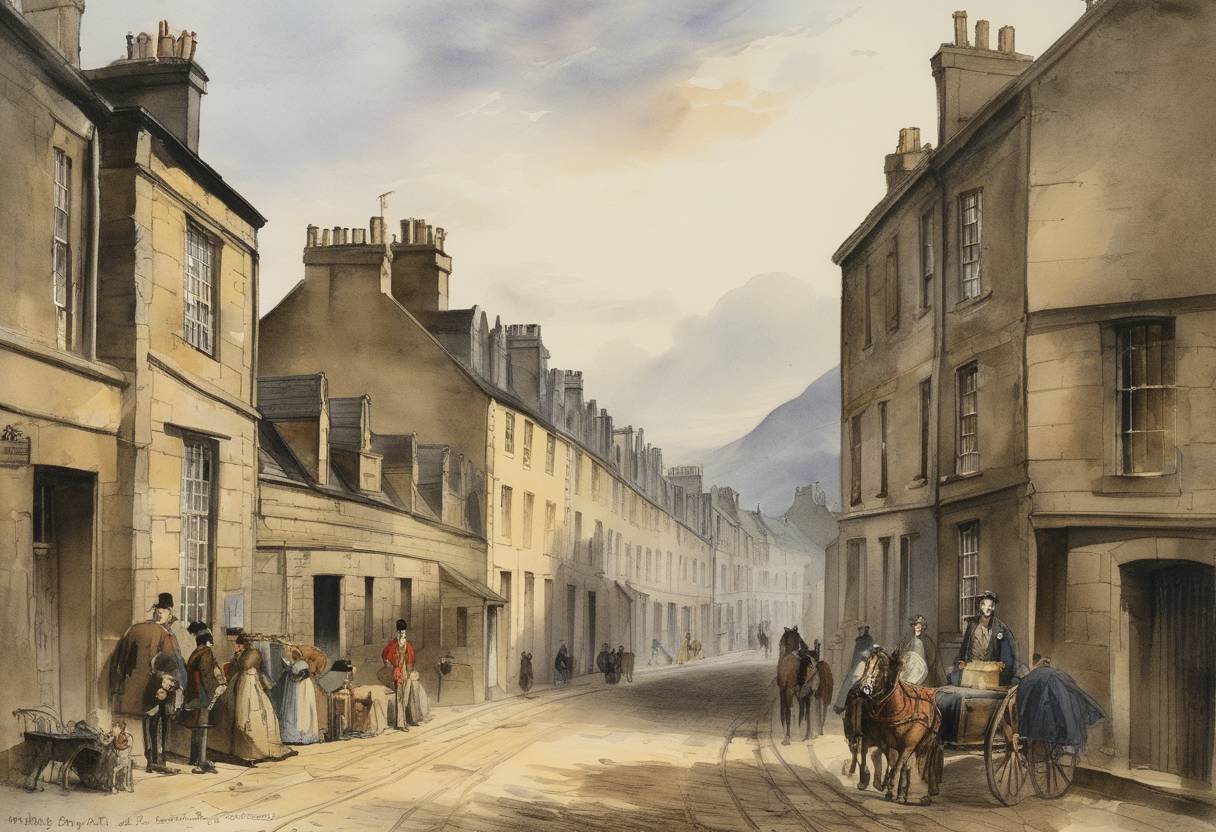
On January 27, 1836, Scotland officially authorized the development of a civil registration system for recording births, marriages, and deaths. This marked a pivotal shift from ecclesiastical to civil documentation and administration of vital records, aligning with broader social and governmental changes pursuing more centralized record-keeping and oversight.
Before this date, records of births, marriages, and deaths in Scotland were primarily maintained by the Church of Scotland. These parish registers were inconsistent, often incomplete, and subject to the discretion of local clergy. The push for civil registration was influenced by a broader 19th-century European trend towards bureaucratic governance and improved statistical tracking for public health and social policy.
In 1836, amidst broader social reforms in the United Kingdom, Scotland followed England and Wales in establishing a regulated system for vital statistics, though full implementation in Scotland would not occur until later.
The authorization on January 27, 1836, laid the groundwork for more comprehensive legislation. It was a precursor to the Registration Act of 1854, which eventually established the General Register Office for Scotland under national oversight. This office centralized record-keeping, providing a reliable and uniform system that would ensure greater accuracy in public records.
In conclusion, the authorization in January 1836 was a foundational step towards modernizing Scotland’s administrative processes and aligning them with the needs of a developing industrial society. The transition from church to state control in these records represents a crucial evolution in governance and public administration.
Source: www.nrscotland.gov.uk