Launch of the Mir Space Station
1986 · Baikonur, Soviet Union
The Soviet Union launched the Mir space station, which became the first modular space station and operated in low Earth orbit until 2001.
June 6, 1971
The Soviet Union launched the Soyuz 11 mission, which carried three cosmonauts to the world's first space station, Salyut 1. Tragically, the mission ended with the deaths of all three cosmonauts when returning to Earth due to a cabin depressurization.
Baikonur, Kazakhstan (then Soviet Union) | Soviet space program
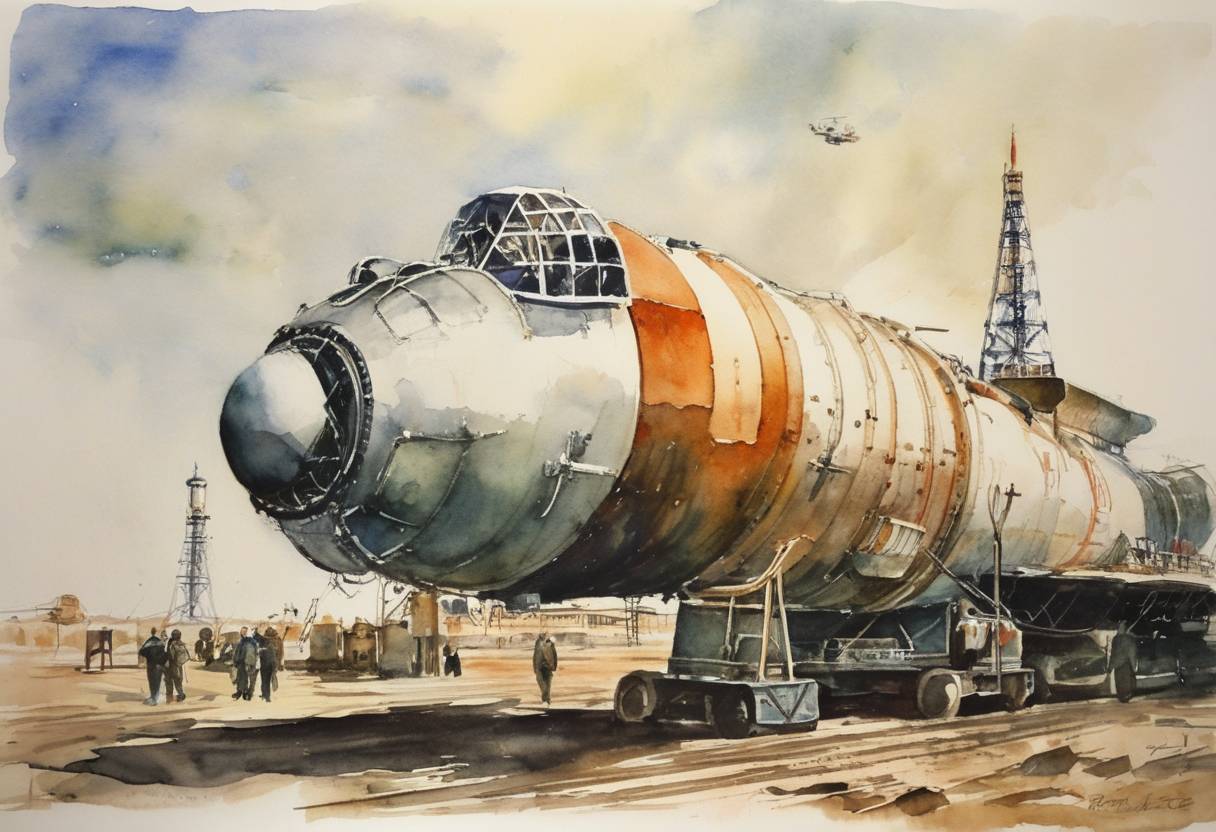
On June 6, 1971, the Soviet Union launched the Soyuz 11 mission from the Baikonur Cosmodrome. The mission’s goal was to transport cosmonauts Georgi Dobrovolski, Viktor Patsayev, and Vladislav Volkov to Salyut 1, the world’s first space station. This mission followed the unsuccessful attempt by Soyuz 10 in April 1971, which failed to dock correctly with the station.
The Soyuz 11 mission was planned to have the crew conduct scientific experiments, observations, and technology demonstrations aboard Salyut 1. The cosmonauts successfully docked with the space station on June 7 and remained on board for over three weeks, setting a record for the longest duration in space at the time. During their stay, they carried out various scientific experiments that contributed valuable data to space research.
On June 30, 1971, as Soyuz 11 prepared for re-entry into Earth’s atmosphere, an unfortunate cabin depressurization occurred due to a valve malfunction in the descent module. The incident led to the deaths of all three cosmonauts. Tragically, the crew had no spacesuits as the Soyuz design at the time did not accommodate personal space suits due to space constraints, leaving them vulnerable to the depressurization in the capsule.
The loss of the Soyuz 11 crew had a significant impact on the Soviet space program. Investigations led to design changes in the Soyuz spacecraft, notably the inclusion of pressurized suits for cosmonauts, which became standard in all subsequent manned missions. The tragedy underscored the inherent risks of space exploration and pushed advancements in safety protocols for future space missions.
The courage and sacrifice of Georgi Dobrovolski, Viktor Patsayev, and Vladislav Volkov are commemorated by honors such as posthumous awards and the naming of geological formations on the Moon and Mars, further solidifying their legacy in the annals of space history.
Source: en.wikipedia.org