Armistice Negotiations to End the Vietnam War in Geneva on July 20, 1954
1954 · Geneva, Switzerland
Armistice negotiations to end the Vietnam War began in Geneva.
July 19, 1954
The first part of the Geneva Accords is signed, aimed at resolving the ongoing conflict in Indochina.
Geneva, Switzerland | International Control Commission
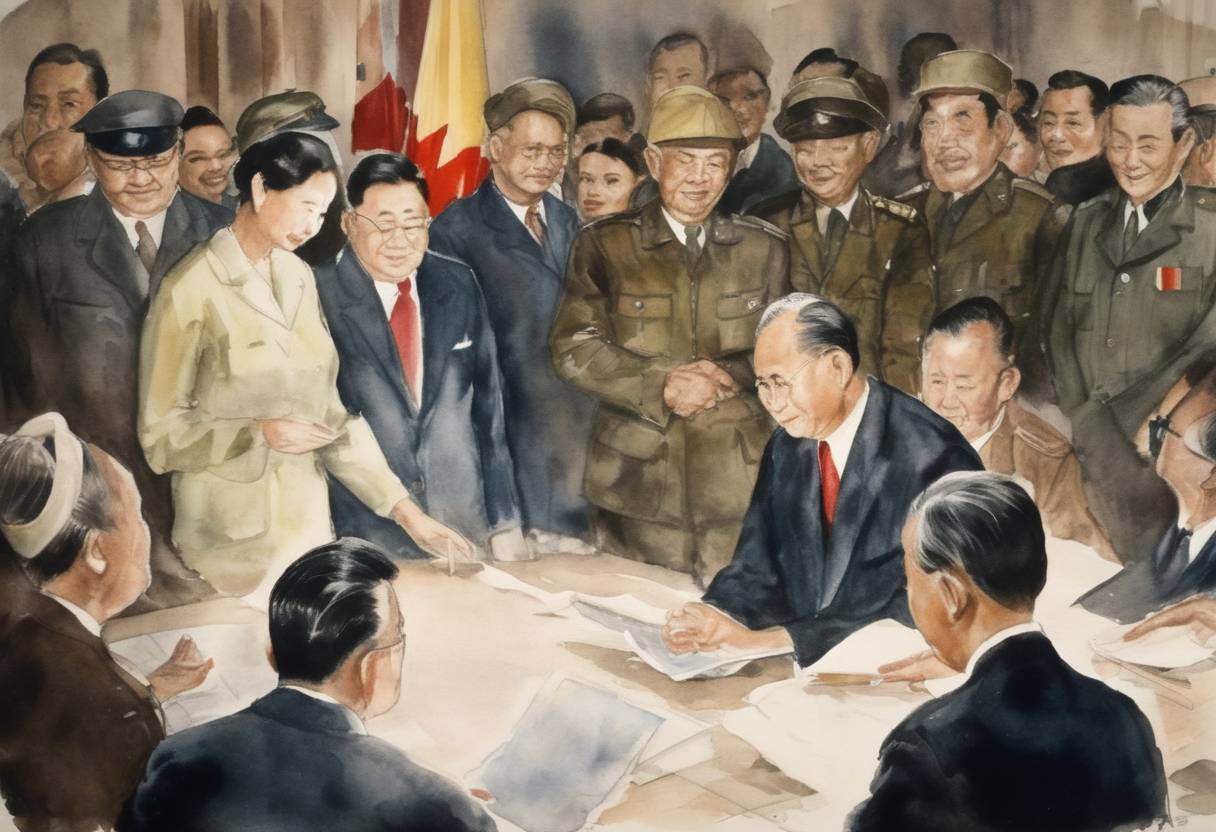
On July 19, 1954, the first part of the Geneva Accords was signed, marking a critical moment in efforts to resolve the ongoing conflict in Indochina. This agreement was pivotal in addressing the hostilities following the First Indochina War, primarily between the French Union’s French Far East Expeditionary Corps and the forces of the Viet Minh.
The First Indochina War, which began in 1946, emerged as a struggle for Vietnamese independence from French colonial rule. By the early 1950s, the conflict had intensified, drawing international attention and involvement. This period became even more complicated due to the Cold War’s geopolitical dynamics, with the United States supporting the French efforts and the Soviet Union and China backing the Viet Minh.
The Geneva Conference commenced on April 26, 1954, involving multiple countries, including France, the Vietnam Democratic Republic (North Vietnam), the State of Vietnam (South Vietnam), the United States, the Soviet Union, China, and the United Kingdom, among others. The discussions aimed to achieve a ceasefire and establish a political resolution for the territories in Indochina, encompassing Vietnam, Laos, and Cambodia.
The first part of the Geneva Accords signed on July 19, 1954, laid the groundwork for ending hostilities, even though the complete accords were finalized slightly later. The agreement primarily focused on establishing a ceasefire, withdrawing French troops, and dividing Vietnam at the 17th parallel into North and South Vietnam temporarily, pending general elections scheduled for 1956.
The Geneva Accords played a crucial role in temporarily halting the fighting but also set the stage for future conflict. The division of Vietnam was meant to be temporary; however, the elections were never held, leading to increased tensions and eventually the Vietnam War. The Accords also underscored the complexities of international diplomacy during the Cold War, illustrating the challenges of balancing national self-determination against broader geopolitical strategies.
In retrospect, the signing of the Geneva Accords on July 19, 1954, marked both an end and a beginning—a cessation to one conflict and the seeds for another, as Vietnam and Indochina continued to navigate the turbulent waters of the mid-20th century.
Source: www.britannica.com