First Partial Human Face Transplant
2005 · Amiens, France
The first partial human face transplant in a successful operation is carried out in Amiens, France by a team led by Dr. Bernard Devauchelle and Dr. Jean-Michel Dubernard.
June 20, 1921
The BCG vaccine against tuberculosis is first administered to a human.
Paris, France | Institut Pasteur
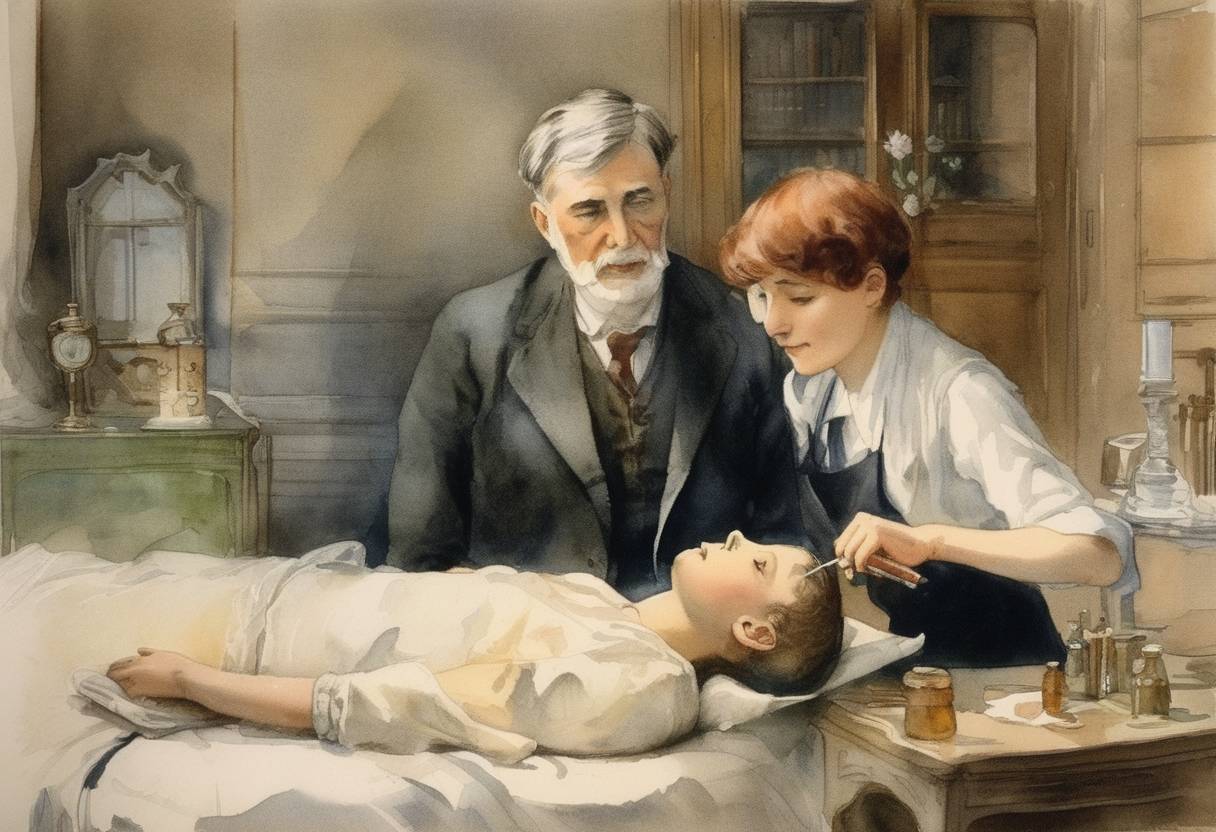
On June 20, 1921, a significant milestone in medical history was achieved with the first human administration of the Bacillus Calmette-Guérin (BCG) vaccine. This event took place in Paris, France, marking a crucial step in the fight against tuberculosis (TB), a disease that was a leading cause of death worldwide at the time.
Tuberculosis was a major public health issue in the early 20th century, causing millions of deaths annually. In response, two French scientists, Albert Calmette and Camille Guérin, embarked on a mission to develop a vaccine that could offer protection against this deadly disease. Their work began in 1908 when they started experimenting with a strain of the Mycobacterium bovis bacterium, which is similar to the Mycobacterium tuberculosis that causes TB in humans.
Albert Calmette, a bacteriologist, and veterinarian Camille Guérin, systematically attenuated the virulence of the bacterium through serial culture passaging. This process took over a decade, resulting in a live, attenuated strain that could elicit an immune response without causing the disease. After rigorous testing in cattle, which are also affected by tuberculosis, the BCG vaccine was deemed safe for human use.
The first human trial of the BCG vaccine was conducted with a newborn infant whose mother was tuberculosis-infected. The vaccine was given orally, as was the practice initially. This pivotal moment signaled the beginning of widespread human trials and paved the way for the vaccine’s global distribution.
Following its initial administration, the BCG vaccine underwent further trials and was eventually adopted worldwide as a key tool in the fight against tuberculosis. The World Health Organization (WHO) later endorsed it as part of global TB control strategies. Today, the BCG vaccine is still widely used, especially in countries with high TB prevalence.
The first administration of the BCG vaccine on June 20, 1921, laid the groundwork for one of the most effective preventive measures against tuberculosis. Despite variations in its effectiveness in different regions, the BCG vaccine remains a vital element in public health efforts to control and prevent TB, particularly in developing countries. This historic event underscores the importance of scientific innovation and collaboration in addressing public health challenges.
Source: en.wikipedia.org