The Second Mongol Invasion of Japan: Kamikaze Typhoon - August 12, 1281
1281 · Tsushima Island, Japan
The second Mongol invasion of Japan is thwarted by the kamikaze typhoon, which destroyed much of the Mongol fleet.
August 14, 1281
The second Mongol invasion of Japan ends with the destruction of the Mongol fleet by a typhoon, known as the kamikaze or 'divine wind,' helping repel the invasion forces.
Hakata Bay, Japan | Yuan Dynasty
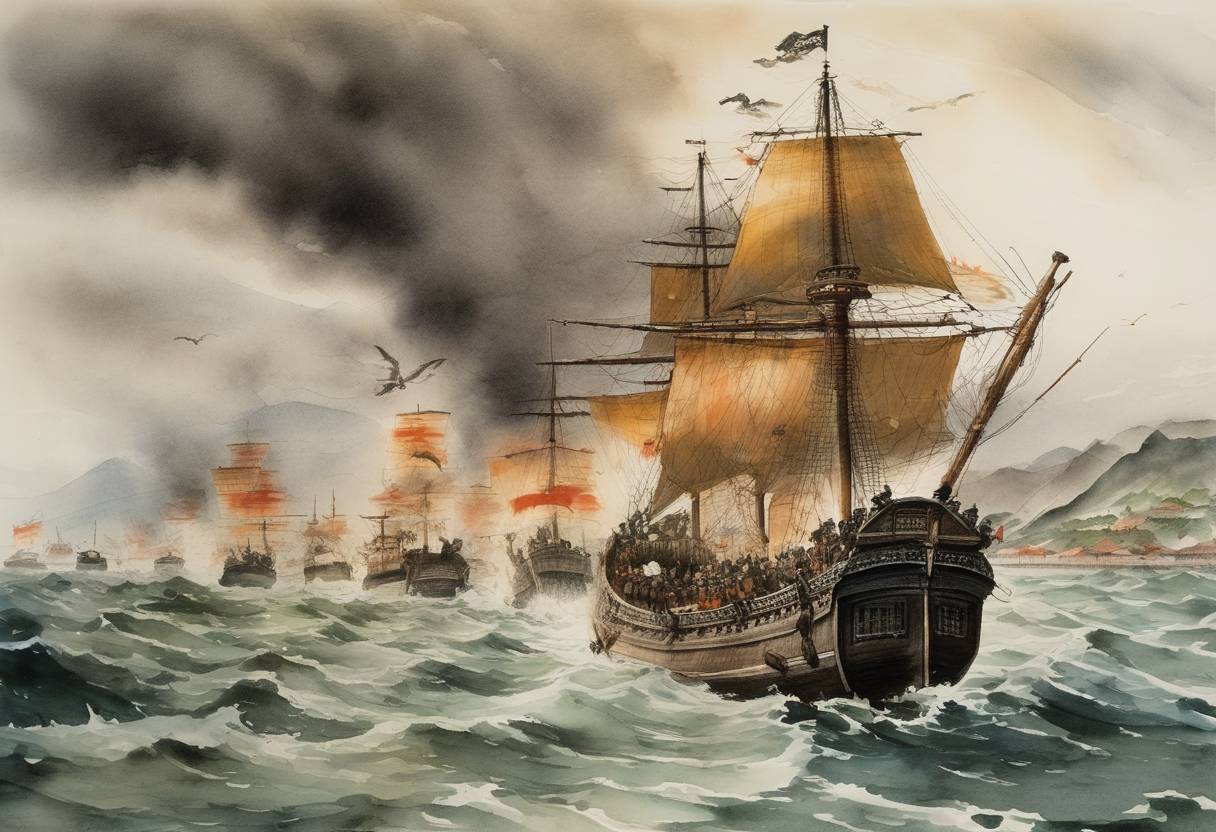
On August 14, 1281, a powerful typhoon played a decisive role in thwarting the second Mongol invasion of Japan, led by the Khagan Kublai Khan. This event was marked by the destruction of a significant portion of the Mongol fleet off the coast of Kyushu, Japan, a phenomenon famously referred to as the “kamikaze” or “divine wind.”
In the late 13th century, Kublai Khan, the Mongol ruler of China, sought to expand his empire by subjugating Japan. This ambition led to two major invasion attempts. The first invasion in 1274 ended in a withdrawal after the Mongol fleet faced resistance and a storm. Undeterred, Kublai Khan prepared a second, larger invasion force in 1281.
The 1281 Mongol invasion consisted of two separate fleets. One, assembled in Korea, comprised approximately 900 ships carrying Korean and Chinese soldiers. The second force, larger and based in Southern China, included about 1000 ships. The two were supposed to join before launching a coordinated attack on Japan.
The invasion commenced with Mongol forces capturing parts of Tsushima and Iki islands. By August 1281, they aimed to converge on Hakata Bay on Japan’s main island of Kyushu. The Japanese defenders, employing fortifications and fierce combat tactics, offered formidable resistance to the invading armies.
As battles raged, both Mongol fleets were caught off the coast of Kyushu by a sudden and catastrophic typhoon. These storms, characteristic of the region during that season, unleashed devastation on the assembled Mongol ships, sinking a substantial number and scattering the forces.
The typhoon’s impact was immense and immediate. It obliterated the Mongol maritime capabilities, drowning thousands and preventing any further concerted military effort against the Japanese. The term “kamikaze,” translating to “divine wind,” emerged as a symbolic representation of nature’s intervention in aiding Japan’s defense against foreign domination.
The failure of these invasions significantly weakened Mongol influence and marked the end of the Mongol attempts to conquer Japan. The impact of the kamikaze became deeply ingrained in Japanese cultural memory, symbolizing divine protection. This historical narrative would later inspire the name given to World War II-era Japanese military aviation tactics.
The unsuccessful invasion had longer-term geopolitical consequences as well. With Japan retaining its independence, the Mongol Empire’s attention turned elsewhere, ultimately contributing to its later fragmentation.
The kamikaze remains one of the most dramatic examples of the role natural events have played in shaping the course of human history, showcasing the interplay between environmental forces and political ambitions.
Source: en.wikipedia.org