1799 · , Mauritius
The action of 18 June 1799 took place during the French Revolutionary Wars when British Navy frigate HMS Sybille captured French frigate Forte near the island of Mauritius.
April 16, 1797
The British warship HMS Daedalus, under the command of Captain Henry Lovely, was launched. The ship later saw service in the Napoleonic Wars and was eventually decommissioned and broken up in 1811.
Woolwich, England | Royal Navy
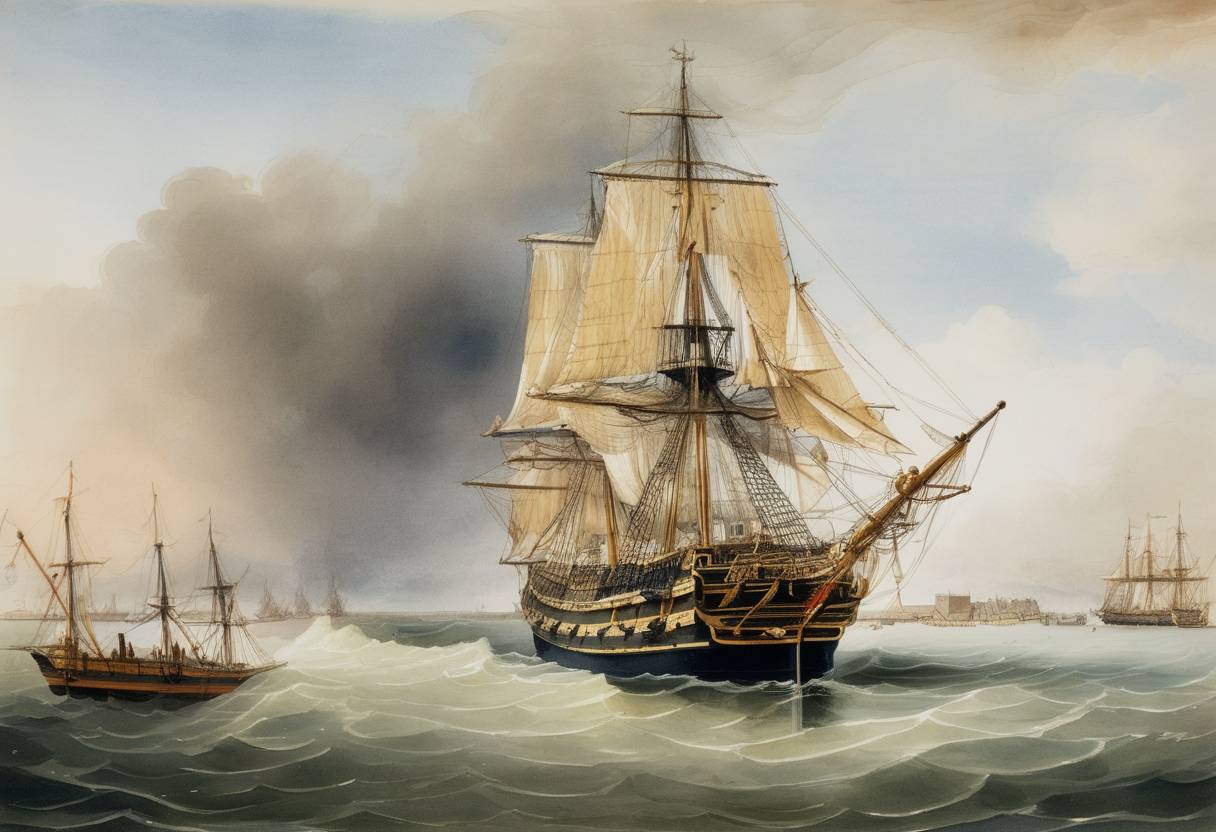
On April 16, 1797, the British warship HMS Daedalus was launched. This ship was a sixth-rate frigate constructed for the Royal Navy. Commanded by Captain Henry Lovely, HMS Daedalus became a significant player during its years of service, particularly throughout the volatile period of the Napoleonic Wars.
HMS Daedalus was built during a time when the British Royal Navy was expanding its fleet to keep pace with escalating tensions across Europe, particularly with Revolutionary France. The ship belonged to the Leda-class frigates, known for their speed and maneuverability, crucial traits for the engagements it would face during wartime.
Daedalus served the Royal Navy throughout the Napoleonic Wars, a series of conflicts declared against the French Empire under Napoleon Bonaparte. Frigates like HMS Daedalus were instrumental in protecting British trade routes, disrupting enemy supply lines, and enforcing blockades. The crew of Daedalus engaged in various operations that were vital in maintaining Britain’s maritime superiority.
After her active service, HMS Daedalus was decommissioned. She was eventually broken up in 1811, a common fate for ships that had served their purpose and could no longer meet the navy’s needs due to wear and the rapid advancement in naval technology.
The service life of HMS Daedalus underscores the critical role of naval vessels in maintaining British economic and military dominance during the late 18th and early 19th centuries. Ships like Daedalus not only bolstered the Royal Navy’s capacity to control the seas but also facilitated the expansion of British influence globally during and after the Napoleonic Wars.
Source: www.pbenyon.plus.com