Russo-Turkish War (1877–1878): Russia Declares War on the Ottoman Empire
1877 · , Russia
Russo-Turkish War (1877–1878) began as Russia declared war on the Ottoman Empire.
July 5, 1770
The Russo-Turkish War (1768–1774) saw the Battle of Larga, where Russian forces led by Field Marshal Peter Rumyantsev decisively defeated Ottoman troops.
, Moldova | Russian Army
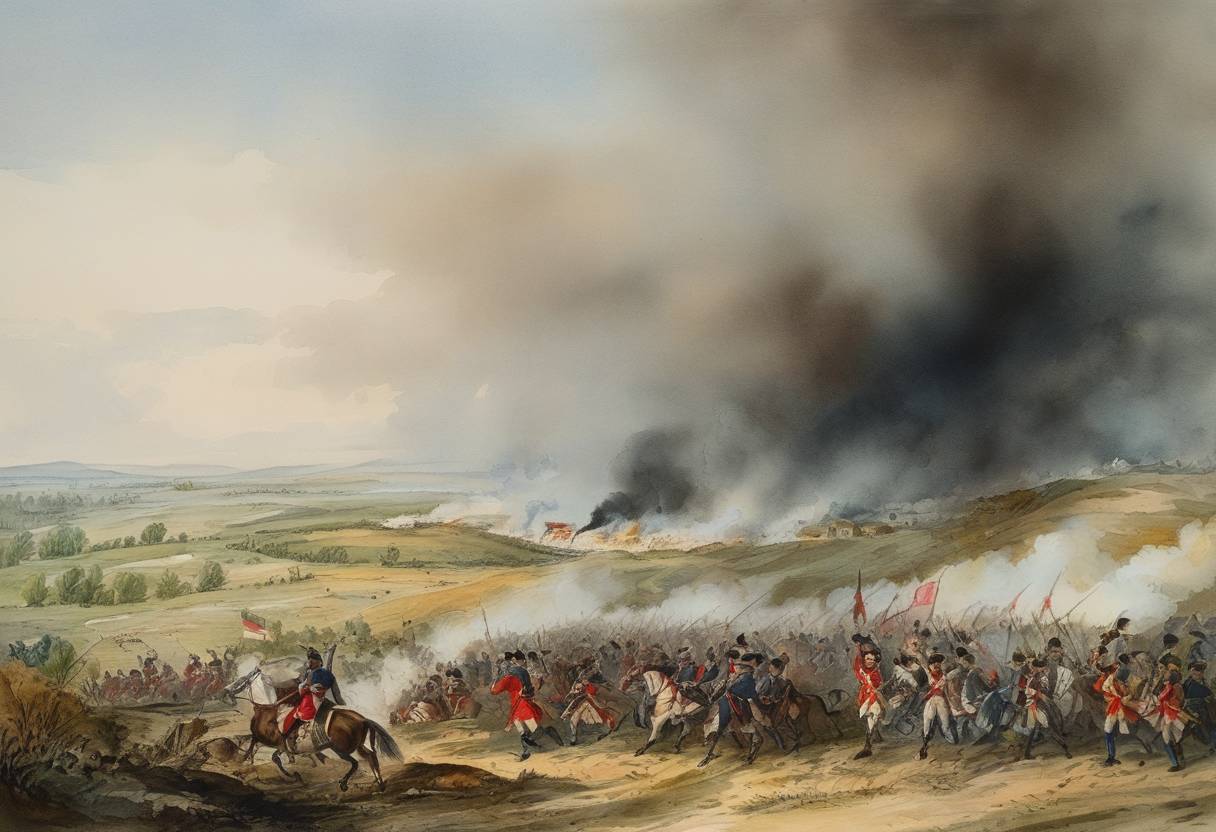
The Battle of Larga, a decisive encounter in the Russo-Turkish War (1768–1774), took place on July 5, 1770. This significant confrontation was part of the broader struggle for influence and territory between the Russian Empire and the Ottoman Empire, both of which were vying for supremacy in Eastern Europe.
The Russo-Turkish War was primarily ignited by Russia’s ambitions to expand southward and gain access to the Black Sea, a strategic goal that challenged Ottoman hegemony in the region. This period of conflict was marked by a series of military engagements, largely in the region of modern-day Moldova and Ukraine.
The battle was fought near the Larga River, a tributary of the Dniester, in present-day Moldova. Field Marshal Rumyantsev’s army, comprising approximately 38,000 troops, faced an Ottoman force of around 50,000. Despite being outnumbered, the Russian forces utilized superior tactics and discipline to achieve victory.
Rumyantsev’s strategy included swift and decisive movements that disrupted the larger Ottoman force. The Russian artillery played a crucial role in breaking the Ottoman lines, leading to significant Ottoman casualties and a retreat.
The victory at Larga bolstered Russian morale and paved the way for further successes in the war, notably the Battle of Kagul later that month. These victories greatly weakened the Ottoman military position and contributed to the eventual signing of the Treaty of Küçük Kaynarca in 1774.
This treaty marked a significant turning point, as it granted Russia territorial acquisitions and navigational rights in the Black Sea, thereby diminishing Ottoman dominance.
The Battle of Larga was a seminal event that demonstrated the growing power and military prowess of the Russian Empire. It underscored the decline of Ottoman influence in Eastern Europe and set the stage for future Russian expansions, profoundly altering the geopolitical landscape of the region.
Source: en.wikipedia.org