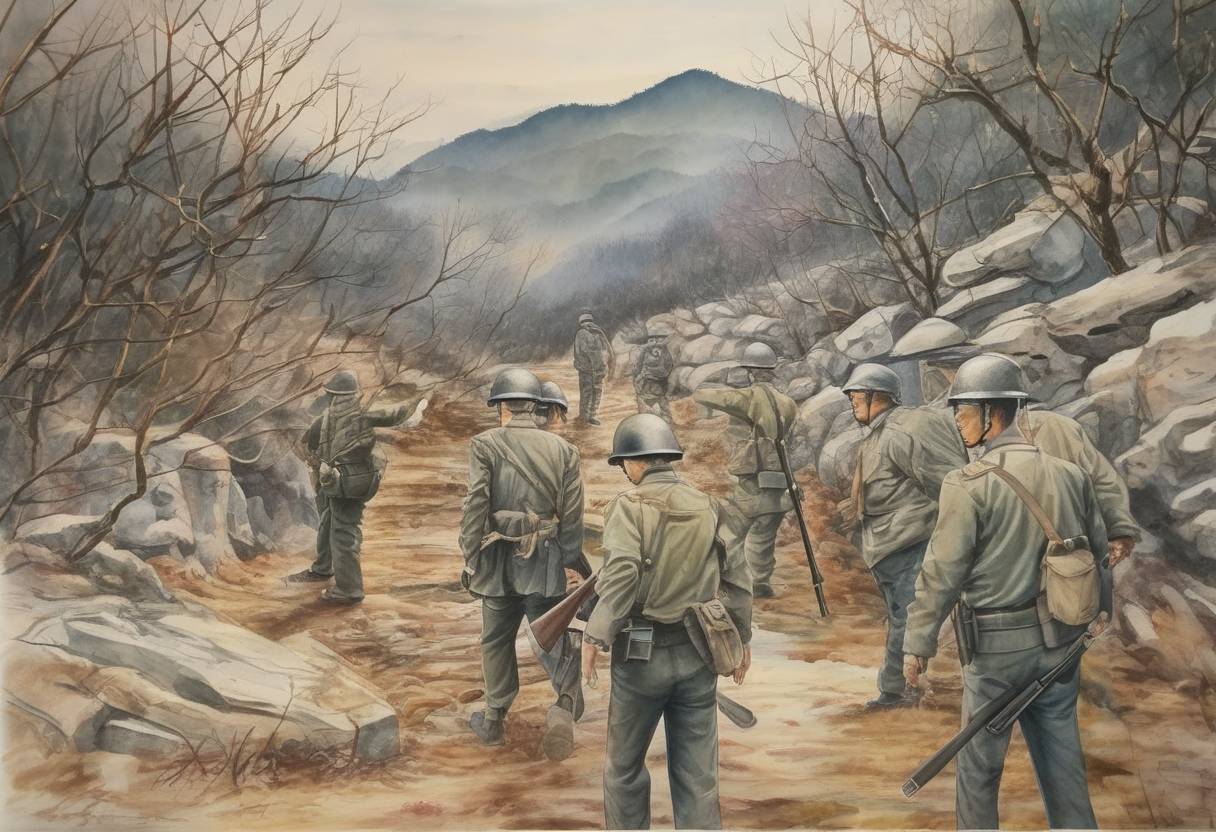
The Korean Axe Murder Incident: August 18, 1976
The Korean Axe Murder Incident, which took place on August 18, 1976, was a significant and violent confrontation in the Korean Demilitarized Zone (DMZ) that escalated tensions between North and South Korea, as well as involving the United States.
Background
The Korean DMZ, established in 1953 following the Korean War armistice, is a heavily fortified border separating North and South Korea. Despite the armistice, the region remained a hotspot for military confrontations and espionage activities. The Joint Security Area (JSA) within the DMZ was the only place where North and South Korean forces stood face-to-face, making it a focal point for diplomatic and military tensions.
The Incident
On August 18, 1976, a group of United Nations Command (UNC) personnel, including U.S. Army officers Captain Arthur Bonifas and First Lieutenant Mark Barrett, were tasked with trimming a poplar tree that obstructed the view between a United Nations Command checkpoint and an observation post. The tree was located within the JSA, and its maintenance was a routine operation.
As the work commenced, a group of North Korean soldiers, led by Senior Lieutenant Pak Chul, approached and demanded that the tree trimming cease, claiming it was unauthorized. Despite attempts by the UNC personnel to continue their task, the situation quickly escalated. The North Korean soldiers attacked the UNC team with axes and other tools, resulting in the deaths of Captain Bonifas and Lieutenant Barrett.
Aftermath and Operation Paul Bunyan
The brutal nature of the attack and the deaths of the two U.S. officers led to a significant international outcry and heightened military tensions. In response, the United States and South Korea launched Operation Paul Bunyan on August 21, 1976. This operation was a show of force intended to demonstrate resolve and deter further aggression.
Operation Paul Bunyan involved a massive display of military power, including the deployment of troops, aircraft, and naval forces. The operation successfully removed the poplar tree without further incident, as North Korean forces did not intervene.
Broader Historical Significance
The Korean Axe Murder Incident underscored the volatility of the Korean Peninsula and the potential for minor incidents to escalate into larger conflicts. It highlighted the precarious nature of the armistice and the ongoing tensions between North and South Korea. The incident also reinforced the importance of maintaining a strong military presence and readiness in the region to deter aggression and ensure stability.
In the aftermath, both sides took steps to reduce tensions, including the establishment of more formal communication channels within the JSA. The incident remains a stark reminder of the fragile peace on the Korean Peninsula and the enduring legacy of the Korean War.