The Birth of Cinema: The Lumière Brothers' First Public Film Screening
1895 · Paris, France
The Lumière brothers held the first commercial public screening of films at Salon Indien du Grand Café in Paris, marking the birth of cinema.
February 13, 1894
The Lumière brothers patent their cinematograph, a machine capable of projecting motion pictures, which significantly contributed to the development of early cinema.
Paris, France | Lumière Brothers
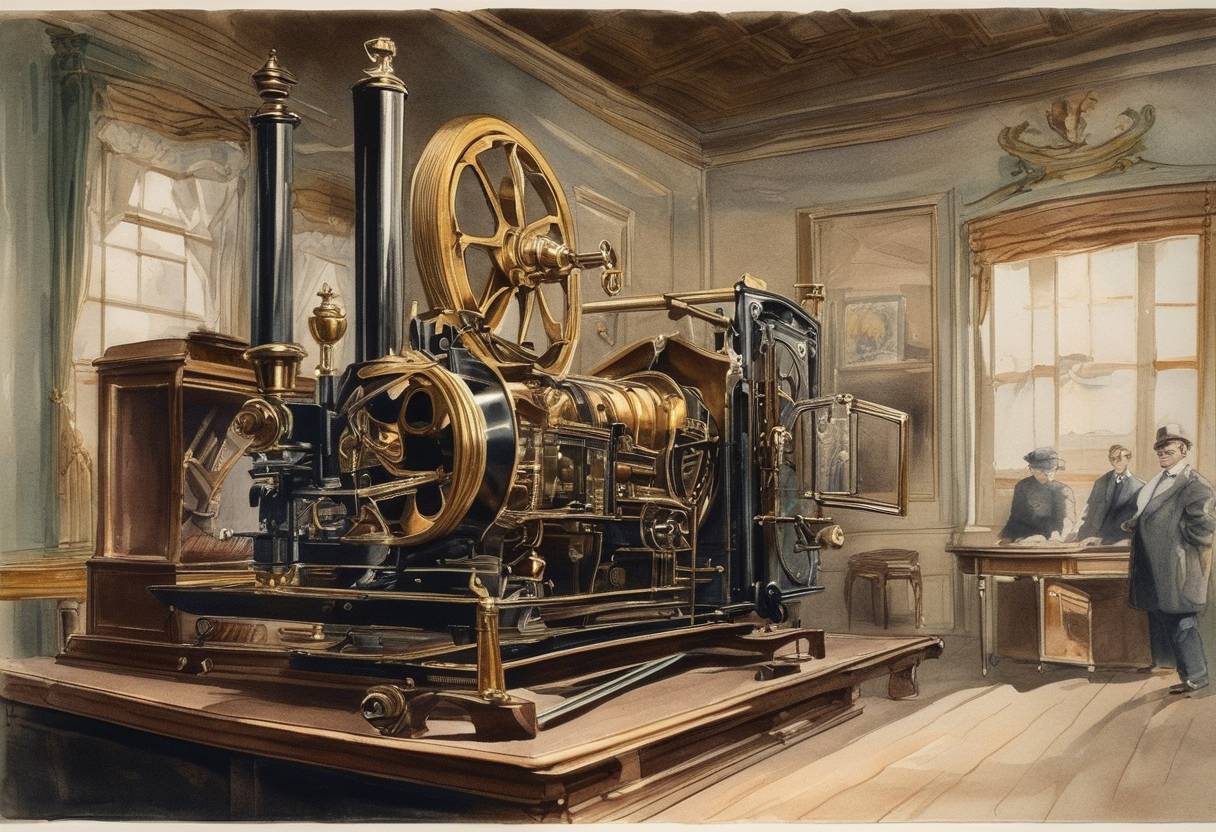
On February 13, 1894, the Lumière brothers, Louis and Auguste Lumière, were granted a patent for their invention, the cinematograph. This device played a pivotal role in the evolution of early cinema by enabling the projection of motion pictures to a large audience, a significant advancement over the previously existing methods of showcasing films.
The Lumière brothers were French inventors and pioneers in the development of motion picture technology. Born to a family involved in the photographic industry, the brothers were instrumental in advancing the techniques of capturing and displaying moving images.
The cinematograph was a revolutionary invention that functioned both as a camera and a projector. This dual functionality distinguished it from earlier devices, like Thomas Edison’s kinetoscope, which served only as a viewer for individual spectators and did not have projection capabilities.
Compact Design: The apparatus was relatively lightweight and portable, enabling filmmakers to shoot films in different locations more easily.
Projection Capability: Unlike the kinetoscope, which required individual viewing, the cinematograph could project images onto a screen, allowing multiple people to view the films simultaneously.
Versatility: It could both record and project films, using a mechanism powered by hand-cranking a film reel containing a series of photographic images.
The ability to project films to a public audience marked a critical moment in entertainment history, transforming film from a niche interest to a popular cultural phenomenon. The first public screening using the cinematograph took place on December 28, 1895, in Paris, showcasing short films like “La Sortie de l’usine Lumière à Lyon” (“Workers Leaving the Lumière Factory”).
The cinematograph’s successful demonstration sparked further experimentation and innovation in the field of cinema. As a result, it contributed to the establishment of the film industry, setting the foundation for modern filmmaking techniques.
The patenting of the cinematograph on February 13, 1894, was crucial in shifting the landscape of visual entertainment. The Lumière brothers’ invention paved the way for the communal experience of watching films and initiated a transformation that led to the global film industry as we know it today.
Source: en.wikipedia.org