James Otis: The Life and Legacy
1768 · Andover, United States
James Otis dies in Massachusetts. He was a political activist known for his phrase 'Taxation without representation is tyranny.'
October 25, 1764
The first trial of James Otis, a prominent colonial lawyer, began in Boston; he famously challenged the Writs of Assistance, which contributed to the growth of American colonial resistance against British rule.
Boston, American Colonies | Colonial Massachusetts Court
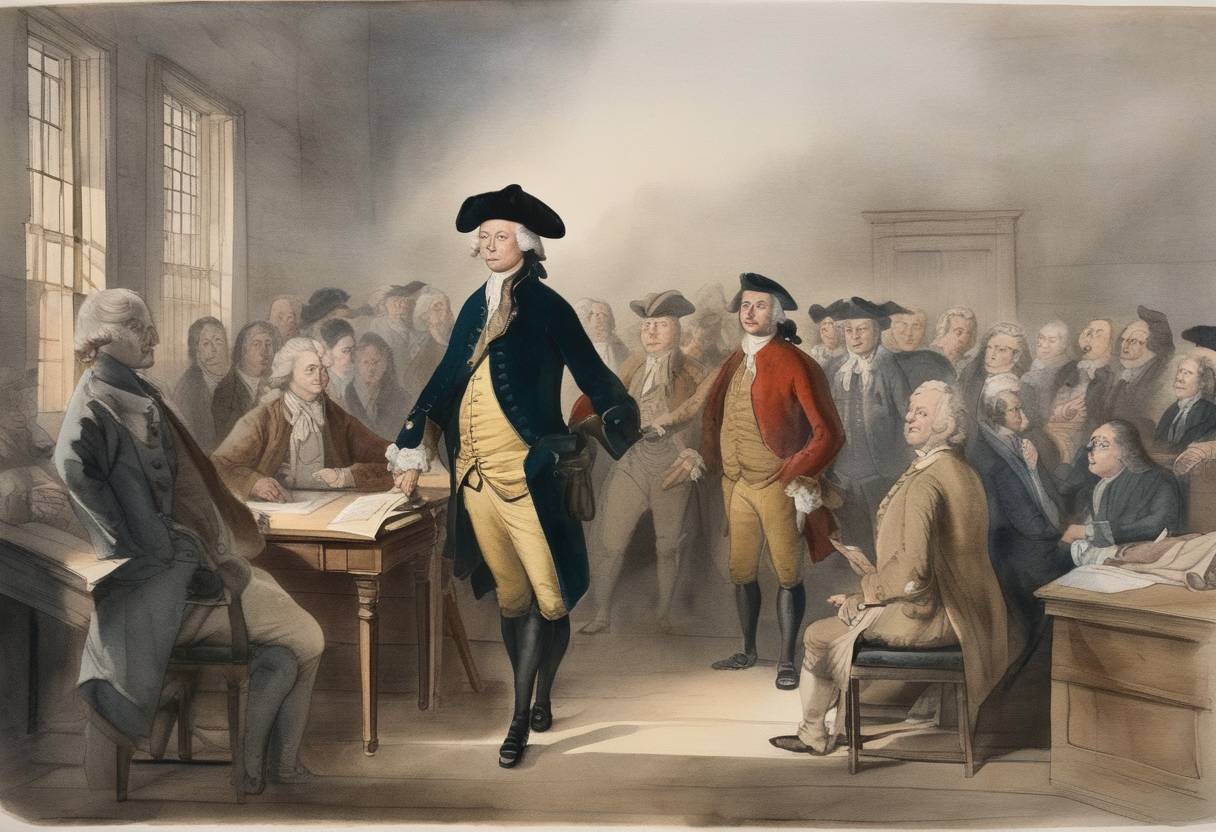
James Otis Jr., a prominent lawyer in colonial Massachusetts, played a pivotal role in challenging British policies that eventually contributed to the American Revolutionary movement. His legal fight against the Writs of Assistance, general search warrants used by British authorities, marked a significant moment in colonial resistance.
Writs of Assistance were issued by the British government to prevent smuggling in the American colonies after the French and Indian War. These writs allowed customs officials to search any property for smuggled goods without specific warrants, infringing on the colonists’ perceived rights.
James Otis, then Advocate General of the colony, resigned his position in protest and took up the cause of the colonists, advocating against these writs. His argument was rooted in the idea that they violated the natural rights of the colonists and the British constitutional principle of security from unreasonable searches and seizures.
The trial in which Otis’s arguments gained prominence did not officially commence on October 25, 1764. Detailed accounts and historical accuracy suggest that Otis’s groundbreaking case against the Writs occurred earlier, with his celebrated speech delivered in a Boston court in February 1761. However, Otis’s impact lingered in debates and legal battles that carried into subsequent years, profoundly influencing colonial attitudes towards British rule.
Otis’s arguments were foundational, sowing the seeds for American legal principles embedded later in the Fourth Amendment to the U.S. Constitution. John Adams, who was present during Otis’s impassioned courtroom presentation, noted its profound influence on the American Revolution, reportedly stating, “Then and there, the child Independence was born.”
Although Otis ultimately lost the case as the courts ruled in favor of the writs, his spirited defense against British overreach helped galvanize colonial dissent. It underscored the growing tension between the Colonies and Parliament, laying the groundwork for more organized resistance in the lead-up to the American Revolution.
Source: en.wikipedia.org