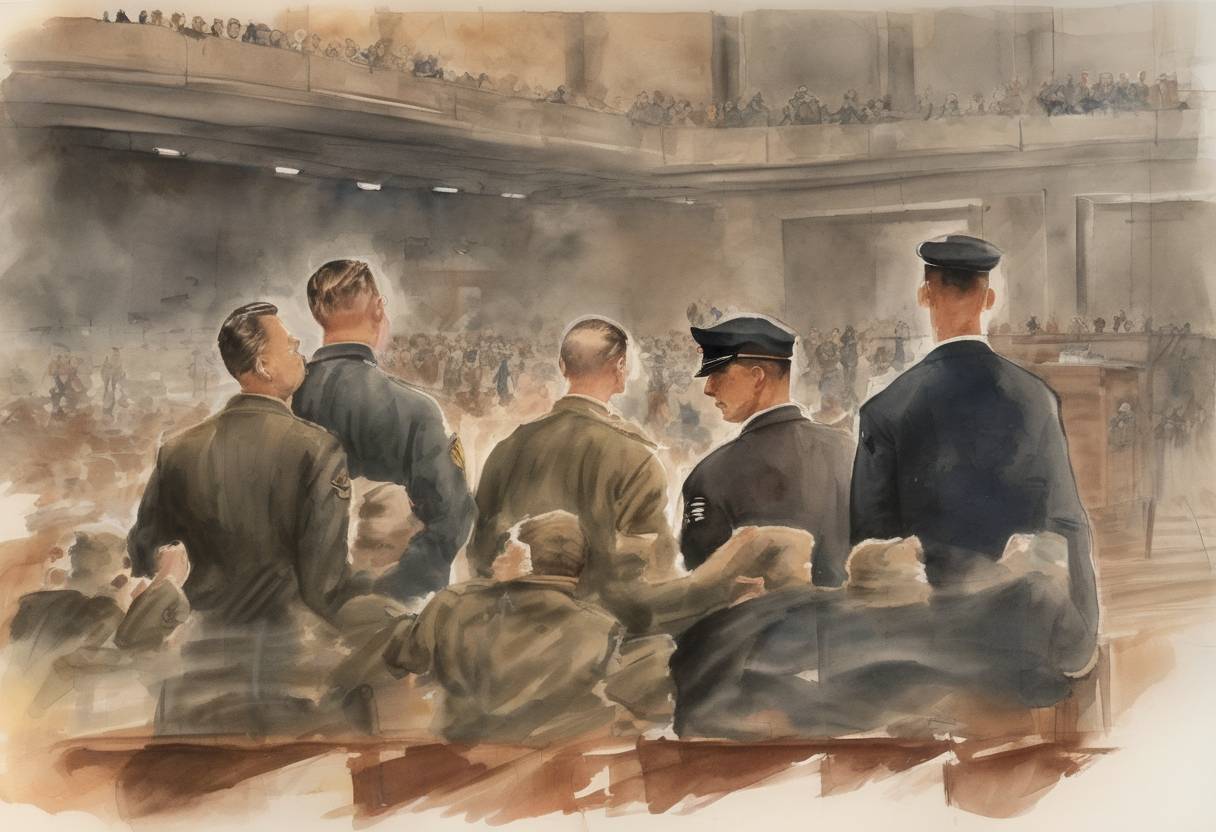
Execution of Nazi Saboteurs on August 8, 1942
On August 8, 1942, during World War II, six Nazi saboteurs were executed in Washington, D.C., following a military tribunal. This event was a significant moment in the United States’ wartime history, highlighting the nation’s internal security challenges and its response to espionage threats.
Background
In June 1942, as part of Operation Pastorius, eight German agents were deployed by submarine to the United States with the mission to sabotage key American economic and military targets. The operation was orchestrated by the German military intelligence service, the Abwehr, and aimed to disrupt the American war effort by targeting infrastructure such as railroads, bridges, and factories.
The saboteurs landed in two groups: one in Long Island, New York, and the other in Ponte Vedra Beach, Florida. They were equipped with explosives, incendiaries, and cash to carry out their mission.
Capture and Trial
The operation quickly unraveled when one of the saboteurs, George John Dasch, decided to defect. He turned himself in to the FBI and provided information that led to the capture of the other seven agents. The swift action by the FBI prevented any sabotage activities from being carried out.
President Franklin D. Roosevelt authorized a military tribunal to try the saboteurs, bypassing the civilian court system. This decision was based on the precedent set during the American Civil War and was justified by the administration as a necessary measure during wartime.
The tribunal, held in secret, found all eight men guilty. Six of them—Herbert Haupt, Heinrich Heinck, Edward Kerling, Hermann Neubauer, Richard Quirin, and Werner Thiel—were sentenced to death. George Dasch and another saboteur, Ernest Burger, received prison sentences due to their cooperation with authorities.
Execution and Aftermath
The executions were carried out on August 8, 1942, in the District of Columbia jail’s electric chair. This marked the first time since the Civil War that enemy combatants were executed on American soil.
The event underscored the United States’ vulnerability to espionage and sabotage during World War II and demonstrated the government’s resolve to protect national security. The use of a military tribunal was controversial but was upheld by the U.S. Supreme Court in the case Ex parte Quirin, which affirmed the President’s authority to try enemy combatants by military commission.
Historical Significance
The execution of the Nazi saboteurs served as a deterrent to further espionage attempts and reinforced the importance of internal security during wartime. It also set a legal precedent for the treatment of enemy combatants, influencing future U.S. policy and legal interpretations regarding military tribunals and national security.
This event remains a notable example of the challenges faced by the United States during World War II and the measures taken to address threats to its homeland security.