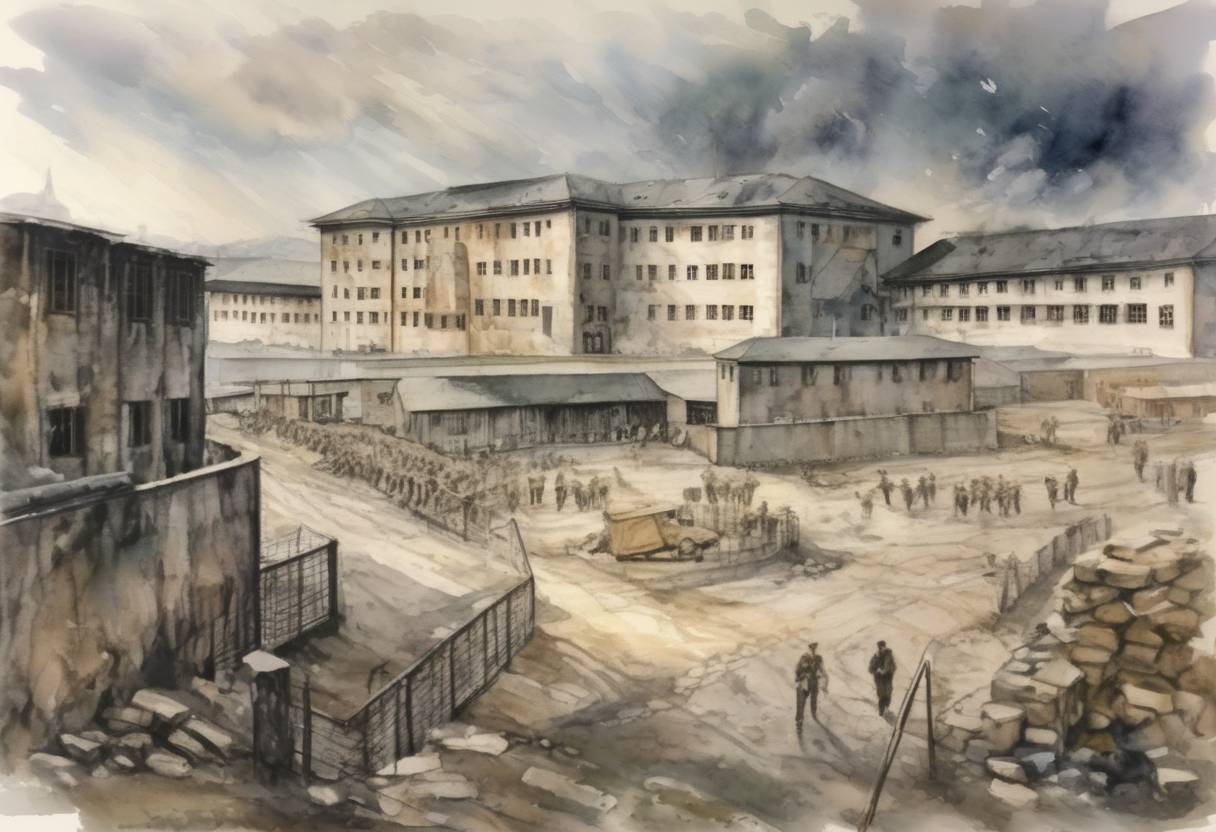
Liberation of Mauthausen Concentration Camp - May 5, 1945
On May 5, 1945, the Mauthausen concentration camp, one of the most notorious Nazi concentration camps, was liberated by American forces. This event marked a significant moment in the closing days of World War II, as Allied forces advanced through Europe, liberating numerous camps and uncovering the full extent of the Holocaust’s atrocities.
Background
- Establishment: Mauthausen was established in 1938 near the town of Mauthausen, Austria. It was one of the first large concentration camps established by the Nazis and was primarily used for forced labor.
- Prisoners: The camp held a diverse group of prisoners, including political dissidents, Jews, Romani people, homosexuals, and prisoners of war. It became infamous for its brutal conditions and the harsh treatment of inmates.
- Labor and Death: Mauthausen was classified as a “Grade III” camp, indicating that it was intended for the most “incorrigible political enemies of the Reich.” Prisoners were subjected to grueling labor, particularly in the nearby stone quarries, which led to high mortality rates.
Liberation
- American Forces: The 11th Armored Division of the U.S. Third Army, under the command of General George S. Patton, reached Mauthausen on May 5, 1945. The soldiers were met with scenes of horror, as they discovered the emaciated survivors and evidence of the atrocities committed there.
- Survivors: At the time of liberation, approximately 20,000 prisoners were found alive, though many were in critical condition due to starvation and disease.
Aftermath
- Documentation and Trials: The liberation of Mauthausen, like other camps, was extensively documented by the Allies. This documentation played a crucial role in the subsequent Nuremberg Trials, where Nazi war criminals were prosecuted.
- Memorialization: Today, Mauthausen serves as a memorial and museum, preserving the memory of those who suffered and died there. It stands as a reminder of the atrocities of the Holocaust and the importance of remembering history to prevent future genocides.
Historical Significance
The liberation of Mauthausen was part of a broader effort by Allied forces to dismantle the Nazi regime and bring justice to its victims. It highlighted the resilience of the human spirit in the face of unimaginable cruelty and underscored the importance of international efforts to uphold human rights and dignity.
The events at Mauthausen, along with other liberated camps, contributed significantly to the global understanding of the Holocaust and the need for vigilance against hatred and intolerance.