Captain James Cook Crosses the Antarctic Circle - January 17, 1773
1773 · Antarctic Circle, Antarctica
Captain James Cook becomes the first known European to cross the Antarctic Circle.
April 19, 1770
Captain James Cook sights the eastern coast of what is now Australia.
Sydney, Australia | British Royal Navy
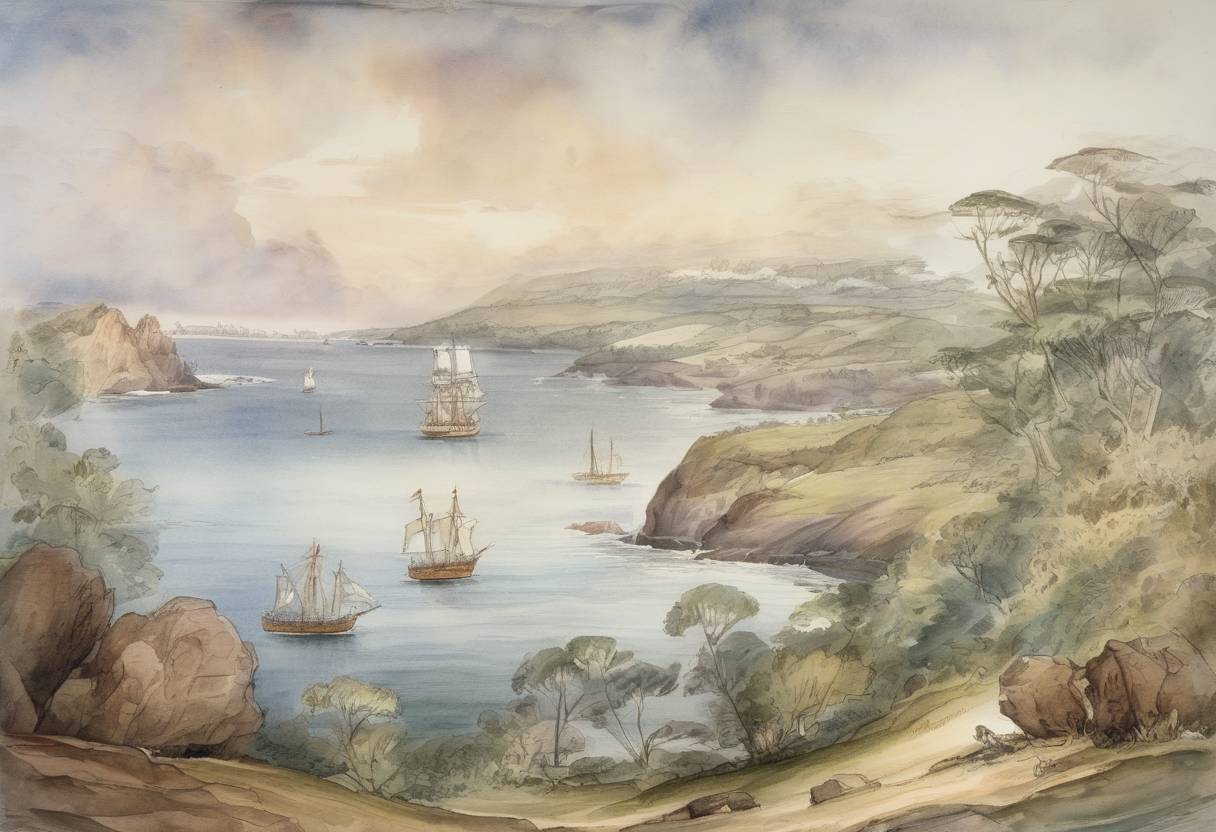
On April 19, 1770, Captain James Cook, a British explorer and navigator, made a significant historical contribution by sighting the eastern coast of what is now known as Australia. This event marked a pivotal moment in the European exploration of the Pacific and the eventual British colonization of Australia.
James Cook’s Mission: Captain Cook was on his first voyage aboard the HMS Endeavour, which began in 1768. The primary mission was to observe the transit of Venus across the sun from Tahiti, which was crucial for improving navigation and mapping techniques. Following this, Cook had secret orders from the British Admiralty to search for the hypothesized Terra Australis Incognita, or “unknown southern land.”
The Journey: After completing the astronomical observations in Tahiti, Cook sailed southward and reached New Zealand, where he spent several months mapping the coastline. He then set sail westward across the Tasman Sea, aiming to explore further.
Location: On April 19, 1770, Cook and his crew sighted the eastern coast of Australia near what is now known as Point Hicks, in the state of Victoria. This was the first recorded European sighting of the eastern coastline of the Australian continent.
Significance: Cook’s sighting and subsequent exploration of the coast laid the groundwork for detailed mapping and understanding of the region. It was a crucial step in the expansion of European knowledge about the Pacific and the lands beyond.
Botany Bay: After sighting the coast, Cook continued northward, eventually anchoring at a bay he named Botany Bay on April 29, 1770. This location was significant for its rich biodiversity, which intrigued the expedition’s naturalists, Joseph Banks and Daniel Solander.
Mapping the Coastline: Cook meticulously charted the eastern coastline of Australia, a task that took several months. His maps were remarkably accurate for the time and were used extensively in future explorations and colonization efforts.
British Colonization: Cook’s exploration of the eastern coast of Australia paved the way for British claims to the land. In 1788, the First Fleet arrived, establishing the first British colony at Port Jackson, now Sydney.
Indigenous Peoples: The arrival of Europeans had profound and lasting impacts on the Indigenous peoples of Australia. The subsequent colonization led to significant disruptions to their societies, cultures, and lands.
Legacy: Captain Cook’s voyages are remembered for their contributions to navigation, science, and European expansion. However, they also mark the beginning of a complex and often contentious history between European settlers and Indigenous Australians.
In summary, Captain James Cook’s sighting of the eastern coast of Australia on April 19, 1770, was a landmark event in the history of exploration. It set the stage for future developments that would shape the continent’s history and its peoples.
Source: en.wikipedia.org