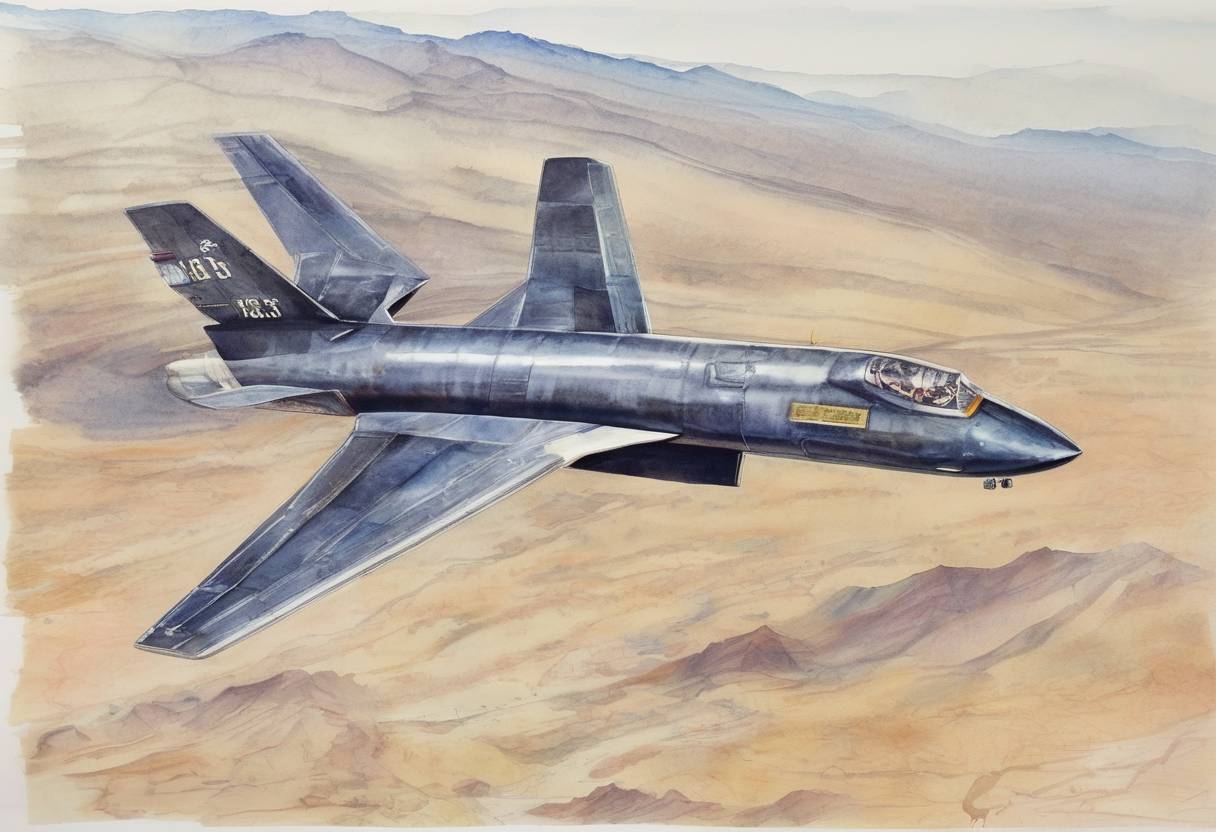
Joe Walker’s Historic X-15 Flight on July 19, 1963
On July 19, 1963, NASA test pilot Joseph A. Walker achieved a significant milestone in the history of space exploration by flying the North American X-15 rocket plane to a record altitude of 106,010 meters (347,800 feet). This flight marked Walker as the first human to enter space twice, a remarkable achievement during the early years of space exploration.
Background
The North American X-15 program was a joint venture between NASA, the U.S. Air Force, and the U.S. Navy, aimed at exploring the boundaries of flight in the upper atmosphere and near-space environments. The X-15 was a rocket-powered aircraft designed to reach the edge of space and gather valuable data on aerodynamics, flight control, and human factors in high-speed, high-altitude flight.
The Flight
- Date: July 19, 1963
- Pilot: Joseph A. Walker
- Aircraft: North American X-15
- Altitude Achieved: 106,010 meters (347,800 feet)
Walker’s flight was part of a series of missions intended to push the X-15 to its limits. The aircraft was launched from a B-52 bomber at high altitude, where its rocket engine was ignited. Walker piloted the X-15 to an altitude that qualified as space according to the U.S. definition at the time, which considered the boundary of space to be 50 miles (approximately 80.5 kilometers) above sea level.
Significance
- First Human to Enter Space Twice: Walker’s achievement of reaching space twice was a testament to the capabilities of the X-15 program and the skill of its pilots.
- Contributions to Space Exploration: The data collected from X-15 flights contributed significantly to the development of future spacecraft and the understanding of flight dynamics at the edge of space.
- Influence on Future Programs: The X-15 program laid the groundwork for subsequent space exploration efforts, including the Mercury, Gemini, and Apollo programs.
Aftermath
The success of the X-15 program demonstrated the feasibility of manned spaceflight and provided critical insights that informed the design and operation of later spacecraft. Joe Walker’s flights, along with those of his fellow pilots, helped establish the United States as a leader in aerospace technology during the Cold War era.
In recognition of his achievements, Walker was posthumously awarded astronaut wings by the U.S. Air Force in 2005, acknowledging his contributions to space exploration and his role in advancing human understanding of high-altitude flight.
Walker’s July 19, 1963, flight remains a landmark event in the history of aviation and space exploration, highlighting the daring and innovation that characterized the early years of the space race.