Charles I's Attempted Arrest of Five Members of Parliament - January 2, 1642
1642 · London, England
The King of England, Charles I, orders the arrest of members of Parliament, sparking a confrontation that leads to the English Civil War.
March 10, 1629
King Charles I of England dissolves Parliament, beginning the eleven-year period known as the Personal Rule.
London, England | Parliament of England
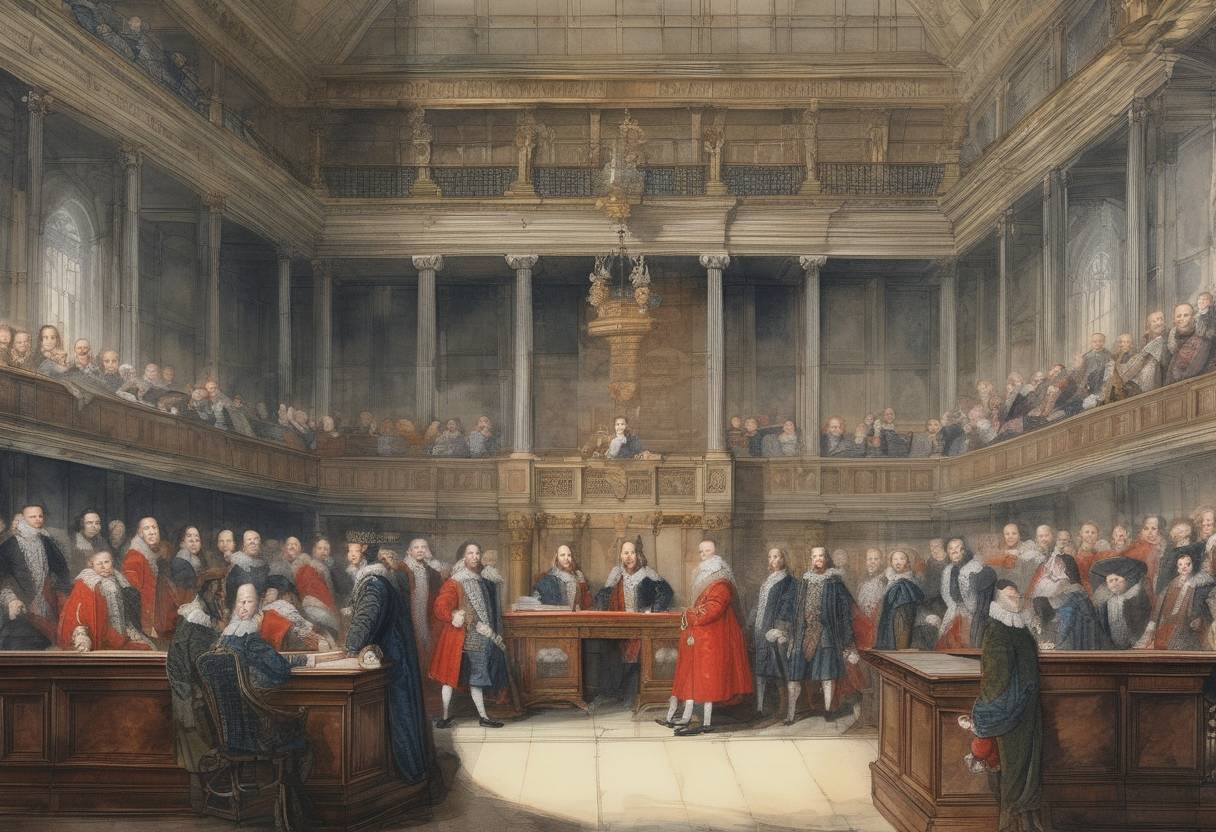
On March 10, 1629, King Charles I of England made a decisive move by dissolving Parliament, initiating an eleven-year period known as the Personal Rule, or sometimes referred to as the “Eleven Years’ Tyranny.” This event marked a significant turning point in English history, as it set the stage for increasing tensions between the monarchy and Parliament, eventually leading to the English Civil War.
Charles I’s Reign: Charles I ascended to the throne in 1625, inheriting a kingdom fraught with financial difficulties and religious tensions. His reign was characterized by a contentious relationship with Parliament, primarily over issues of taxation and royal prerogative.
Financial Struggles: The king’s need for funds to support military campaigns, particularly against Spain and France, led to repeated clashes with Parliament. Charles sought to raise money without parliamentary consent, which was met with resistance.
Religious Tensions: Charles’s marriage to Henrietta Maria, a Catholic French princess, and his support for high Anglican practices alienated many of his Protestant subjects, contributing to the growing distrust between the monarchy and Parliament.
Petition of Right (1628): In response to Charles’s methods of raising revenue, Parliament presented the Petition of Right, which sought to curb the king’s ability to levy taxes without parliamentary approval and to ensure the protection of civil liberties. Charles initially agreed but soon disregarded its provisions.
Final Straw: The immediate cause of the dissolution was Parliament’s continued insistence on addressing grievances against the king’s policies, particularly his collection of “tonnage and poundage” without consent. The tension culminated in a dramatic scene where members of the House of Commons held the Speaker in his chair to pass resolutions against the king’s actions.
March 10, 1629: Frustrated by Parliament’s defiance and determined to govern without its interference, Charles I dissolved Parliament. He declared his intention to rule without calling another Parliament, relying instead on alternative means of raising revenue.
Governance Without Parliament: During this period, Charles I attempted to govern through royal prerogative, utilizing mechanisms such as ship money, monopolies, and fines to generate income. These measures were deeply unpopular and seen as an overreach of royal authority.
Religious Policies: Charles, along with his Archbishop of Canterbury, William Laud, pursued religious reforms that leaned towards Arminianism, further alienating Puritans and other Protestant groups.
Growing Discontent: The king’s autocratic style and financial policies bred widespread resentment, setting the stage for future conflict. The Personal Rule ended in 1640 when Charles was forced to call the Short Parliament due to a rebellion in Scotland, known as the Bishops’ Wars.
The dissolution of Parliament in 1629 and the subsequent Personal Rule were pivotal in the lead-up to the English Civil War. Charles I’s actions highlighted the deep-seated issues of governance, finance, and religion that plagued his reign. The period underscored the struggle for power between the monarchy and Parliament, ultimately contributing to the constitutional changes that followed the Civil War and the eventual establishment of a constitutional monarchy in England.
Source: en.wikipedia.org