NASA Launch of InSight Lander to Mars
2018 · Vandenberg Air Force Base, United States
NASA launched the InSight lander to Mars, aimed at studying the planet's interior to better understand its structure and evolution.
February 11, 2021
The United Arab Emirates' Hope Probe successfully entered Mars' orbit, marking the Arab world's first interplanetary mission.
Mars Orbit, United Arab Emirates | UAE Space Agency
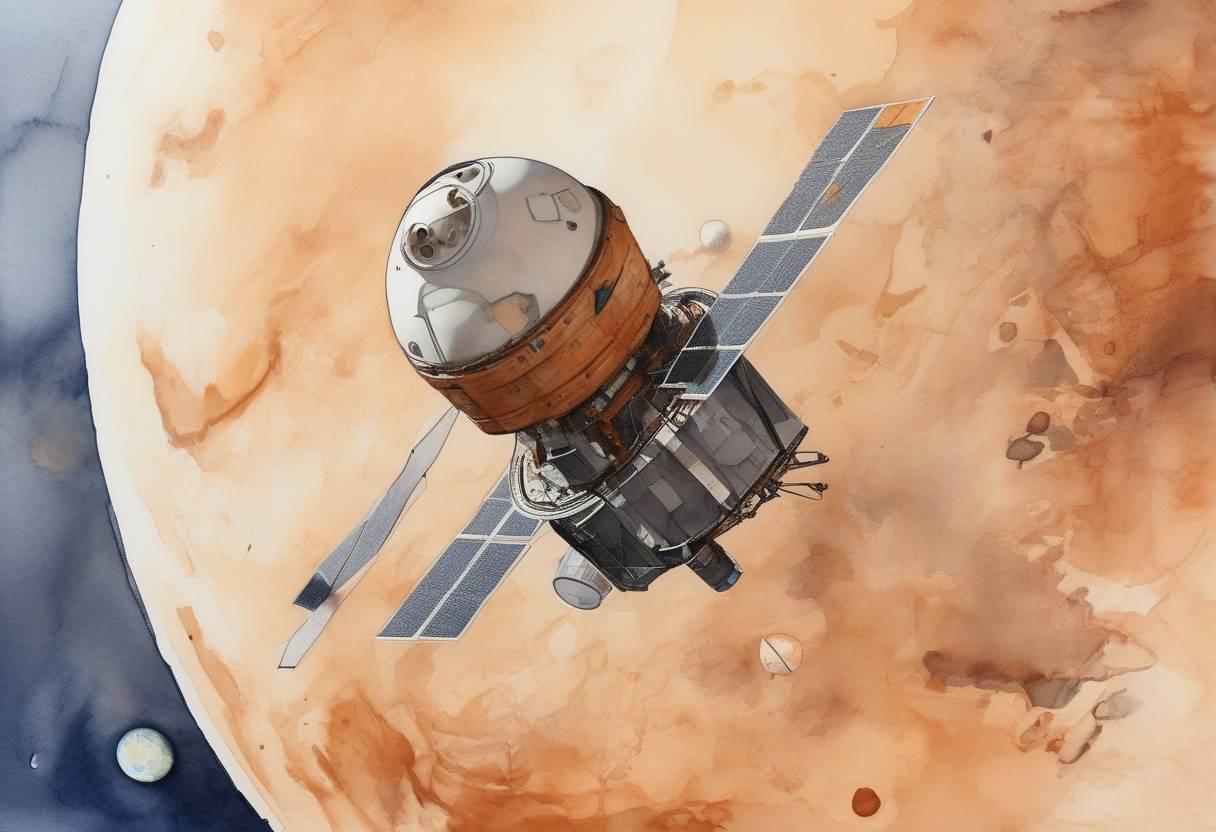
On February 11, 2021, the United Arab Emirates’ Hope Probe successfully entered the orbit of Mars, marking a significant milestone as the Arab world’s first interplanetary mission. This achievement placed the UAE among a select group of nations that have reached the Red Planet, showcasing its growing capabilities in space exploration.
The Hope Probe, also known as the Emirates Mars Mission (EMM), was launched on July 20, 2020, from the Tanegashima Space Center in Japan. The mission was developed by the Mohammed bin Rashid Space Centre in collaboration with international partners, including the University of Colorado Boulder, Arizona State University, and the University of California, Berkeley.
The mission was part of the UAE’s broader strategy to diversify its economy and develop its scientific and technological sectors. It also aimed to inspire a new generation of scientists and engineers in the Arab world.
The primary scientific objectives of the Hope Probe were to study the Martian atmosphere and climate. The mission sought to provide a comprehensive understanding of the Martian weather system, including the dynamics of the lower atmosphere and the loss of hydrogen and oxygen into space. This data would help scientists understand the planet’s climate changes and its potential for supporting life.
The Hope Probe traveled approximately 493 million kilometers (about 306 million miles) over seven months to reach Mars. The journey required precise navigation and timing to ensure the spacecraft could enter Mars’ orbit successfully.
The critical phase of the mission was the Mars Orbit Insertion (MOI), which involved a complex maneuver to slow down the spacecraft from its cruising speed of over 121,000 kilometers per hour (about 75,000 miles per hour) to allow it to be captured by Mars’ gravity. This was achieved by firing the spacecraft’s thrusters for 27 minutes, reducing its speed to about 18,000 kilometers per hour (around 11,200 miles per hour).
The successful insertion of the Hope Probe into Mars’ orbit was a historic achievement for the UAE and the Arab world. It demonstrated the UAE’s commitment to advancing scientific knowledge and contributing to global space exploration efforts. The mission also served as a source of inspiration and pride for the region, highlighting the potential for collaboration and innovation in addressing complex challenges.
Following its successful orbit insertion, the Hope Probe began its scientific mission, collecting and transmitting data back to Earth. The information gathered by the probe is expected to provide valuable insights into Mars’ atmosphere and climate, contributing to the global understanding of the planet.
The success of the Hope Probe has positioned the UAE as a significant player in the field of space exploration and has paved the way for future missions and collaborations. It has also encouraged other nations in the region to invest in space science and technology, fostering a spirit of innovation and exploration.
In summary, the Hope Probe’s entry into Mars’ orbit on February 11, 2021, was a landmark event that underscored the UAE’s ambitions in space exploration and its commitment to contributing to scientific advancements on a global scale.
Source: www.bbc.com