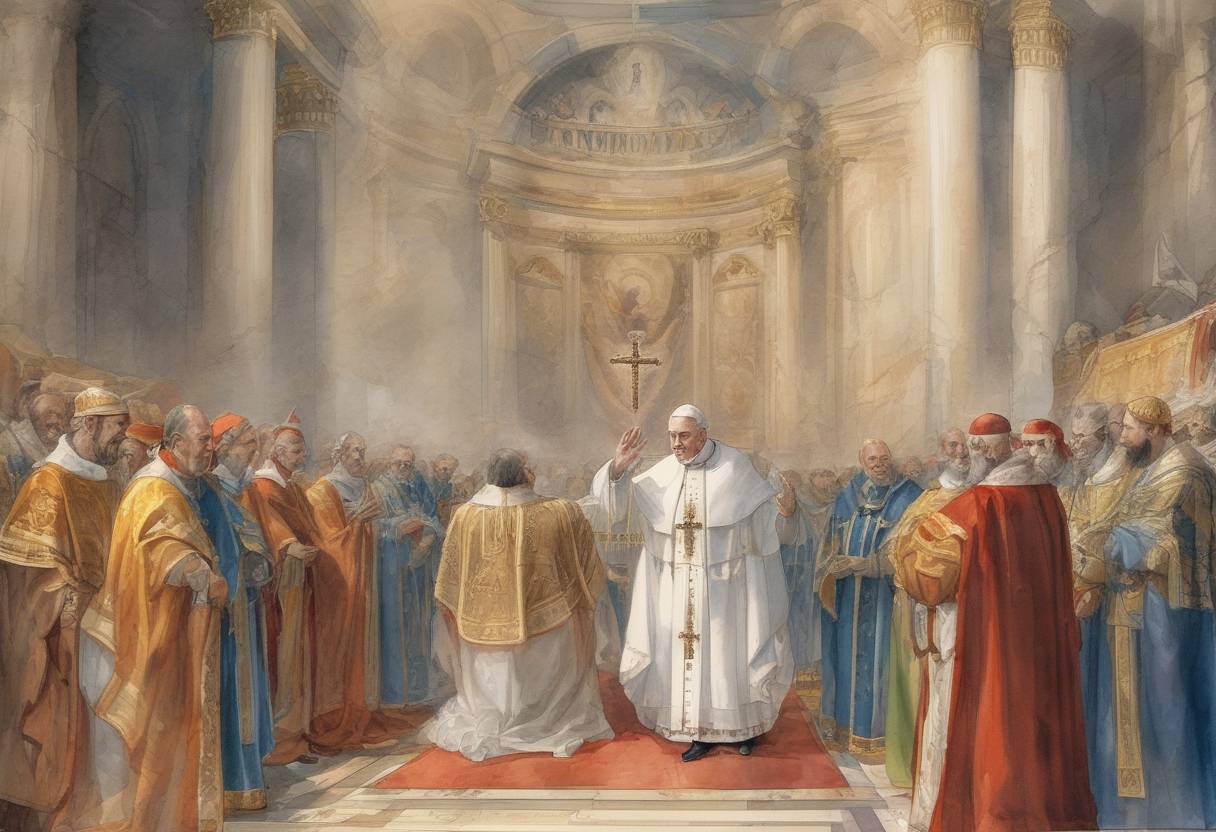
Sergius III Becomes Pope on January 29, 904
On January 29, 904, Sergius III ascended to the papacy, marking the beginning of a tumultuous period in the history of the Catholic Church known as the Saeculum Obscurum, or the “dark age” of the papacy. This era was characterized by significant corruption and the undue influence of powerful Roman families over the papal office.
Background
Before Sergius III’s rise to power, the papacy was embroiled in a series of conflicts and power struggles. Pope Leo V, who reigned briefly in 903, was overthrown by Antipope Christopher, a cleric who seized the papal throne. This period was marked by instability and competing claims to the papacy, reflecting the broader political chaos in Rome and the surrounding regions.
Sergius III’s Ascension
Sergius III, a member of the Roman aristocracy, had previously been a contender for the papacy. His ascent was facilitated by the powerful Theophylact family, who wielded considerable influence in Rome. With their backing, Sergius III was able to depose Antipope Christopher, who was imprisoned and later died under mysterious circumstances, possibly executed on Sergius’s orders.
The Saeculum Obscurum
Sergius III’s papacy is often cited as the beginning of the Saeculum Obscurum, a period lasting roughly from 904 to 964. This era was marked by:
- Corruption and Nepotism: The papacy was heavily influenced by Roman noble families, particularly the Theophylacts, who used their power to control the papal office for their own benefit.
- Moral Decay: The period saw a decline in the moral authority of the papacy, with many popes accused of leading scandalous lives.
- Political Intrigue: The papacy became entangled in the political machinations of the time, often serving the interests of powerful Roman families rather than the broader Christian community.
Historical Significance
The papacy of Sergius III and the subsequent Saeculum Obscurum had long-lasting effects on the Catholic Church. It highlighted the vulnerabilities of the papal office to external influences and set the stage for future reforms. The period is often contrasted with later efforts to restore the spiritual and moral authority of the papacy, culminating in the Gregorian Reforms of the 11th century.
Sergius III’s reign is a reminder of the complex interplay between religion and politics in medieval Europe, and the challenges faced by the Church in maintaining its independence and integrity amidst external pressures.