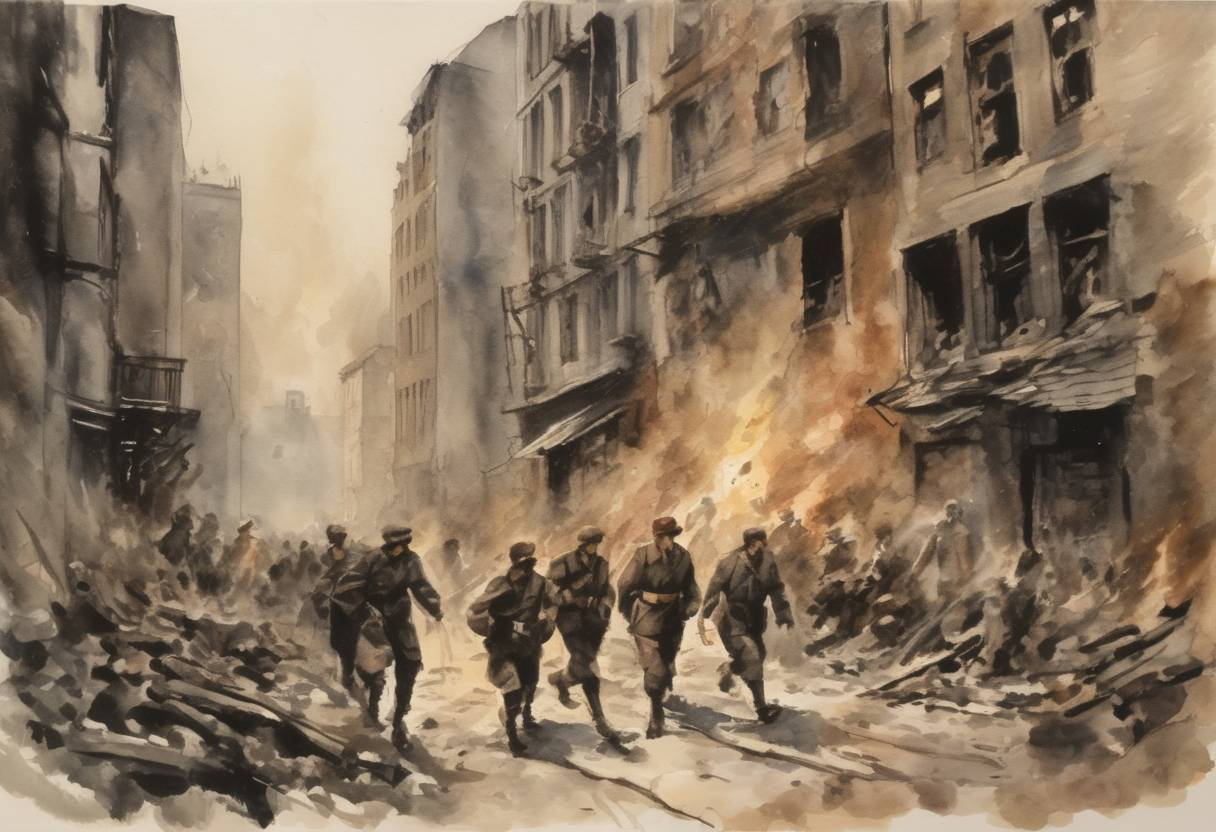
The Warsaw Ghetto Uprising: Conclusion and Aftermath
The Warsaw Ghetto Uprising, a pivotal act of Jewish resistance during the Holocaust, concluded on May 16, 1943, not August 2, 1943. However, the date you mentioned, August 2, 1943, is significant for another act of Jewish resistance: the revolt at the Treblinka extermination camp. Below, I provide details on both events for clarity.
Warsaw Ghetto Uprising
Background
- Establishment of the Ghetto: The Warsaw Ghetto was established by Nazi Germany in October 1940, confining over 400,000 Jews in a small area of Warsaw, Poland.
- Conditions: The ghetto was characterized by overcrowding, starvation, and disease, with many residents deported to extermination camps like Treblinka.
The Uprising
- Start: The uprising began on April 19, 1943, as German forces attempted to liquidate the ghetto.
- Jewish Resistance: Led by the Jewish Combat Organization (ŻOB) and the Jewish Military Union (ŻZW), the resistance fighters, armed with limited weapons, engaged in fierce combat against the better-equipped German troops.
- Duration: The uprising lasted nearly a month, with Jewish fighters employing guerrilla tactics and using the ghetto’s maze-like structure to their advantage.
Conclusion
- End of the Uprising: On May 16, 1943, the Germans declared the end of the uprising by destroying the Great Synagogue of Warsaw, symbolizing the obliteration of the ghetto.
- Casualties: Thousands of Jews were killed during the uprising, and the remaining survivors were deported to concentration and extermination camps.
Significance
- Symbol of Resistance: The uprising became a powerful symbol of resistance against Nazi oppression and highlighted the courage and resilience of the Jewish people.
- Historical Impact: It inspired other acts of resistance and remains a poignant reminder of the human spirit’s capacity to fight against tyranny.
Treblinka Extermination Camp Revolt
Background
- Treblinka: One of the most notorious Nazi extermination camps, where approximately 870,000 Jews were murdered.
- Conditions: Prisoners faced brutal conditions, with mass executions being a daily occurrence.
The Revolt
- Date: The revolt took place on August 2, 1943.
- Planning: A group of prisoners, aware of their impending deaths, meticulously planned an uprising to escape and destroy the camp.
- Execution: Prisoners seized weapons from the camp’s armory, set buildings on fire, and attempted to break through the barbed wire fences.
Aftermath
- Escape and Casualties: Approximately 200 prisoners managed to escape, but many were recaptured and killed. Only about 70 survived the war.
- Impact: The revolt disrupted the camp’s operations and contributed to its eventual closure in October 1943.
Both the Warsaw Ghetto Uprising and the Treblinka revolt are significant events in the history of Jewish resistance during the Holocaust, demonstrating the resilience and bravery of those who fought against overwhelming odds.