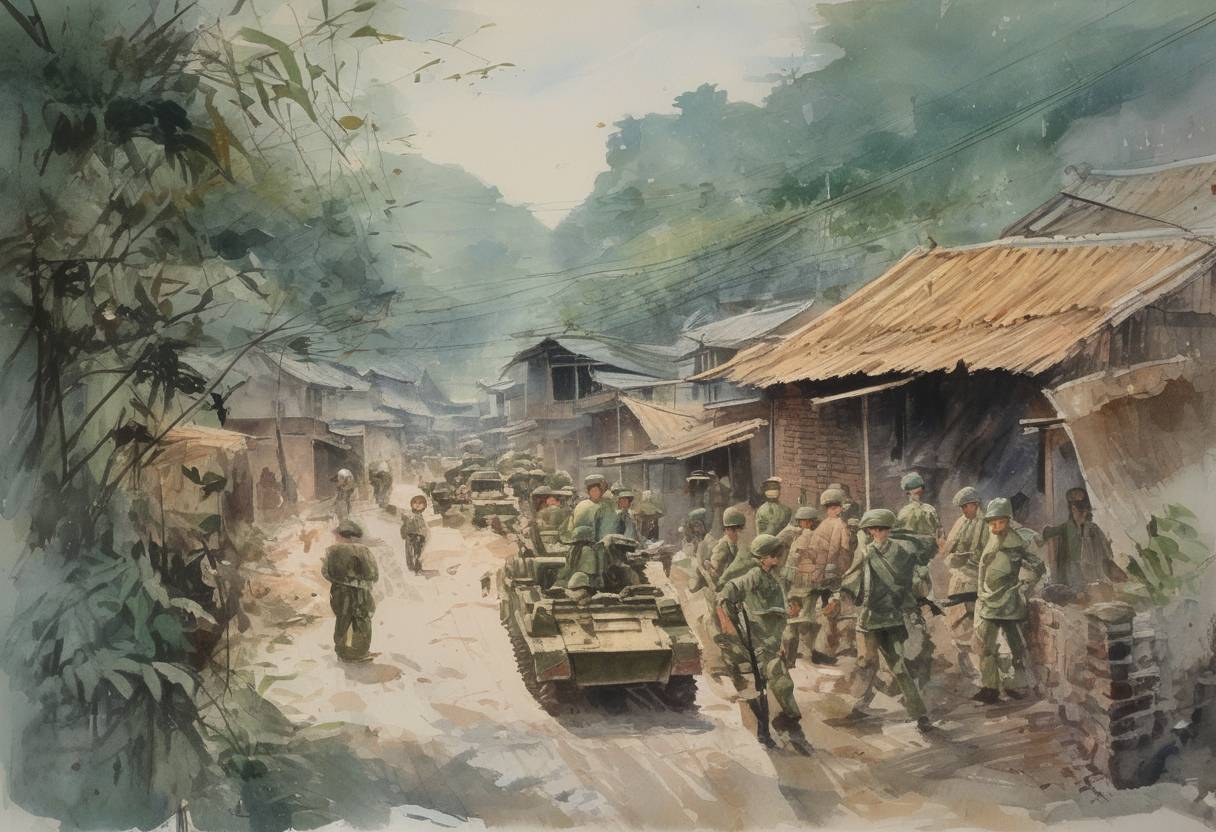
The Sino-Vietnamese War: February 17, 1979
Background
The Sino-Vietnamese War, which began on February 17, 1979, was a brief but intense conflict between the People’s Republic of China and the Socialist Republic of Vietnam. The roots of the conflict can be traced back to several geopolitical tensions and historical grievances:
Vietnam’s Relationship with the Soviet Union: By the late 1970s, Vietnam had aligned itself closely with the Soviet Union, China’s rival in the communist world. This alliance was solidified when Vietnam signed a Treaty of Friendship and Cooperation with the Soviet Union in 1978.
Vietnam’s Invasion of Cambodia: In December 1978, Vietnam invaded Cambodia to oust the Khmer Rouge regime, which was supported by China. The Vietnamese occupation of Cambodia was seen by China as a threat to its influence in Southeast Asia.
Historical Tensions: Historical animosities between China and Vietnam, dating back centuries, also played a role. The two countries had a long history of conflict and territorial disputes.
The Conflict
On February 17, 1979, China launched a large-scale military invasion of northern Vietnam. The Chinese People’s Liberation Army (PLA) mobilized approximately 200,000 troops, supported by tanks and artillery, and attacked across the Sino-Vietnamese border.
Key Events
Initial Assault: The Chinese forces quickly advanced into Vietnamese territory, capturing several border towns and cities, including Lạng Sơn and Cao Bằng.
Vietnamese Resistance: Despite being outnumbered, the Vietnamese People’s Army (VPA) mounted a fierce resistance. The Vietnamese forces, many of whom were battle-hardened from the Vietnam War, utilized guerrilla tactics and their knowledge of the terrain to slow the Chinese advance.
Casualties and Destruction: The war was characterized by intense and brutal fighting, resulting in significant casualties on both sides. Estimates suggest that tens of thousands of soldiers and civilians were killed or wounded.
Aftermath
Chinese Withdrawal: After about a month of fighting, China declared its punitive mission accomplished and began withdrawing its troops on March 16, 1979. The withdrawal was completed by March 18, 1979.
Political Consequences: The war strained Sino-Vietnamese relations for years to come. It also highlighted the complexities of Cold War alliances, as the conflict involved not just regional powers but also the broader Soviet-Chinese rivalry.
Impact on Vietnam and Cambodia: Vietnam maintained its military presence in Cambodia until 1989, despite international pressure and continued border skirmishes with China.
Broader Historical Significance
The Sino-Vietnamese War underscored the shifting dynamics of Cold War geopolitics in Asia. It demonstrated China’s willingness to use military force to assert its regional interests and marked a significant moment in the post-Vietnam War era, influencing the strategic calculations of neighboring countries and superpowers alike.
The conflict also had long-term implications for China’s military strategy and modernization efforts, as the PLA’s performance revealed several deficiencies that prompted subsequent reforms.
Overall, the Sino-Vietnamese War remains a significant episode in the history of Southeast Asia, reflecting the complex interplay of regional and global forces during the late 20th century.