French Army's March in Egypt Under General Kléber – September 24, 1800
1800 · Cairo, Egypt
The French army under General Jean Baptiste Kléber began the march to recapture Egypt's towns from Ottoman forces following Napoleon's departure.
March 21, 1800
The Battle of Heliopolis took place during the French Revolutionary Wars, where French forces under General Jean-Baptiste Kléber defeated the Ottoman army near Cairo, Egypt. This battle was part of the French campaign in Egypt and Syria.
Heliopolis, Egypt | French Army
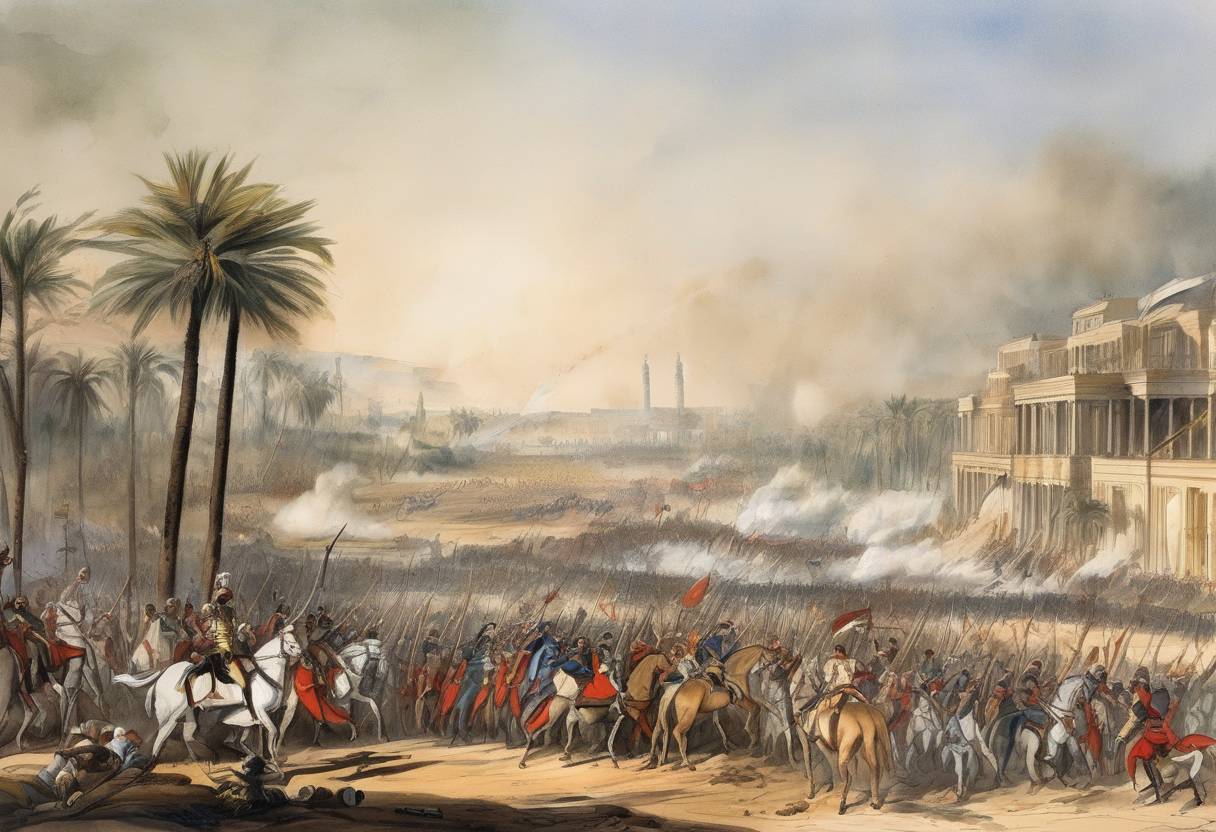
The Battle of Heliopolis, fought on March 21, 1800, was a significant engagement during the French Revolutionary Wars, specifically within the context of the French campaign in Egypt and Syria. This battle saw French forces, led by General Jean-Baptiste Kléber, achieve a decisive victory over the Ottoman army near Cairo, Egypt.
French Campaign in Egypt and Syria: Initiated by Napoleon Bonaparte in 1798, the campaign aimed to disrupt British trade routes to India and establish French influence in the region. After initial successes, including the capture of Cairo, the French faced increasing resistance from local forces and the Ottomans, who sought to reclaim control over Egypt.
Napoleon’s Departure: By August 1799, Napoleon had left Egypt to return to France, leaving General Kléber in command of the French forces. Kléber inherited a challenging situation, with dwindling supplies, a hostile local population, and the looming threat of an Ottoman counter-offensive.
Ottoman Forces: The Ottoman army, commanded by Grand Vizier Kör Yusuf Ziyaüddin Pasha, was determined to expel the French from Egypt. The Ottomans amassed a substantial force, estimated at around 60,000 troops, including cavalry and artillery.
French Strategy: Despite being outnumbered, Kléber’s forces, numbering approximately 10,000, were well-disciplined and strategically positioned. Kléber utilized his troops’ superior training and the element of surprise to counter the Ottoman advance.
Engagement: The battle commenced near the ancient city of Heliopolis, close to modern-day Cairo. Kléber executed a bold and decisive attack, exploiting weaknesses in the Ottoman lines. The French forces managed to break through the Ottoman center, causing disarray and leading to a rout of the Ottoman troops.
French Victory: The victory at Heliopolis solidified French control over Egypt temporarily, allowing Kléber to re-establish order and negotiate a temporary armistice with the Ottomans.
Kléber’s Assassination: Despite the victory, Kléber’s tenure was short-lived. He was assassinated on June 14, 1800, by a Syrian student, which further destabilized the French position in Egypt.
End of the Campaign: The French campaign in Egypt ultimately concluded with the withdrawal of French forces in 1801, following a series of defeats and diplomatic negotiations.
Historical Impact: The Battle of Heliopolis highlighted the tactical prowess of the French military during the Revolutionary Wars and underscored the challenges of sustaining a colonial campaign far from home. It also set the stage for the eventual British dominance in Egypt.
The Battle of Heliopolis remains a notable example of military strategy and the complexities of colonial ambitions during the era of the French Revolutionary Wars.
Source: en.wikipedia.org