Umberto I Crowned King of Italy: January 9, 1878
1878 · Rome, Italy
Umberto I is crowned King of Italy.
May 26, 1805
Napoleon Bonaparte is crowned King of Italy with the Iron Crown of Lombardy in the Cathedral of Milan.
Milan, Italy | First French Empire
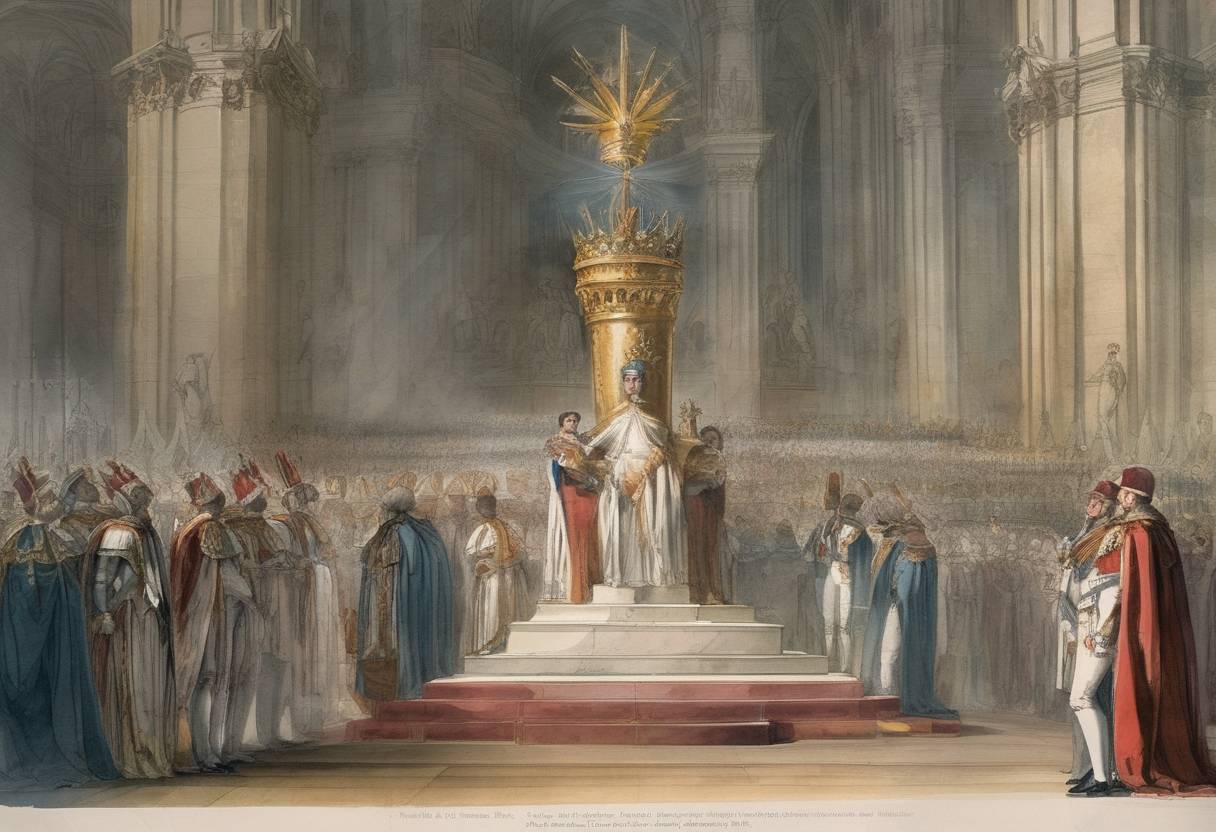
On May 26, 1805, Napoleon Bonaparte was crowned King of Italy in a grand ceremony held at the Cathedral of Milan. This event marked a significant moment in European history, as it further solidified Napoleon’s influence and control over the Italian Peninsula.
Napoleonic Wars: By 1805, Europe was deeply embroiled in the Napoleonic Wars, a series of conflicts involving Napoleon’s French Empire and various European coalitions. Napoleon’s military campaigns had already led to significant territorial expansions for France.
Cisalpine Republic: Before becoming the Kingdom of Italy, the region was known as the Cisalpine Republic, a sister republic of France established in 1797. It was reorganized into the Italian Republic in 1802, with Napoleon as its president.
Strategic Importance: Italy was of strategic importance to Napoleon, providing a buffer against Austria and a base for further military operations in Europe.
Location: The ceremony took place in the magnificent Cathedral of Milan, a symbol of religious and political power in Northern Italy.
The Iron Crown of Lombardy: Napoleon was crowned with the Iron Crown of Lombardy, a relic of great historical significance. Traditionally used in the coronation of Lombard and later Holy Roman Emperors, the crown symbolized the continuity of imperial authority in Italy.
Symbolism: By crowning himself King of Italy, Napoleon aimed to legitimize his rule and assert his dominance over the Italian territories. The act was both a political maneuver and a demonstration of his ambition to reshape Europe.
Kingdom of Italy: The coronation led to the formal establishment of the Kingdom of Italy, with Napoleon as its monarch. This kingdom included much of Northern Italy and was a satellite state of the French Empire.
Political Reorganization: Napoleon implemented various administrative and legal reforms in the Kingdom of Italy, mirroring those in France. These changes aimed to modernize the region and integrate it more closely with the French Empire.
European Reactions: The coronation further strained relations with other European powers, particularly Austria, which had interests in Italy. It contributed to the ongoing tensions that would lead to the War of the Third Coalition later in 1805.
Napoleon’s coronation as King of Italy was a testament to his ambition and strategic acumen. It reflected his desire to consolidate power and influence across Europe, reshaping the continent’s political landscape. The event also highlighted the complex interplay of nationalism, imperial ambition, and the quest for legitimacy that characterized the Napoleonic era.
Source: en.wikipedia.org