Appointment of Pope Leo VIII on December 6, 963
963 · Rome, Italy
Pope Leo VIII is appointed as pope by Emperor Otto I, marking a significant moment in the history of the papacy and the Holy Roman Empire.
November 23, 0800
Charlemagne arrives in Rome at the invitation of Pope Leo III, setting the stage for his coronation as Emperor of the Romans on Christmas Day of the same year.
Rome, Italy | Frankish Empire
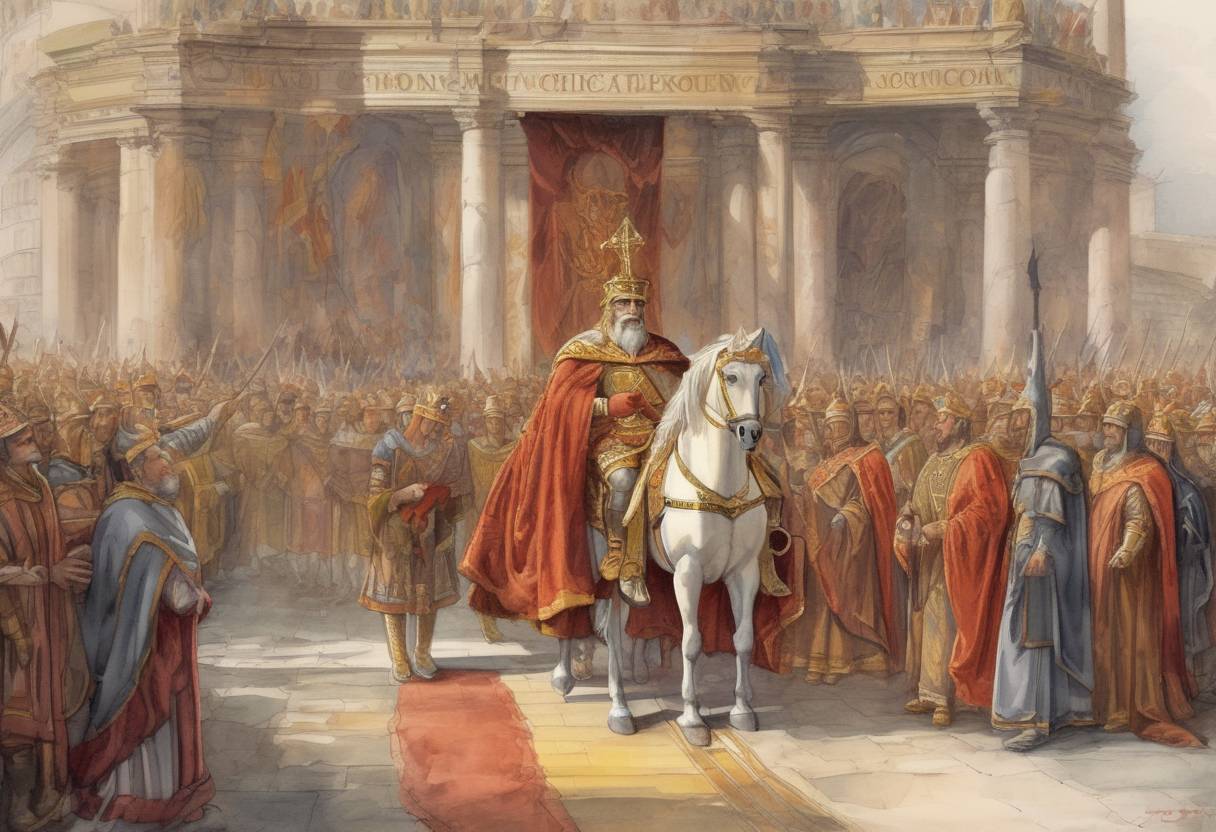
On November 23, 800, Charlemagne, the King of the Franks and Lombards, arrived in Rome at the invitation of Pope Leo III. This event was a pivotal moment in medieval European history, setting the stage for Charlemagne’s coronation as Emperor of the Romans on Christmas Day of the same year.
Charlemagne’s Reign: Charlemagne, also known as Charles the Great, had been expanding his kingdom since becoming king in 768. By 800, he had consolidated a vast territory that included much of Western and Central Europe.
Pope Leo III: Leo III became pope in 795. His papacy was marked by internal strife and opposition from Roman nobility, who questioned his legitimacy and authority.
The Invitation: In 799, Pope Leo III was attacked by Roman nobles and fled to Charlemagne’s court seeking protection. Charlemagne, recognizing the opportunity to strengthen his influence over the papacy and the Christian world, agreed to support Leo.
Charlemagne’s Support: Charlemagne provided military and political support to Pope Leo III, helping him regain control over Rome. This alliance was mutually beneficial, as it reinforced Leo’s position and expanded Charlemagne’s influence.
Journey to Rome: Charlemagne’s journey to Rome was a significant diplomatic and political maneuver. It demonstrated his commitment to the papacy and his role as a protector of the Church.
Significance: Charlemagne’s arrival in Rome was a grand affair, underscoring his power and the importance of his relationship with the papacy. It was a precursor to the events that would unfold a month later.
Preparations for Coronation: During his stay in Rome, Charlemagne engaged in discussions with Pope Leo III, setting the groundwork for his coronation as Emperor. This coronation would symbolize the fusion of Roman, Christian, and Germanic elements, marking the revival of the Western Roman Empire.
Coronation as Emperor: On December 25, 800, Charlemagne was crowned “Emperor of the Romans” by Pope Leo III in St. Peter’s Basilica. This event marked the beginning of the Carolingian Empire and the Holy Roman Empire, influencing European politics for centuries.
Legacy: Charlemagne’s coronation established the precedent of papal involvement in imperial coronations, highlighting the intertwined nature of religious and secular power in medieval Europe. It also reinforced the idea of a unified Christian empire in the West.
Charlemagne’s arrival in Rome and subsequent coronation had profound implications for the political and religious landscape of Europe, shaping the course of medieval history and laying the foundations for the future Holy Roman Empire.
Source: en.wikipedia.org