The Siege of Nicaea Ends - July 1, 1097
1097 · Nicaea, Byzantine Empire
The Siege of Nicaea ends as the city surrenders to the Crusaders during the First Crusade.
July 31, 0904
The Sack of Thessalonica occurred when Saracen pirates led by Leo of Tripoli captured the city of Thessalonica, the second-largest city of the Byzantine Empire, after a short siege. The city was plundered, and a large number of inhabitants were taken as slaves.
Thessalonica, Byzantine Empire | Saracen pirates
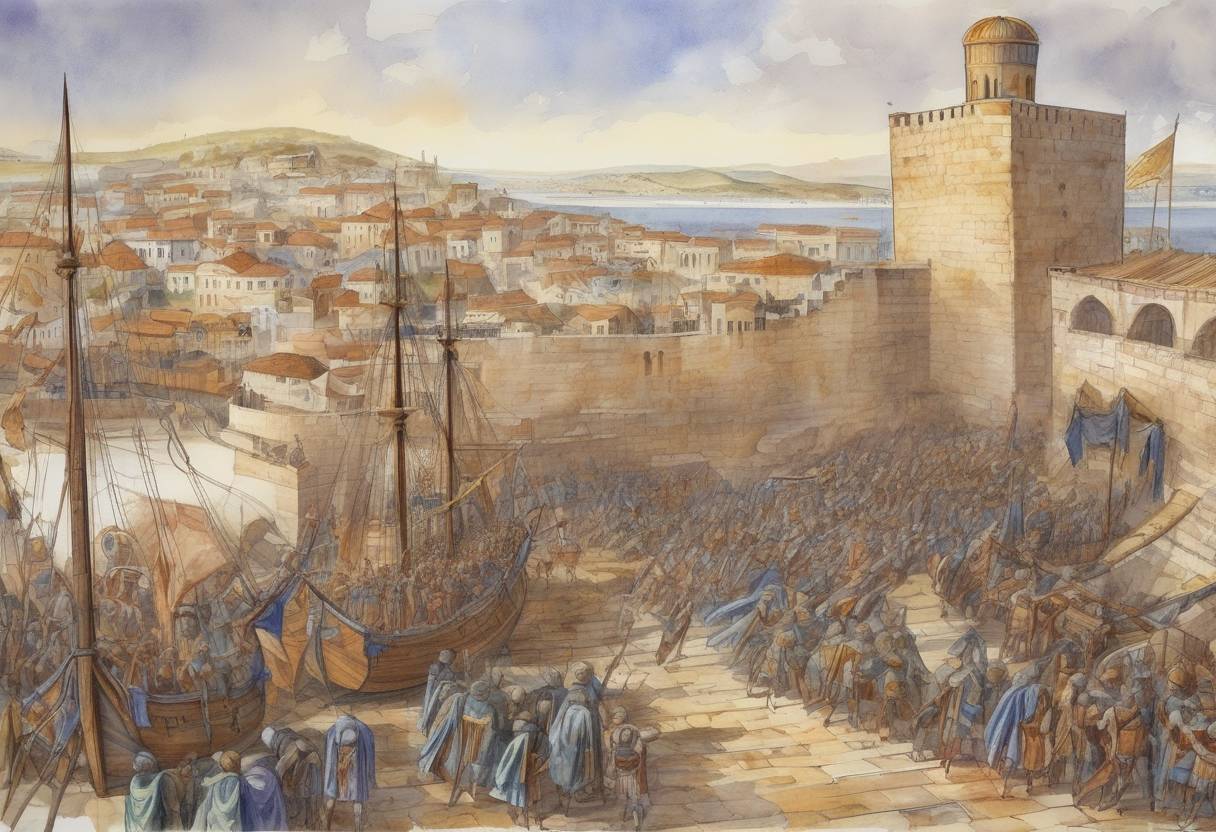
The Sack of Thessalonica on July 31, 904, was a significant event in the history of the Byzantine Empire, marking a devastating raid by Saracen pirates led by the renegade Greek convert to Islam, Leo of Tripoli. This event underscored the vulnerabilities of the Byzantine Empire during this period and had lasting impacts on the region.
Thessalonica, the second-largest city of the Byzantine Empire after Constantinople, was a vital economic and strategic hub. Its location made it a prime target for raids, especially during a time when the Byzantine Empire was frequently challenged by external threats.
The attack on Thessalonica was swift and brutal. Leo of Tripoli’s fleet, composed of agile and well-armed ships, approached the city with little warning. The Byzantine defenses were caught off guard, and the city fell after a short siege.
Once inside, the Saracen pirates plundered Thessalonica extensively. They looted wealth and treasures, causing significant economic damage. Moreover, a large number of the city’s inhabitants were captured and taken as slaves, a common practice in raids during this period, which further devastated the local population.
The sack of Thessalonica had several immediate and long-term effects:
The sack of Thessalonica was a stark reminder of the Byzantine Empire’s vulnerabilities during the early 10th century. It demonstrated the reach and impact of Saracen naval power in the Mediterranean and underscored the ongoing conflict between the Byzantine Empire and Muslim forces. This event also contributed to the Byzantine efforts to strengthen their military and fortifications in subsequent years.
In summary, the Sack of Thessalonica in 904 was a pivotal event that had significant repercussions for the Byzantine Empire, influencing its military policies and highlighting the persistent threats it faced from external forces.
Source: en.wikipedia.org