Release of the Intel 486DX2 Microprocessor
1991 · Santa Clara, United States
Intel released the first Intel 486DX2 microprocessor, marking a significant advancement in computer processing technology.
March 22, 1993
The Intel Corporation produced the first Pentium microprocessor, marking a significant advancement in computer technology.
Santa Clara, United States | Intel Corporation
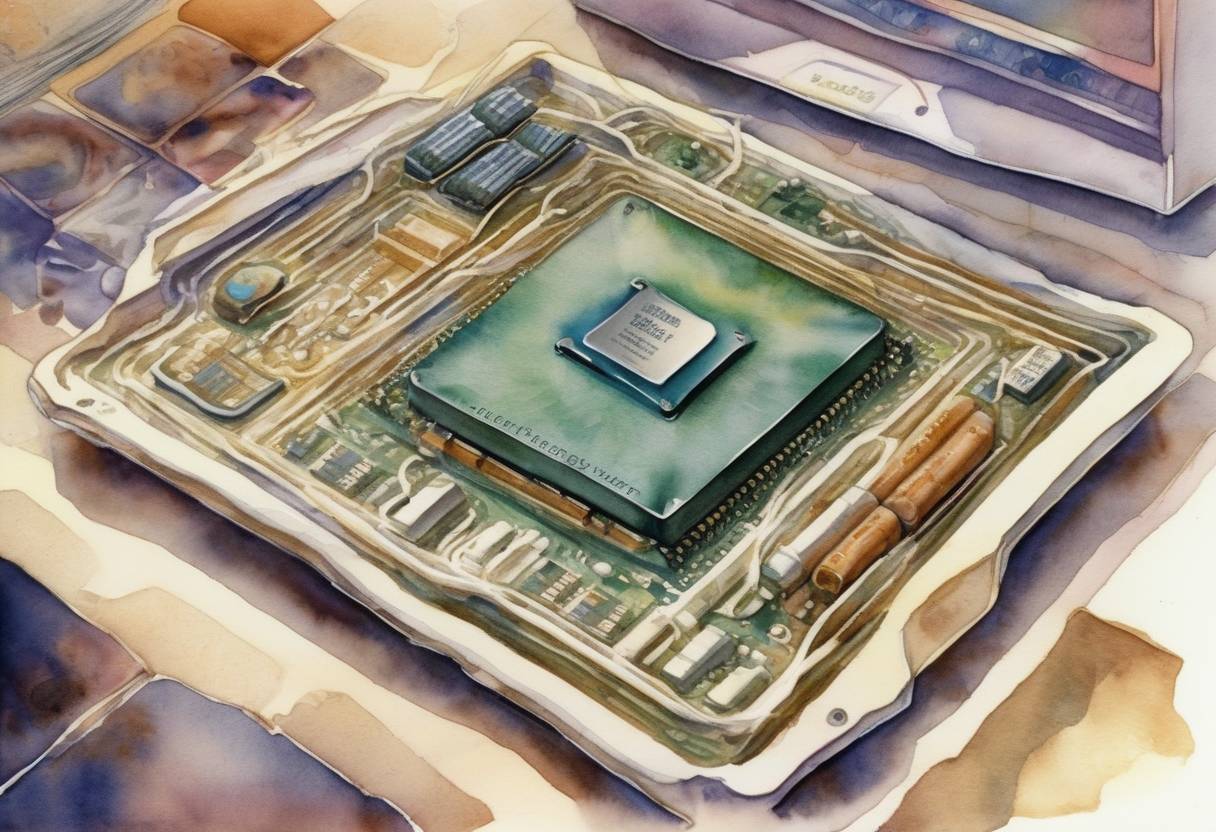
On March 22, 1993, Intel Corporation introduced the Pentium microprocessor, a pivotal advancement in computer technology that significantly enhanced computing power and efficiency. This launch marked a major milestone in the evolution of personal computing and set the stage for future innovations in the industry.
Before the Pentium, Intel had already established itself as a leader in the microprocessor market with its 386 and 486 processors. However, the increasing demand for more powerful and efficient computing capabilities led Intel to develop a new generation of processors. The Pentium was designed to address these needs by offering improved performance, greater speed, and enhanced capabilities.
Superscalar Architecture: The Pentium was Intel’s first processor to use a superscalar architecture, allowing it to execute multiple instructions per clock cycle. This significantly increased the processing speed compared to its predecessors.
64-bit Data Bus: The Pentium featured a 64-bit data bus, which enabled faster data transfer rates and improved overall system performance.
Integrated Floating-Point Unit (FPU): The processor included an integrated FPU, which enhanced its ability to perform complex mathematical calculations, making it ideal for applications requiring high computational power.
Enhanced Multimedia Capabilities: With its improved architecture, the Pentium was better suited for multimedia applications, including graphics and audio processing.
The introduction of the Pentium microprocessor had a profound impact on both the consumer and business markets. It enabled the development of more powerful personal computers, which in turn facilitated advancements in software applications, gaming, and multimedia content creation. The Pentium’s performance improvements also contributed to the growth of the internet and the expansion of digital communication technologies.
Following the success of the Pentium, Intel continued to innovate, releasing subsequent generations of processors that further pushed the boundaries of computing technology. The Pentium brand became synonymous with high performance and reliability, solidifying Intel’s position as a dominant force in the microprocessor industry.
The Pentium’s introduction in 1993 set a new standard for computing power and efficiency, influencing the design and development of future processors. It played a crucial role in shaping the modern computing landscape, making advanced technology accessible to a broader audience and paving the way for the digital age.
In summary, the launch of the Intel Pentium microprocessor on March 22, 1993, was a landmark event in the history of computing, marking a significant leap forward in processing power and setting the foundation for future technological advancements.
Source: en.wikipedia.org