Conviction of Sirhan Sirhan for the Assassination of Robert F. Kennedy
1969 · Los Angeles, United States
Sirhan Sirhan was convicted of assassinating United States Senator Robert F. Kennedy.
June 5, 1968
Robert F. Kennedy is shot at the Ambassador Hotel in Los Angeles.
Los Angeles, United States | Democratic Party
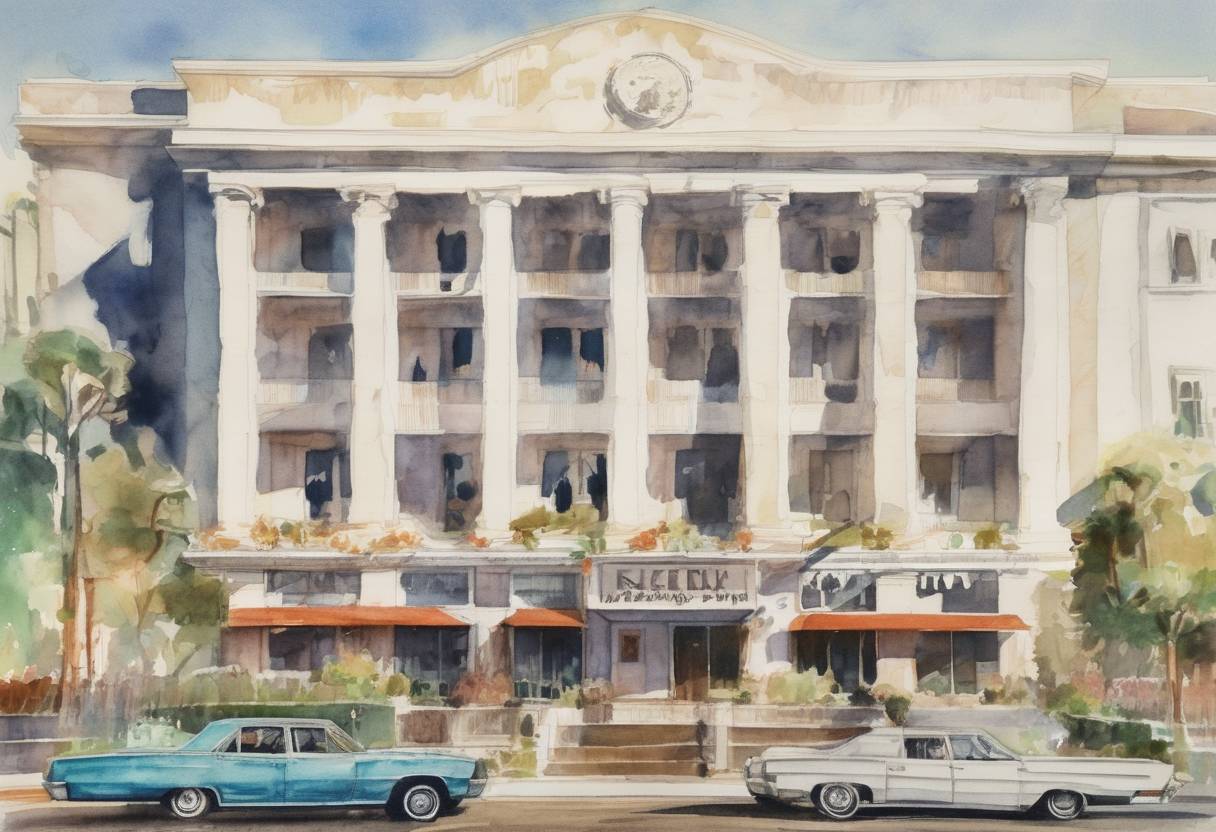
On June 5, 1968, a pivotal and tragic event unfolded in American history when Senator Robert F. Kennedy was shot at the Ambassador Hotel in Los Angeles, California. This event marked a significant moment in the turbulent political landscape of the 1960s.
Robert F. Kennedy, often referred to as “Bobby,” was a prominent political figure and the younger brother of President John F. Kennedy. Following his brother’s assassination in 1963, Robert Kennedy served as a U.S. Senator from New York and became a leading figure in the Democratic Party. In 1968, he announced his candidacy for the presidency, campaigning on a platform of civil rights, social justice, and opposition to the Vietnam War.
The 1968 presidential campaign was marked by widespread social unrest, including the civil rights movement, anti-Vietnam War protests, and the assassination of civil rights leader Martin Luther King Jr. in April of the same year. Kennedy’s campaign resonated with many Americans who were seeking change and unity during this period of upheaval.
On the night of June 4, 1968, Robert F. Kennedy delivered a victory speech at the Ambassador Hotel after winning the California Democratic primary, a crucial step in securing the Democratic nomination. Shortly after midnight, on June 5, as he exited through the hotel kitchen, he was shot multiple times by Sirhan Sirhan, a 24-year-old Palestinian immigrant.
Kennedy was immediately rushed to the Good Samaritan Hospital in Los Angeles, where he underwent surgery. Despite the efforts of medical staff, he succumbed to his injuries and was pronounced dead in the early hours of June 6, 1968.
The assassination of Robert F. Kennedy sent shockwaves throughout the United States and the world. It was a devastating blow to a nation already reeling from the assassination of Martin Luther King Jr. just two months earlier. Kennedy’s death marked the loss of a charismatic leader who had inspired hope and change among many Americans.
Sirhan Sirhan was apprehended at the scene and later convicted of first-degree murder. His motives were reportedly linked to Kennedy’s pro-Israel stance, which Sirhan opposed due to the ongoing Israeli-Palestinian conflict.
The assassination had profound implications for the 1968 presidential election and the Democratic Party. It led to increased security measures for political figures and contributed to the growing sense of disillusionment and division within the United States during the late 1960s.
Robert F. Kennedy’s legacy endures through his advocacy for social justice and equality, and his assassination remains a poignant reminder of the volatile and transformative era in which he lived.
Source: en.wikipedia.org