Capture of Inca Emperor Atahualpa by Francisco Pizarro
1532 · Cajamarca, Peru
Spanish conquistador Francisco Pizarro captures Inca Emperor Atahualpa at the Battle of Cajamarca.
November 14, 1533
Spanish conquistador Francisco Pizarro arrives in Cajamarca, Peru, marking the beginning of the Spanish conquest of the Inca Empire.
Cajamarca, Peru | Spanish Empire
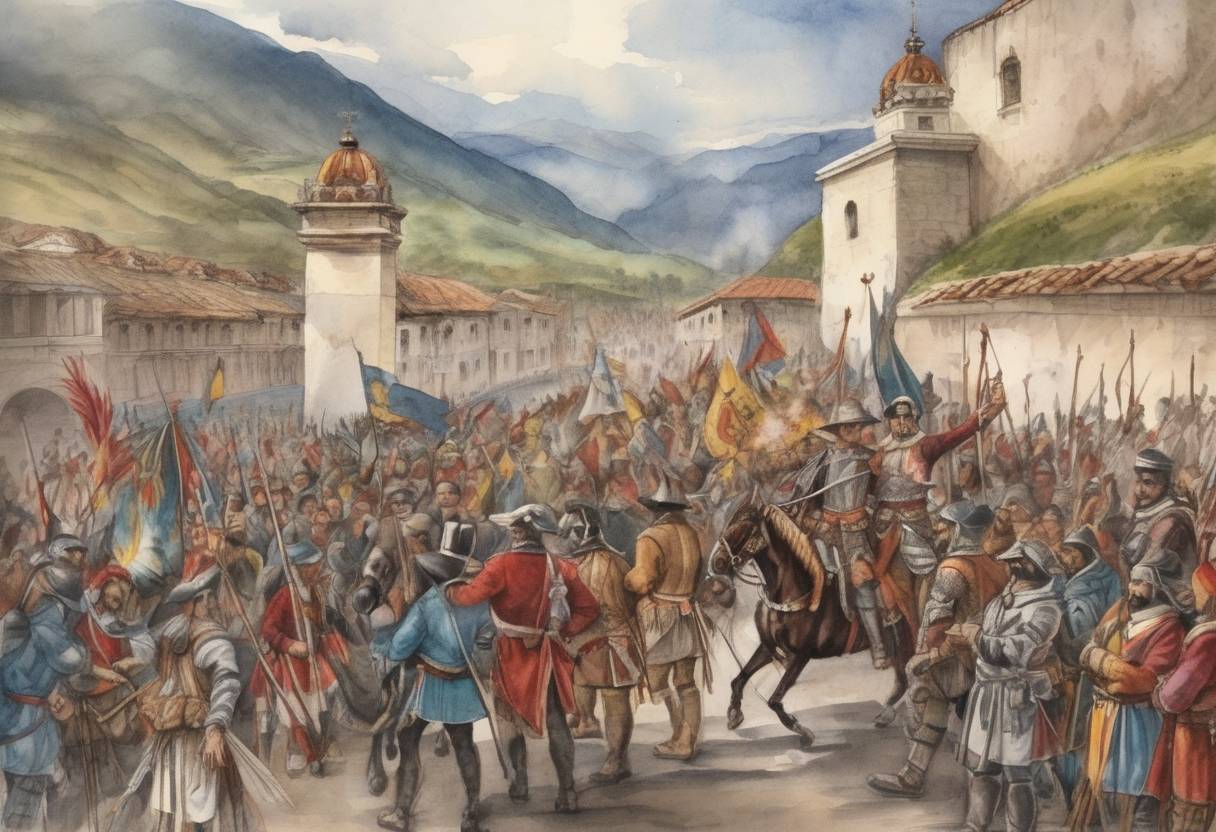
On November 14, 1533, Spanish conquistador Francisco Pizarro arrived in Cajamarca, Peru, a pivotal moment that marked the beginning of the Spanish conquest of the Inca Empire. This event set the stage for a dramatic and consequential chapter in the history of the Americas.
Francisco Pizarro, born around 1478 in Trujillo, Spain, was an ambitious explorer and soldier. Inspired by the successes of Hernán Cortés in Mexico, Pizarro sought to find his fortune in the New World. After several expeditions along the western coast of South America, Pizarro received royal approval from King Charles I of Spain to conquer the lands of the Inca Empire.
The Inca Empire, at the time, was the largest empire in pre-Columbian America, stretching across modern-day Peru, Ecuador, Bolivia, and parts of Chile and Argentina. It was a highly organized society with advanced agricultural practices, architecture, and a complex political system.
Pizarro’s arrival in Cajamarca was strategic. The city was located in the northern highlands of Peru and was a significant center of Inca power. At the time of Pizarro’s arrival, the Inca Empire was embroiled in a civil war between two brothers, Atahualpa and Huáscar, who were vying for the throne. Atahualpa had recently emerged victorious and was consolidating his power.
Pizarro, with a small force of around 168 men, including cavalry and artillery, approached Cajamarca with a combination of audacity and diplomacy. He invited Atahualpa to a meeting in the city square, ostensibly to discuss peace and cooperation.
On November 16, 1532, two days after Pizarro’s arrival, the meeting took place. Atahualpa, confident in his superiority and accompanied by thousands of unarmed retainers, entered Cajamarca. Pizarro’s forces, however, ambushed the Incas in a surprise attack. The Spanish used their horses, firearms, and steel weapons to devastating effect, capturing Atahualpa and killing thousands of his followers in what became known as the Battle of Cajamarca.
The capture of Atahualpa was a turning point in the conquest of the Inca Empire. Pizarro held the Inca ruler for ransom, demanding a room filled with gold and silver. Despite the Incas delivering the ransom, Atahualpa was executed in 1533, leading to the further destabilization of the Inca leadership.
Pizarro’s conquest continued, and by 1533, he had captured the Inca capital of Cusco. The Spanish established a colonial presence that would last for centuries, profoundly impacting the indigenous cultures, economies, and societies of the region.
The arrival of Francisco Pizarro in Cajamarca and the subsequent conquest of the Inca Empire had far-reaching consequences. It marked the expansion of Spanish influence in South America and the beginning of a new era of European colonization. The events also led to significant cultural and demographic changes, including the spread of Christianity, the introduction of European diseases, and the exploitation of indigenous peoples.
Pizarro’s actions, while bringing wealth and power to Spain, also contributed to the decline of one of the most sophisticated civilizations in the Americas. The legacy of the conquest is complex, reflecting both the achievements and the tragedies of this period in history.
Source: en.wikipedia.org