The First Session of the French Legislative Assembly: October 1, 1791
1791 · Paris, France
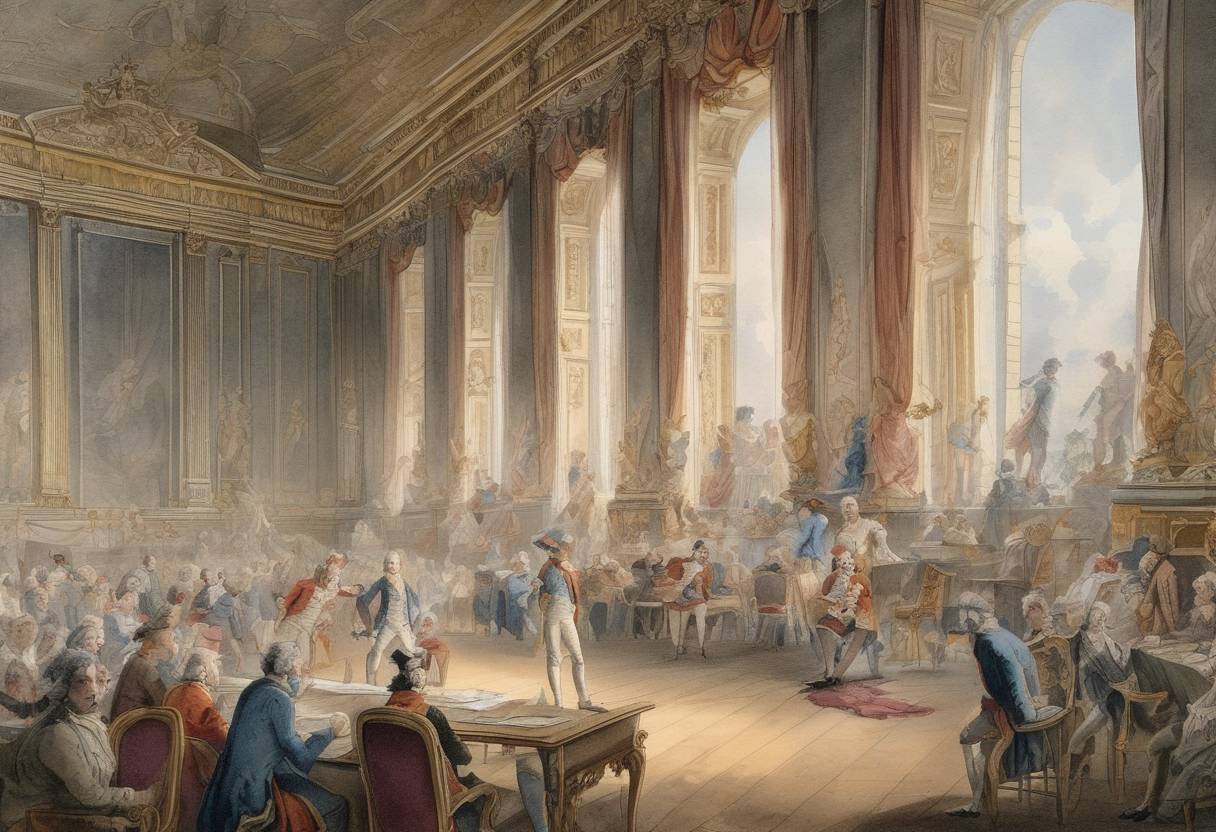
The first session of the French Legislative Assembly was held, following the French Revolution's National Constituent Assembly.
June 17, 1789
During the French Revolution, the Third Estate declares itself the National Assembly.
Versailles, France | Third Estate
The French Revolution was a period of radical social and political upheaval in France that lasted from 1789 until 1799. It was characterized by the overthrow of the monarchy, the rise of radical political factions, and widespread social change. The revolution was driven by a complex interplay of economic hardship, political discontent, and Enlightenment ideals.
Before the revolution, French society was divided into three estates:
In 1789, facing a severe financial crisis, King Louis XVI called a meeting of the Estates-General, an assembly representing the three estates, to propose solutions to the kingdom’s fiscal problems. This was the first time the Estates-General had been convened since 1614.
On June 17, 1789, frustrated by the lack of progress and the voting system that favored the First and Second Estates, the representatives of the Third Estate took a bold step. They declared themselves the “National Assembly,” asserting that they were the true representatives of the French people. This move was a direct challenge to the authority of the king and the traditional structure of the Estates-General.
The declaration of the National Assembly was a catalyst for the events that followed, including the storming of the Bastille on July 14, 1789, and the eventual abolition of the feudal system. It also led to the drafting of the Declaration of the Rights of Man and of the Citizen, which laid the foundation for modern democratic principles.
The actions of the Third Estate on June 17, 1789, were instrumental in the transformation of French society and governance, influencing revolutionary movements worldwide and marking the beginning of a new era in French history.
Source: en.wikipedia.org