Charles Darwin Publishes *On the Origin of Species*
1859 · London, United Kingdom
Charles Darwin publishes 'On the Origin of Species', introducing the theory of evolution by natural selection.
September 15, 1835
The HMS Beagle, with Charles Darwin aboard, reached the Galápagos Islands, which would later play a crucial role in the development of Darwin's theory of evolution by natural selection.
Galápagos Islands, Ecuador | Royal Navy
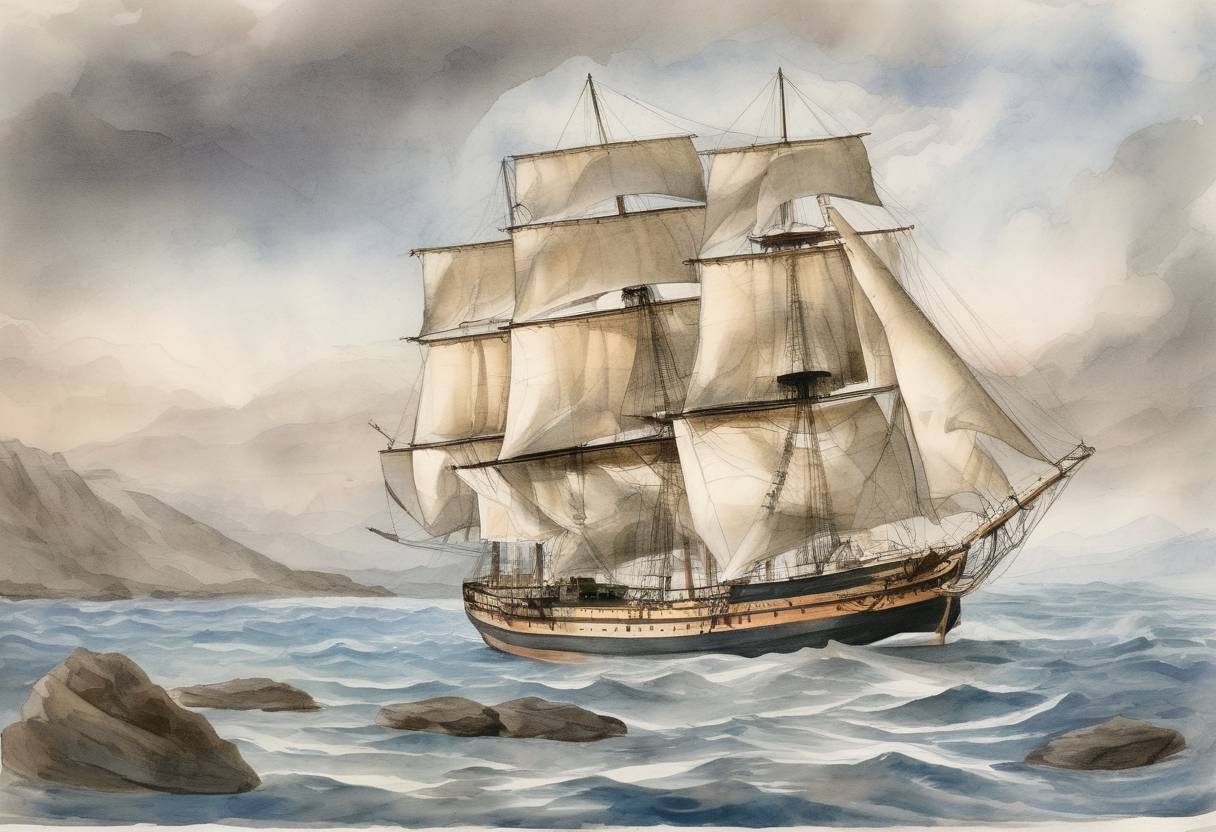
On September 15, 1835, the HMS Beagle, with the young naturalist Charles Darwin aboard, arrived at the Galápagos Islands. This visit would prove pivotal in the development of Darwin’s theory of evolution by natural selection, fundamentally altering the course of biological science.
The HMS Beagle, under the command of Captain Robert FitzRoy, embarked on its second voyage in December 1831. The primary mission was to chart the coastlines of South America, but it also aimed to gather a wealth of scientific data. Charles Darwin, then a 26-year-old naturalist, joined the expedition as a gentleman companion to FitzRoy and as an unpaid naturalist.
The Beagle reached the Galápagos Islands, an archipelago of volcanic islands located in the Pacific Ocean, about 600 miles west of Ecuador. The ship’s arrival on September 15 marked the beginning of a five-week exploration of the islands. Darwin visited several islands, including San Cristóbal, Floreana, Isabela, and Santiago.
During his time on the islands, Darwin meticulously observed and collected various specimens of flora and fauna. He noted the unique characteristics of the islands’ wildlife, particularly the finches, tortoises, and mockingbirds. Darwin observed that:
These observations led Darwin to consider the possibility of species adaptation to their environments. Although he did not immediately formulate his theory of evolution by natural selection during the voyage, the evidence he gathered in the Galápagos played a crucial role in shaping his ideas.
Upon returning to England, Darwin spent years analyzing his findings. In 1859, he published “On the Origin of Species,” where he presented his theory of evolution by natural selection, fundamentally transforming the understanding of biological diversity.
Darwin’s work laid the foundation for modern evolutionary biology. The Galápagos Islands remain a symbol of evolutionary study and continue to be a critical site for scientific research. The insights gained from Darwin’s observations have had profound implications across various fields, including genetics, ecology, and conservation biology.
The visit of the HMS Beagle to the Galápagos Islands on September 15, 1835, stands as a landmark moment in the history of science, illustrating the power of observation and inquiry in uncovering the natural world’s mysteries.
Source: www.britannica.com