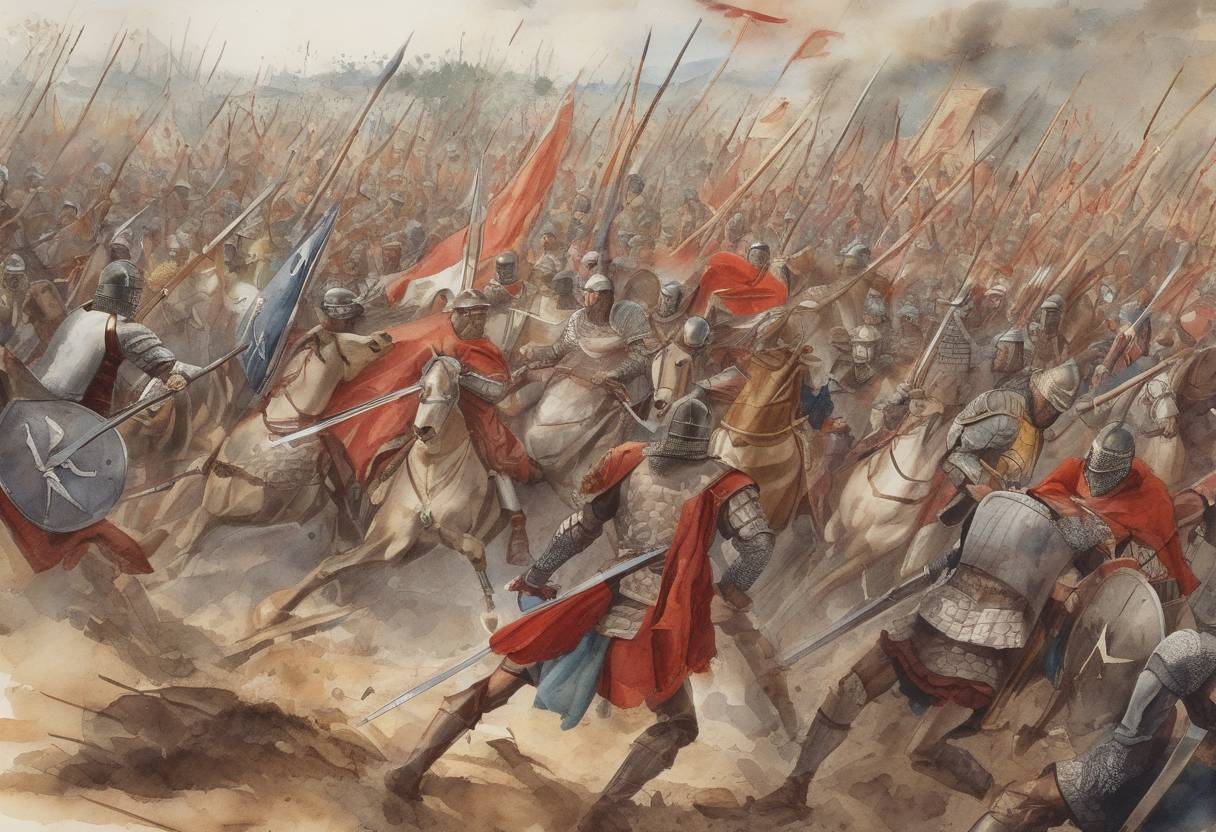
The Battle of Verona: September 30, 489
The Battle of Verona, fought on September 30, 489, was a pivotal conflict in the series of wars that led to the fall of Odoacer, the king of Italy, and the rise of Theodoric the Great, king of the Ostrogoths. This battle marked a significant turning point in the power dynamics of post-Roman Italy.
Context Leading to the Battle
The Fall of the Western Roman Empire: By the late 5th century, the Western Roman Empire had collapsed, leading to a power vacuum in Italy. Odoacer, a Germanic chieftain, had deposed the last Roman emperor, Romulus Augustulus, in 476 and declared himself King of Italy.
Theodoric’s Ambitions: Theodoric, leader of the Ostrogoths, was initially a federate of the Eastern Roman Empire under Emperor Zeno. Zeno, seeking to rid himself of the troublesome Ostrogoths and to weaken Odoacer, encouraged Theodoric to invade Italy.
The Battle
Forces and Strategy: Theodoric led a formidable Ostrogothic army into Italy, confronting Odoacer’s forces near Verona. The battle was characterized by Theodoric’s strategic acumen and the effective use of his cavalry.
Outcome: Theodoric’s forces decisively defeated Odoacer’s army. This victory was crucial as it allowed Theodoric to consolidate his power in northern Italy and paved the way for further advances.
Aftermath and Significance
The Siege of Ravenna: Following the Battle of Verona, Theodoric pursued Odoacer, eventually besieging him in Ravenna. The siege lasted until 493, when Theodoric finally captured the city and executed Odoacer, solidifying his control over Italy.
Theodoric’s Rule: Theodoric established himself as the ruler of Italy, maintaining a semblance of Roman governance while integrating Gothic customs. His reign is often noted for its relative stability and prosperity, as well as efforts to bridge cultural divides between Romans and Goths.
Historical Impact: The battle and subsequent events marked the end of Odoacer’s rule and the beginning of Ostrogothic dominance in Italy. Theodoric’s reign is considered a significant period in the transition from Roman to medieval European structures.
The Battle of Verona thus stands as a critical event in the transformation of Italy during the early medieval period, illustrating the complex interplay of Roman legacies and Germanic influences in shaping European history.