1996 · Cape Canaveral, United States
NASA launched the Mars Pathfinder, a mission that included the first successful deployment of a rover on Mars, which laid the foundation for future Mars exploration missions.
November 28, 1964
Mariner 4 is launched by NASA, the first spacecraft to successfully fly by Mars and send back images.
Cape Canaveral, United States | NASA
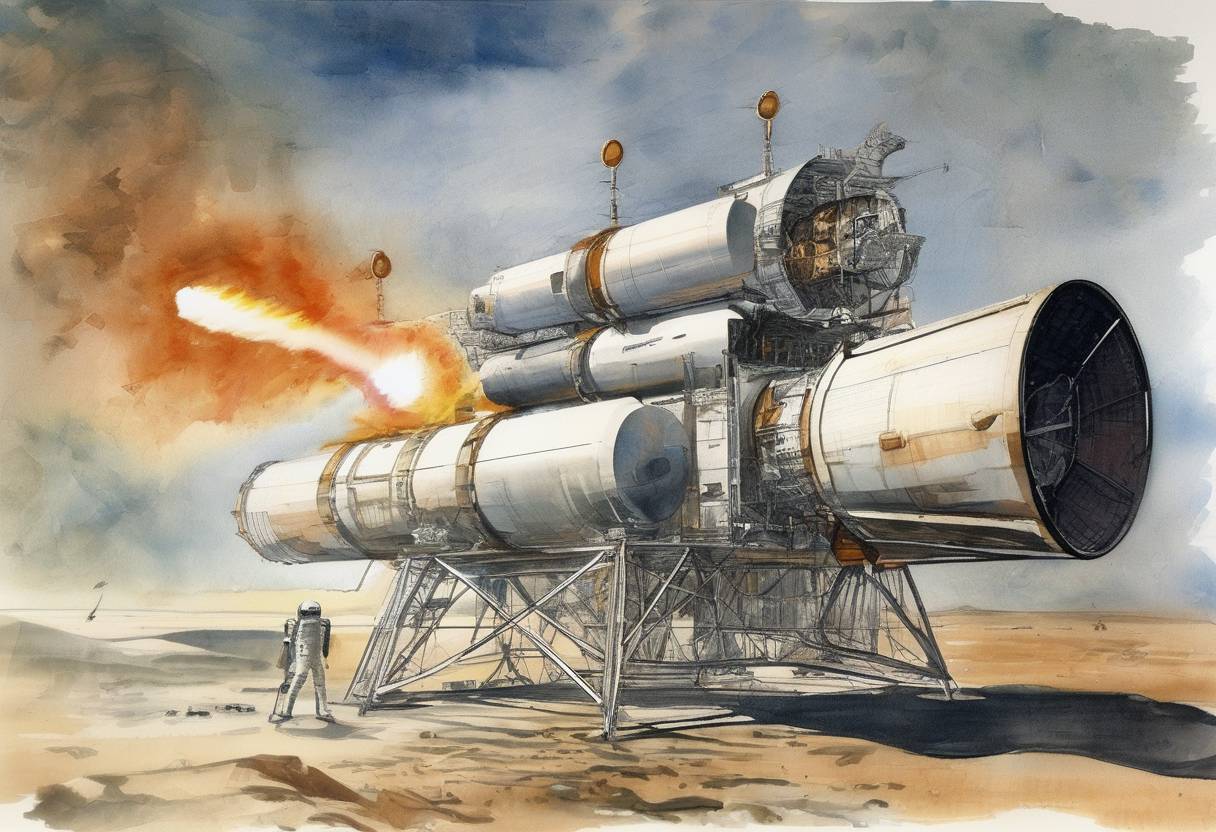
On November 28, 1964, NASA launched Mariner 4, marking a significant milestone in space exploration as the first spacecraft to successfully fly by Mars and send back images of the Martian surface. This mission was part of NASA’s Mariner program, which aimed to explore the inner planets of the solar system.
The early 1960s were a period of intense competition in space exploration, primarily between the United States and the Soviet Union, known as the Space Race. Following the success of the Mariner 2 mission to Venus in 1962, NASA set its sights on Mars, the next logical target for exploration.
Mariner 4 was designed to conduct a flyby of Mars, capturing images and collecting data about the Martian atmosphere and surface. The spacecraft was equipped with a television camera, a magnetometer, a cosmic dust detector, and other scientific instruments.
The successful flyby of Mariner 4 represented a monumental achievement in planetary exploration. The data and images sent back by the spacecraft provided invaluable insights into the Martian environment, laying the groundwork for future missions to Mars. The mission also demonstrated the feasibility of long-duration space missions and the capability of spacecraft to operate far from Earth.
Mariner 4’s success bolstered NASA’s reputation and contributed to the United States’ leadership in space exploration during the Space Race. The mission’s findings significantly influenced subsequent Mars exploration strategies, including the design of orbiters, landers, and rovers that followed in the decades to come.
In summary, Mariner 4’s launch and successful mission to Mars marked a pivotal moment in space exploration history, expanding our understanding of the Red Planet and inspiring continued exploration of our solar system.
Source: en.wikipedia.org