The Death of King Henry V and the Ascension of Henry VI
1422 · Vincennes, France
King Henry V of England dies unexpectedly in France, leaving his infant son, Henry VI, as king.
April 6, 1199
King Richard I of England, also known as Richard the Lionheart, died from an infection following an injury sustained during a siege in France.
Châlus, France | English Monarchy
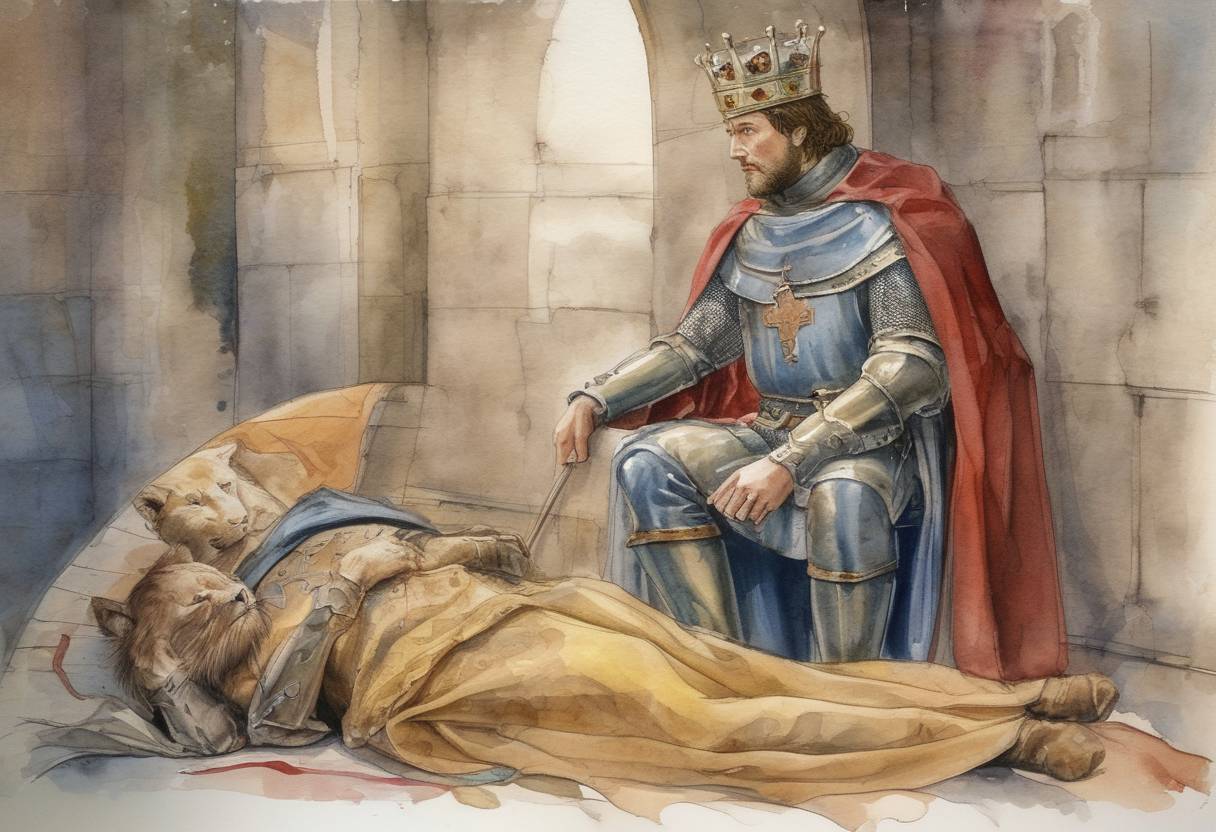
On April 6, 1199, King Richard I of England, famously known as Richard the Lionheart, died from an infection following an injury sustained during the siege of Châlus-Chabrol in France. His death marked the end of a reign characterized by military exploits and crusading zeal.
Richard I ascended to the English throne in 1189, succeeding his father, King Henry II. Known for his military prowess and leadership during the Third Crusade, Richard earned the moniker “Lionheart” for his bravery and formidable presence on the battlefield. Despite spending much of his reign abroad, particularly in the Holy Land and in his French territories, Richard remained a legendary figure in English history.
In March 1199, Richard was in France, engaged in a campaign to suppress a rebellion led by Viscount Aimar V of Limoges. The siege of Châlus-Chabrol, a small castle in the Limousin region, was part of this campaign. During the siege, Richard was struck by a crossbow bolt in the shoulder. The wound, though not immediately fatal, became gangrenous.
Despite attempts to treat the injury, Richard’s condition worsened, leading to his death on April 6, 1199. He was 41 years old. Richard’s death had significant implications for the English crown. He was succeeded by his younger brother, John, who would later become infamous for his troubled reign, including the signing of the Magna Carta in 1215.
Richard’s death marked the end of an era of crusading kingship. His reputation as a warrior king overshadowed his relatively short time spent in England, and his legacy was shaped by his military campaigns and the romanticized accounts of his exploits. The transition to King John brought about a shift in English politics and governance, setting the stage for future conflicts and reforms.
Richard the Lionheart’s life and death remain emblematic of the medieval knightly ideal, and his story continues to capture the imagination of historians and the public alike.
Source: en.wikipedia.org