The Treaty of Paris and the Anglo-Spanish War (1654–1660)
1657 · Paris, France
The Treaty of Paris is signed, ending the Anglo-Spanish War (1654–1660) between France and Spain.
May 30, 1631
The Treaty of Fontainebleau was signed between Maximilian I, Elector of Bavaria, and King Louis XIII of France, marking a significant alliance during the Thirty Years' War.
Fontainebleau, France | French monarchy
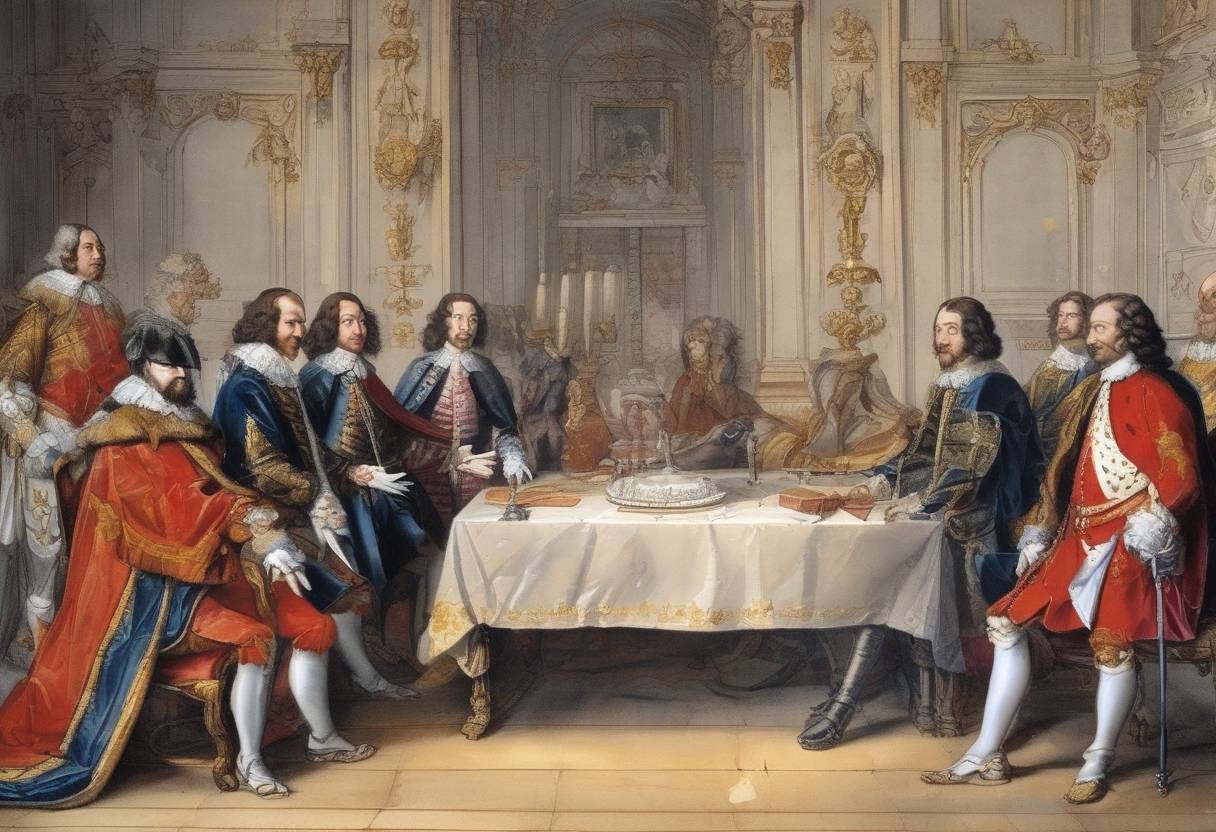
The Treaty of Fontainebleau, signed on May 30, 1631, was a pivotal diplomatic agreement during the tumultuous period of the Thirty Years’ War. This treaty marked a significant alliance between Maximilian I, Elector of Bavaria, and King Louis XIII of France, reflecting the complex web of alliances and enmities that characterized this era.
The Thirty Years’ War (1618-1648) was a protracted and devastating conflict that involved many of the great powers of Europe. It began as a religious war between Protestant and Catholic states in the fragmented Holy Roman Empire but gradually evolved into a broader political struggle for European dominance.
The Treaty of Fontainebleau was primarily a defensive alliance, with several important provisions:
The Treaty of Fontainebleau was significant for several reasons:
The treaty’s impact was felt in subsequent military campaigns, as the Thirty Years’ War continued to ravage Europe. The complex alliances and enmities it represented would eventually lead to the Peace of Westphalia in 1648, which concluded the war and reshaped the political map of Europe.
In summary, the Treaty of Fontainebleau was a critical diplomatic maneuver that highlighted the intricate balance of power during the Thirty Years’ War, demonstrating how political pragmatism often overrode religious considerations in the pursuit of national interests.
Source: en.wikipedia.org