The Swat Valley Offensive: June 19, 2009
2009 · Swat Valley, Pakistan
The War in North-West Pakistan continued with the Pakistani military launching an offensive against Taliban militants in the Swat Valley.
February 26, 2019
India conducted airstrikes in Balakot, Pakistan, targeting a Jaish-e-Mohammed training camp, following a terrorist attack in Pulwama, Kashmir. This marked a significant escalation in India-Pakistan tensions.
Balakot, Pakistan | Indian Air Force
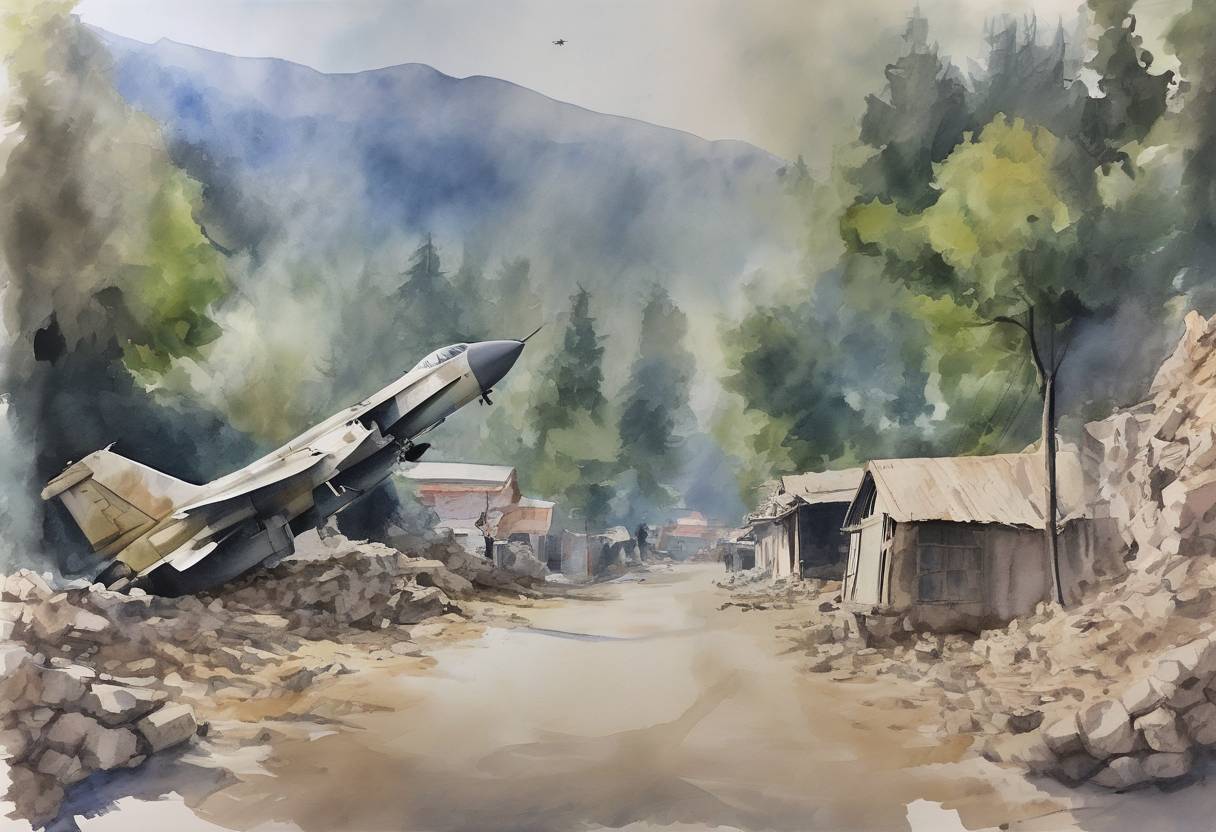
On February 26, 2019, India conducted airstrikes in Balakot, Pakistan, targeting a training camp operated by the militant group Jaish-e-Mohammed (JeM). This operation marked a significant escalation in the ongoing tensions between India and Pakistan, two nuclear-armed neighbors with a history of conflict.
Pulwama Attack: On February 14, 2019, a suicide bomber affiliated with Jaish-e-Mohammed attacked a convoy of the Central Reserve Police Force (CRPF) in Pulwama, in the Indian-administered region of Jammu and Kashmir. The attack resulted in the deaths of 40 Indian paramilitary personnel, making it one of the deadliest attacks in the region in decades.
Jaish-e-Mohammed: JeM is a Pakistan-based militant group that has been involved in several attacks in India, particularly in the Kashmir region. The group seeks the integration of Jammu and Kashmir with Pakistan and has been designated as a terrorist organization by several countries, including India and the United States.
Objective: The Indian government stated that the airstrikes were a “preemptive” measure aimed at preventing further terrorist attacks by JeM. The target was a JeM training camp in Balakot, located in Pakistan’s Khyber Pakhtunkhwa province.
Execution: The Indian Air Force (IAF) deployed Mirage 2000 fighter jets to carry out the strikes. The operation was conducted in the early hours of February 26, 2019, and involved crossing the Line of Control (LoC), the de facto border between India and Pakistan in the disputed Kashmir region.
Pakistan’s Response: Pakistan condemned the airstrikes, claiming that they violated its sovereignty. Pakistani officials initially denied that the strikes caused any significant damage or casualties. In response, Pakistan conducted its own airstrikes across the LoC on February 27, 2019, leading to aerial engagements between the two countries.
International Reaction: The international community expressed concern over the escalation of tensions between India and Pakistan. Several countries urged both nations to exercise restraint and engage in dialogue to de-escalate the situation.
Diplomatic and Military Tensions: The airstrikes and subsequent military actions led to heightened diplomatic and military tensions between India and Pakistan. Both countries put their armed forces on high alert, and there were fears of a larger conflict.
India-Pakistan Relations: The Balakot airstrikes were a significant moment in the history of India-Pakistan relations, highlighting the ongoing volatility and the potential for conflict in the region. The incident underscored the challenges of addressing cross-border terrorism and maintaining peace between the two nations.
Nuclear Concerns: Given that both India and Pakistan possess nuclear weapons, the escalation raised concerns about the potential for a nuclear confrontation. The international community closely monitored the situation to prevent further escalation.
The Balakot airstrikes remain a pivotal event in the complex and often fraught relationship between India and Pakistan, illustrating the persistent challenges of regional security and counterterrorism efforts.
Source: en.wikipedia.org