1814 · Niagara Falls, Canada
The Battle of Lundy's Lane, one of the bloodiest battles of the War of 1812, was fought in present-day Niagara Falls, Ontario, resulting in a stalemate between American and British forces.
October 13, 1812
The Battle of Queenston Heights took place, marking the first significant engagement in the War of 1812 between American and British forces. This battle resulted in a British victory and the death of General Isaac Brock, a major loss for the British.
Queenston, Upper Canada (present-day Canada) | British Army
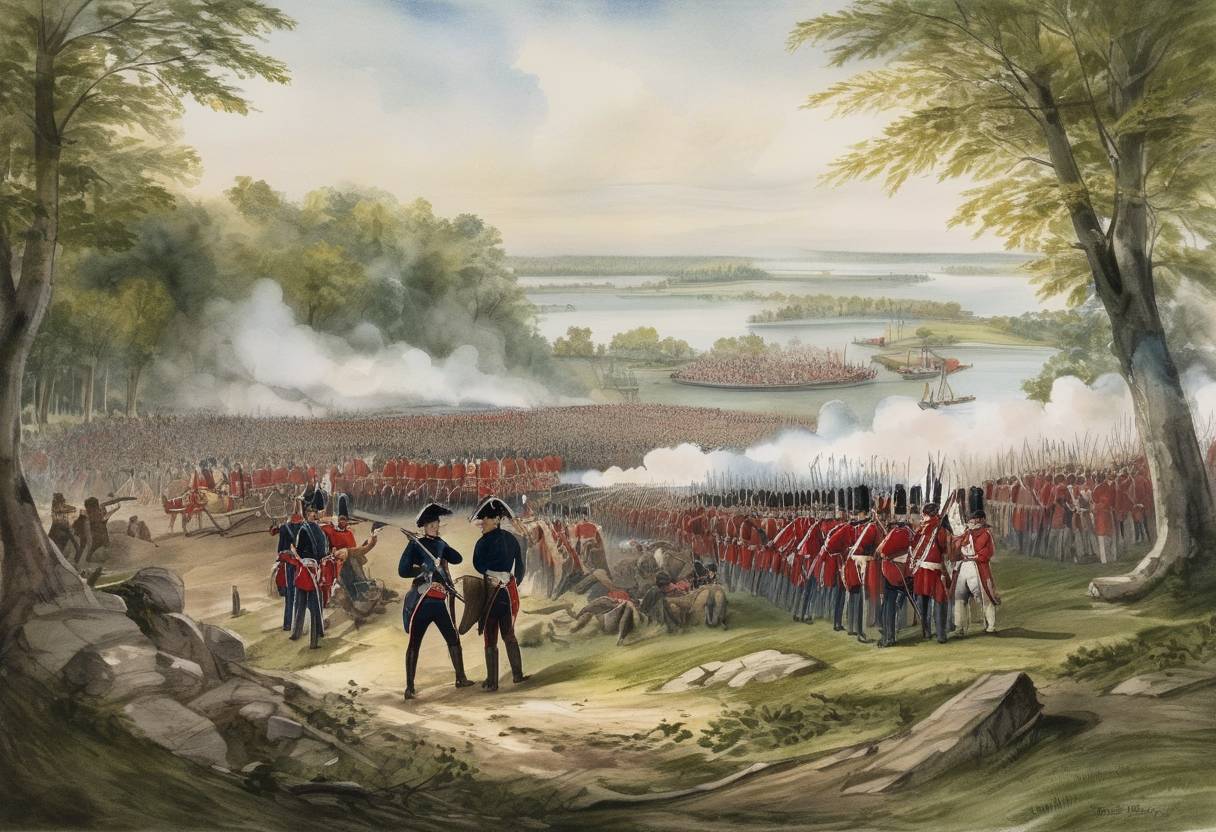
The Battle of Queenston Heights was a pivotal early conflict in the War of 1812, signaling the first significant engagement between American and British forces. Taking place on October 13, 1812, near present-day Niagara-on-the-Lake, Ontario, this battle was crucial for controlling the Niagara frontier, a key target in the American military strategy.
The War of 1812 had erupted due to a mix of American grievances against British policies, including trade restrictions and the impressment of American sailors into the British Navy. As part of their campaign, the United States sought to invade and occupy parts of British North America (now Canada) to pressure Britain into concessions.
In October 1812, American forces, commanded by Major General Stephen Van Rensselaer, aimed to cross the Niagara River and capture the fortified heights at Queenston, thereby securing a foothold for further incursions into Canadian territory.
The American attack began before dawn. Despite difficulties, including strong river currents and organizational chaos, a contingent of American troops managed to cross the Niagara River and make landfall near Queenston. They initially succeeded in capturing a British artillery position on the heights.
Major General Sir Isaac Brock, the British commander and administrator of Upper Canada, responded swiftly. Known for his assertive leadership, Brock attempted a counter-attack to reclaim the defensive position. Unfortunately, during the confrontation, General Brock was fatally shot, becoming the most prominent casualty of the battle and a significant loss for the British forces.
Despite the early success of the Americans, British and allied Native American reinforcements arrived, including forces led by Major General Roger Hale Sheaffe. They mounted a counter-offensive that reclaimed the heights. The American troops, disorganized and lacking support from their commanding officers across the river, ultimately surrendered.
The battle resulted in a decisive British victory, bolstering Canadian morale and recruitment while dispelling American hopes for a quick win on the Niagara front. The death of General Brock was a substantial loss for the British, but his leadership and tactical acumen were credited with the defensive successes in Canada.
Brock became a celebrated hero in Canadian history, posthumously honored for his role in defending the country. The battle laid the groundwork for future engagements in the War of 1812, underscoring the challenges posed by logistical issues and strategic command that would continue to affect both sides throughout the war.
Source: www.britannica.com