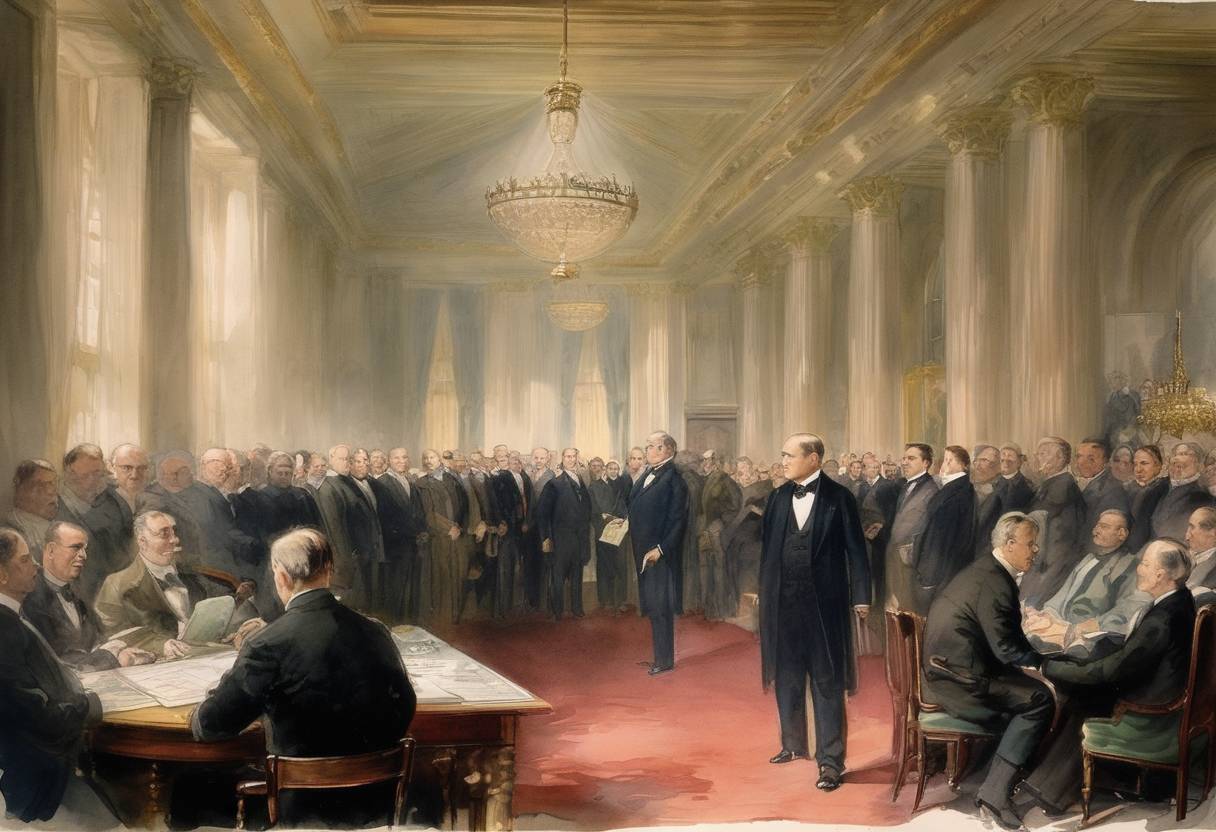
The Gold Standard Act of 1900
On March 14, 1900, U.S. President William McKinley signed the Gold Standard Act into law. This significant legislation officially placed the United States on the gold standard, meaning its currency was fully backed by gold reserves. This pivotal moment in U.S. economic history came after intense national debate and political contention regarding monetary policy.
Context and Background
Throughout the late 19th century, the United States grappled with the question of whether to back its currency with gold alone or to incorporate silver as well, a policy known as bimetallism. This debate intensified particularly during the economic downturns of the 1870s and 1890s, leading to a period known as the “Free Silver” movement. Proponents of bimetallism argued that including silver would inflate the currency, thereby alleviating debts and stimulating economic growth.
The issue became a central theme in the presidential election of 1896, famously culminating in William Jennings Bryan’s “Cross of Gold” speech advocating for silver. However, McKinley’s victory represented a decisive rejection of free silver, paving the way for the Gold Standard Act.
The Gold Standard Act
The Gold Standard Act effectively committed the U.S. Treasury to redeem its paper money in gold upon demand and established gold as the sole standard for redeeming paper money, stopping the coinage of silver. It aimed to stabilize the economy by preventing inflation and aligning U.S. currency with other major economies that were also on the gold standard.
Key Provisions
- All forms of U.S. currency, including coins and paper notes, were made redeemable in gold.
- The Act fixed the value of the dollar in terms of gold, with $20.67 equal to one ounce of gold.
- Ensured the U.S. Treasury maintained a minimum gold reserve of $150 million.
Aftermath and Consequences
The implementation of the Gold Standard Act established economic confidence and ensured currency stability, greatly influencing international trade. It aligned the United States with other leading global economies that had adopted the gold standard, enhancing its role in the burgeoning world economy.
However, the rigidity of the gold standard also later contributed to economic challenges during periods of financial crisis, notably the Great Depression, leading to its eventual abandonment during the early 1930s.
The Gold Standard Act of 1900 remains a pivotal moment hearkening America’s shift towards modern financial systems, highlighting the intersection of economics and politics in shaping national policy.