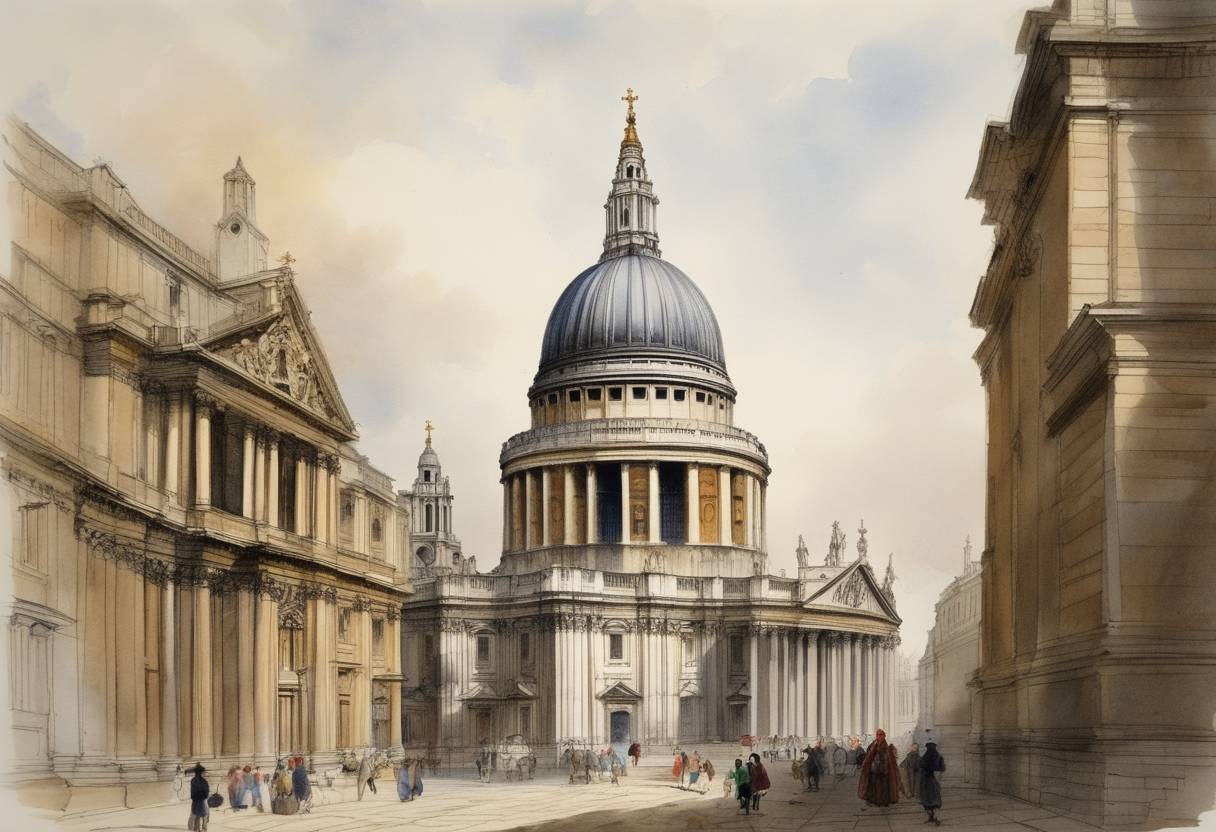
Consecration of St Paul’s Cathedral
The consecration of St Paul’s Cathedral, designed by the eminent architect Sir Christopher Wren, took place on December 2, 1697, in London, England. This event marked a significant milestone in the rebuilding efforts of the city following the Great Fire of London in 1666.
Background
- Great Fire of London (1666): The catastrophic fire destroyed a vast portion of London, including the medieval St Paul’s Cathedral.
- Reconstruction Plan: Sir Christopher Wren, appointed as the Surveyor of the King’s Works in 1669, was entrusted with the monumental task of designing and overseeing the reconstruction of the cathedral.
- Design and Construction: The design combined elements of Gothic architecture and Baroque style, eventually resulting in the grand structure that stands today. Construction began in 1675.
Consecration Ceremony
- Location: St Paul’s Cathedral, located at the highest point in the City of London, Ludgate Hill.
- Date: December 2, 1697.
- Ceremony: The consecration was carried out in the presence of notable figures, marking the cathedral’s entry into service as a center of worship and ceremony for the Church of England.
Architectural Significance
- Dome: St Paul’s features a large dome, an architectural and engineering marvel of its time.
- Facade & Interior: The cathedral is renowned for its striking facade and richly decorated interior, combining stone masonry and artistic embellishments.
- Influence: Wren’s design had a profound influence on ecclesiastical and secular architecture in the following centuries.
Legacy
- Cultural Symbol: St Paul’s has since become a symbol of resilience and regeneration for the city of London.
- Historical Events: Over the centuries, it has been the site of significant national events, including state funerals, jubilees, and royal celebrations.
- Preservation: Today, it stands as a prime example of Wren’s genius and a central figure in London’s historical and cultural landscape.
St Paul’s Cathedral remains a fundamental part of English heritage, both as a religious institution and an architectural masterpiece.