Establishment of the International Military Tribunal for the Far East
1946 · Tokyo, Japan
General Douglas MacArthur established the International Military Tribunal for the Far East in Tokyo to try Japanese war criminals.
October 1, 1946
Inauguration of the first trial at the International Military Tribunal for the Far East (Tokyo Trials) to prosecute Japanese war crimes committed during World War II.
Tokyo, Japan | International Military Tribunal for the Far East
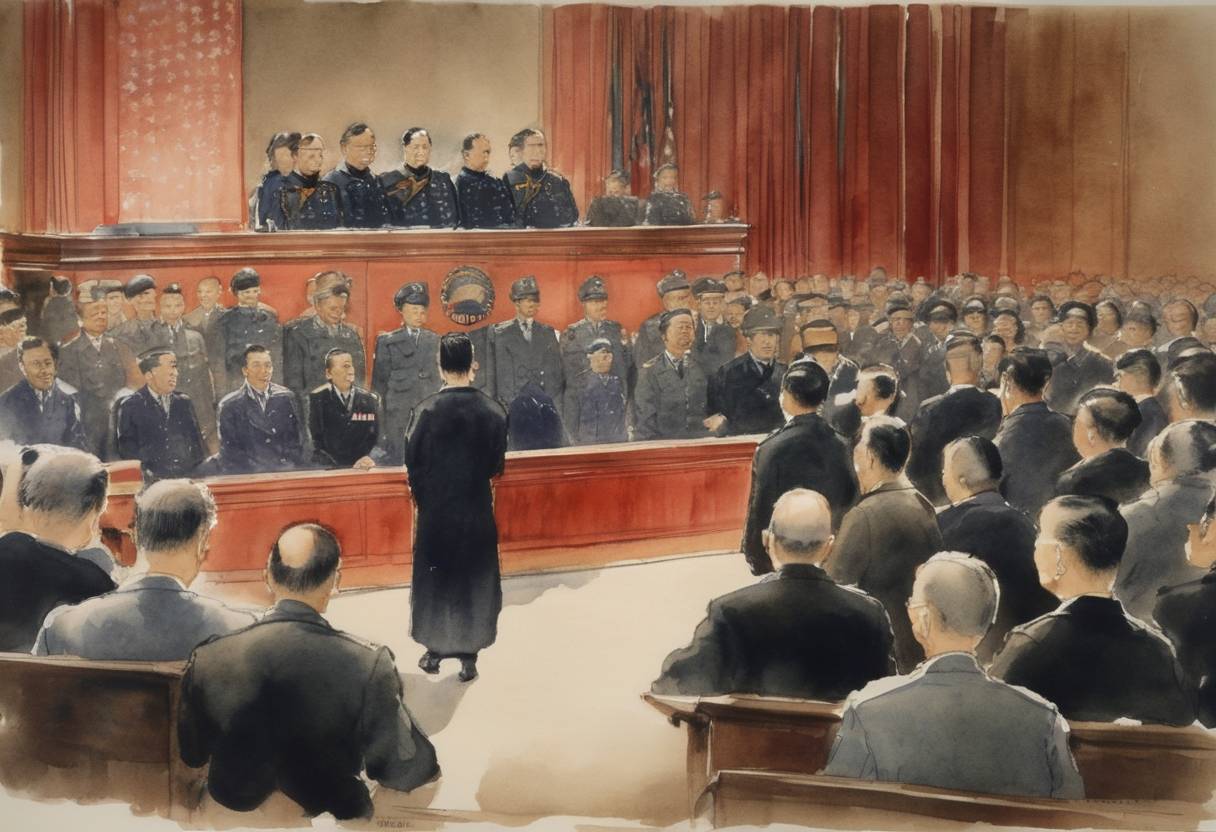
The International Military Tribunal for the Far East (IMTFE), commonly known as the Tokyo Trials, commenced its inaugural session on January 10, 1946. This historic event was founded to address and prosecute Japanese military leaders for war crimes committed during World War II. The tribunal marked a significant moment in international law, drawing lessons from the Nuremberg Trials held in Germany.
Post-War Prosecution: In the aftermath of WWII, Allied powers sought justice for the war crimes committed by Axis powers. Following Germany’s accountability through the Nuremberg Trials, attention pivoted towards Japanese leadership.
Establishment of the IMTFE: The tribunal was established under the Charter for the International Military Tribunal for the Far East, which was issued on January 19, 1946, by General Douglas MacArthur, the Supreme Commander for the Allied Powers in the Pacific.
Location: The inaugural session took place in Tokyo, at the Ichigaya Court, previously the headquarters of the Japanese Imperial Army.
Judiciary Composition: Eleven judges represented the victorious Allied nations: Australia, Canada, China, France, India, the Netherlands, New Zealand, the Philippines, the Soviet Union, the United Kingdom, and the United States.
Defendants: Twenty-eight Japanese military and political leaders were indicted on various charges including crimes against peace, war crimes, and crimes against humanity. Notable figures among the accused included former Prime Minister Hideki Tojo.
Legal Precedents: The Tokyo Trials established important legal precedents for international criminal law. It affirmed the principle of individual accountability for state leaders and military officials for actions conducted during wartime.
Aftermath and Legacy: The tribunal concluded on November 12, 1948, finding most of the defendants guilty on various charges, which led to sentences ranging from death to life imprisonment. This pursuit of justice, despite its criticisms, was foundational in the development of future international courts.
Impacts on Japan: These trials, held during the Allied occupation of Japan, played a crucial role in reshaping Japan’s legal and governmental structures in the post-war era, influencing the country’s transition to a peaceful state.
The inauguration of the IMTFE was a pivotal moment in post-World War II justice and set the stage for international criminal law as it is practiced today.
Source: www.britannica.com