Mozambique Gains Independence from Portugal
1975 · Maputo, Mozambique
Mozambique gains independence from Portugal after a struggle for liberation.
December 22, 1974
Grande Comore, Anjouan, and Moheli vote in a referendum to form the Federal and Islamic Republic of Comoros, gaining independence from French colonial rule.
Moroni, Comoros | Comorian Government
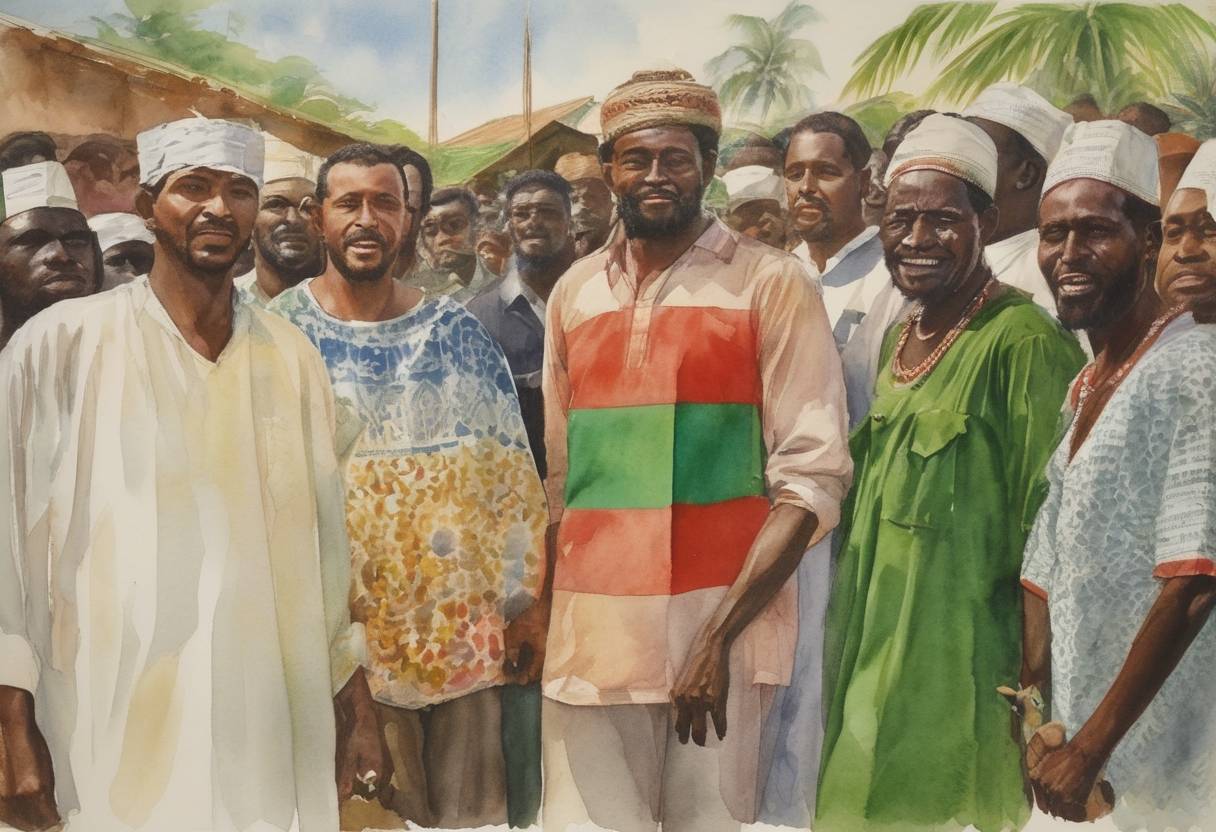
On December 22, 1974, the islands of Grande Comore, Anjouan, and Moheli held a historic referendum to determine their future as an independent nation. This pivotal event marked a significant step toward the dissolution of French colonial rule in the Indian Ocean archipelago and the emergence of the Comoros as a sovereign state.
The Comoros, an archipelago located off the eastern coast of Africa between Mozambique and Madagascar, had been under French colonial control since the late 19th century. Throughout the 20th century, waves of decolonization across Africa inspired movements for autonomy and independence in the Comoros. The prospect of self-governance gained momentum in the early 1970s, reflecting broader regional trends of decolonization.
The December 1974 referendum was a critical juncture in the Comorian struggle for independence. Voters on the islands of Grande Comore, Anjouan, and Moheli were asked whether they favored the formation of a Federal and Islamic Republic of Comoros, effectively ending centuries of colonial rule by France. The referendum excluded the island of Mayotte, where a majority opted to remain under French administration, a decision that continues to influence geopolitics in the region.
A robust majority of the voters from the three islands supported independence, laying the groundwork for the establishment of a unified, independent government. According to official results, around 95% of participants voted in favor of independence. This overwhelming support demonstrated a unified desire among the islanders to forge a new path as a sovereign state.
Despite the clear mandate from the referendum, the path to independence was met with a degree of complexity. France initially delayed the recognition of Comorian independence, citing the divided outcome with Mayotte. Among Comoros’ newly formed political leadership, Ahmed Abdallah, a key nationalist figure, emerged as a central figure in negotiations with France.
The December 22, 1974, referendum underscored the Comorian quest for self-determination and set a precedent for efforts to dismantle European colonial legacies in Africa. The vote paved the way for a formal declaration of independence on July 6, 1975. While independence did not instantly resolve all political and economic challenges facing the islands, it enabled Comoros to join the international community as a sovereign entity, representing its interests on the global stage.
This act of self-determination was celebrated as a significant victory for nationalist movements in the Comoros and contributed to the broader narrative of decolonization in Africa during the latter half of the 20th century.
Source: www.britannica.com