The Systematic Deportation of Jews from the Warsaw Ghetto
1942 · Warsaw, Poland
The systematic deportation of Jews from the Warsaw Ghetto began, marking a significant escalation in the Holocaust.
September 24, 1941
Nazi Germany's SS selects the village of Hankensbüttel, Germany, to become part of the Germanization process of annexed Polish territories, leading to the expulsion of Polish citizens.
Hankensbüttel, Germany | Schutzstaffel (SS)
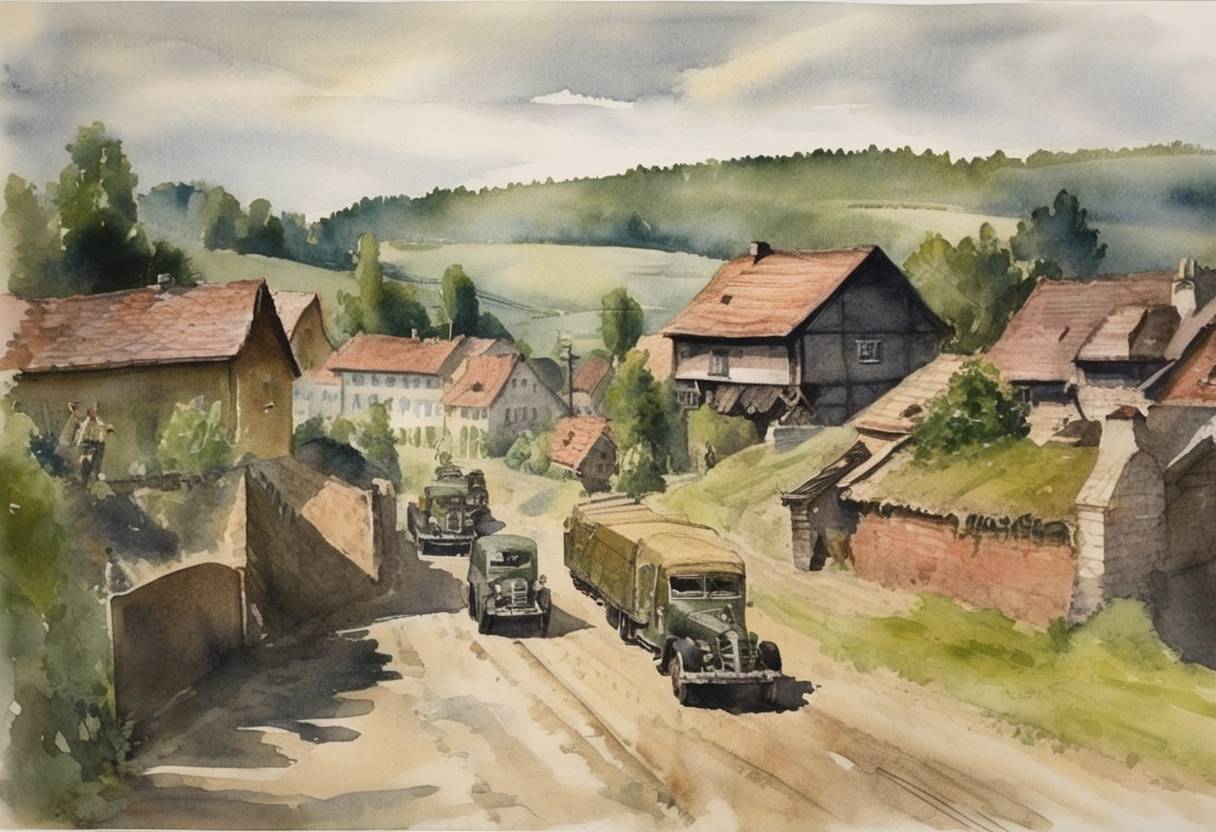
On September 24, 1941, during World War II, Nazi Germany undertook actions that were part of its broader Germanization policy, focusing on altering the demographic and cultural landscape of occupied territories. Although historical records from that precise date about Hankensbüttel’s specific involvement are complex, this period marked the intensification of policies involving the annexed territories, particularly those from Poland, aimed at consolidating German control and identity.
The Germanization process was an extension of Nazi racial policies which aimed to assimilate and repopulate occupied lands with ethnically German populations. This included the systematic displacement and expulsion of non-German populations, primarily Poles, to make room for German settlers. These actions were grounded in a belief that Germanic peoples were superior and entitled to expand their living space, or “Lebensraum.”
The villages in occupied Poland and adjacent areas were earmarked for these radical changes. In the broader context beyond Hankensbüttel itself, many Polish inhabitants experienced forced expulsion, where families were uprooted from their homes and relocated to make space for German settlers. The SS orchestrated these operations with logistical support from various branches of the Nazi infrastructure.
The expulsion often involved swift and brutal methods, with Polish citizens given minimal time to gather belongings before being forcibly removed. They were frequently sent to the General Government area, a part of Poland not annexed by Nazi Germany, or were deported to labor camps.
Such actions were part of a calculated effort to erase Polish cultural and national identity in the annexed regions, integrating them into a greater German Reich. The displacement and the subsequent resettlement initiatives contributed significantly to the human suffering during the war and altered the ethnic composition of significant areas for decades.
The legacy of these policies underpins many of the difficult historical relationships in Europe post-WWII, as affected communities and nations came to terms with the cultural and demographic disruptions caused by the Germanization agenda. The expulsion of Poles and the restructuring of occupied territories serve as harrowing examples of the destructive reach of Nazi racial ideology.
The historical interpretation and assessment of specific localities like Hankensbüttel remain part of a larger puzzle, highlighting the broader, systemic policies executed across Nazi-occupied Europe.
Source: www.ushmm.org