The Bombing of Dresden: February 13, 1945
1945 · Dresden, Germany
The bombing of Dresden by Allied forces began during World War II, resulting in a devastating firestorm.
September 11, 1944
The first Allied troops entered Nazi Germany near Aachen during World War II as part of the Western Allied Invasion of Germany.
Aachen, Germany | Allied Forces
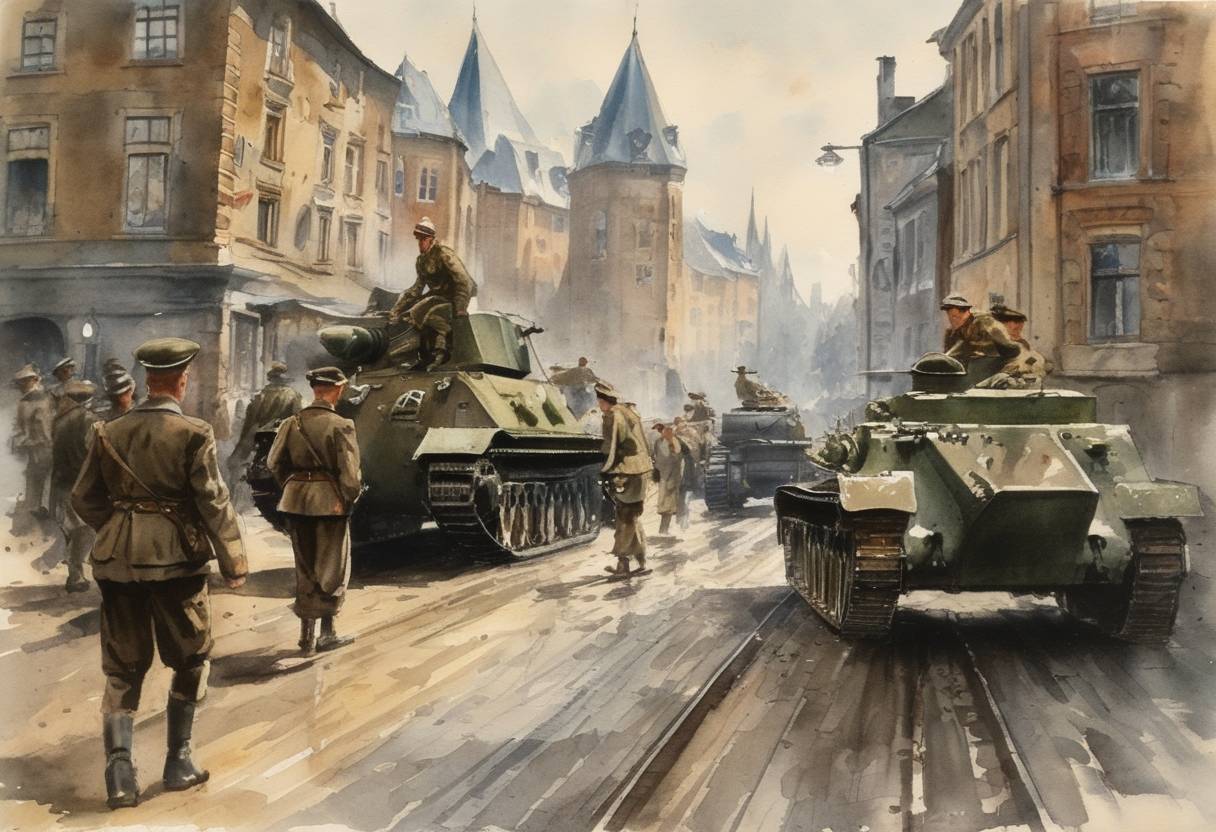
On September 11, 1944, the first Allied troops crossed into Nazi Germany near Aachen, marking a pivotal moment in World War II. This incursion was a significant part of the Western Allied Invasion of Germany, a campaign initiated following the success of the Normandy landings (D-Day) on June 6, 1944.
The initial breakthrough in Normandy allowed Allied forces to advance through France during the summer of 1944, liberating Paris on August 25, and continuing their rapid push toward the German border. The capture of Aachen became a strategic objective due to its location and symbolic significance as one of the first major German cities to lie in their path.
Under the command of General Courtney Hodges, the U.S. First Army was the first Allied group to penetrate the German frontier, advancing into areas near the city of Aachen. They crossed into Germany through the West Wall (also known as the Siegfried Line), a line of defensive fortifications.
The breakthrough was facilitated by weakened German defenses, which were stretched thin after the retreat from France. Aachen was surrounded, and by October, a full-scale assault was launched. Fierce urban combat ensued for weeks as the Allies fought to secure the city against determined German resistance.
The entry into Germany on September 11 was symbolic of the shifting momentum in the European Theater. It demonstrated Allied resolve to bring the war to Germany’s homeland after years of combat primarily outside its borders. The eventual fall of Aachen in October 1944 not only provided a psychological blow to the German populace but also served as a foothold for further incursions into the heart of Nazi Germany.
This advance laid the groundwork for subsequent operations into the Rhineland and the anticipation of crossing the Rhine River. While the campaign faced significant challenges due to the harsh winter and Battle of the Bulge in December 1944, the momentum built around Aachen marked an irreversible step toward the eventual defeat of Nazi Germany in May 1945.
Source: www.britannica.com