Mary, Queen of Scots: Trial for Conspiracy Against Queen Elizabeth I
1586 · Fotheringhay, England
Mary, Queen of Scots, went on trial for conspiracy against Queen Elizabeth I of England.
June 16, 1586
Mary, Queen of Scots, recognized Philip II of Spain as her heir, a significant political move during her imprisonment in England.
Chartley, England | Scottish monarchy
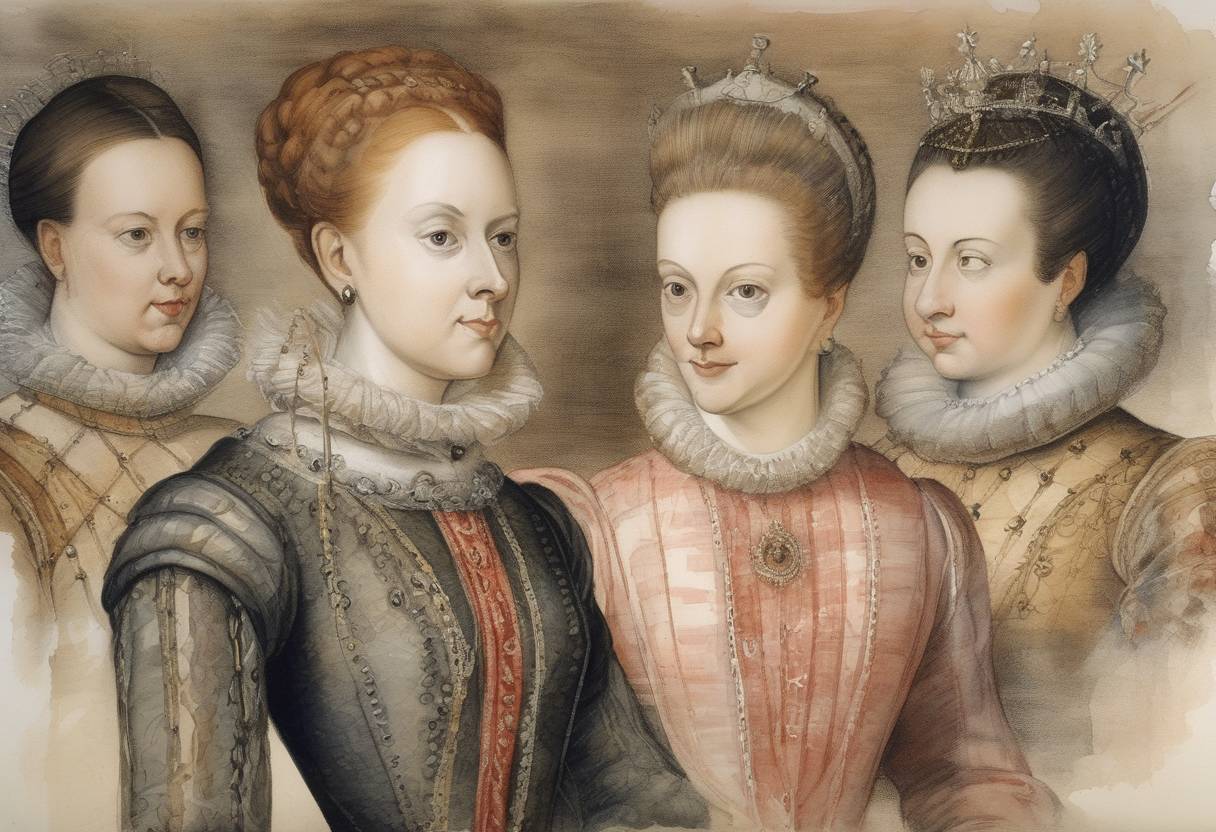
On June 16, 1586, Mary, Queen of Scots, made a significant political move by recognizing Philip II of Spain as her heir. This decision was made during her imprisonment in England and had profound implications for the political landscape of Europe.
Mary, Queen of Scots, was a central figure in the complex web of European politics during the 16th century. Born in 1542, she became Queen of Scotland as an infant. Her life was marked by a series of tumultuous events, including her marriages, abdication, and eventual imprisonment by her cousin, Queen Elizabeth I of England. Mary was seen as a legitimate Catholic claimant to the English throne, which made her a focal point for Catholic plots against Elizabeth I.
By 1586, Mary had been imprisoned in England for nearly two decades. Her captivity was a result of her involvement in various conspiracies against Elizabeth, which were perceived as threats to the Protestant English crown.
Mary’s decision to recognize Philip II of Spain as her heir was a strategic maneuver aimed at securing support from one of the most powerful Catholic monarchs in Europe. Philip II, the King of Spain, was a staunch defender of Catholicism and had vested interests in the religious and political affairs of England and Scotland.
By naming Philip as her heir, Mary sought to strengthen the Catholic cause in England and potentially gain Spanish support for her release and restoration. This move was also intended to counteract the Protestant succession plans of Elizabeth I, who had no direct heirs.
Mary’s recognition of Philip II as her heir had several significant implications:
Increased Tensions: This decision heightened tensions between Catholic and Protestant factions in Europe. It underscored the religious divide and the ongoing struggle for power between Catholic Spain and Protestant England.
The Babington Plot: Mary’s correspondence with Catholic conspirators, including Anthony Babington, was part of a broader plot to assassinate Elizabeth and place Mary on the English throne. The recognition of Philip II as her heir was intertwined with these conspiracies, which ultimately led to Mary’s downfall.
Mary’s Execution: The discovery of the Babington Plot and Mary’s involvement provided Elizabeth I with the justification to execute Mary. In February 1587, Mary was executed, marking the end of her tumultuous life and reign.
The Spanish Armada: The political and religious tensions exacerbated by Mary’s actions contributed to the eventual launch of the Spanish Armada in 1588. Philip II’s attempt to invade England was partly motivated by the desire to restore Catholic rule.
Mary’s recognition of Philip II as her heir highlights the intricate interplay of dynastic politics, religion, and power during the 16th century. It underscores the precarious position of monarchs who were caught between personal ambitions and the broader geopolitical struggles of their time. This event is a testament to the enduring impact of Mary’s life on the history of England, Scotland, and Europe as a whole.
Source: en.wikipedia.org