Establishment of Moscow University by Tsarina Elizabeth
1755 · Moscow, Russia
Tsarina Elizabeth of Russia establishes the Moscow University, later known as Lomonosov Moscow State University, one of the most prestigious universities in Russia.
January 25, 1755
Moscow University is established on Tatiana Day.
Moscow, Russia | Moscow University
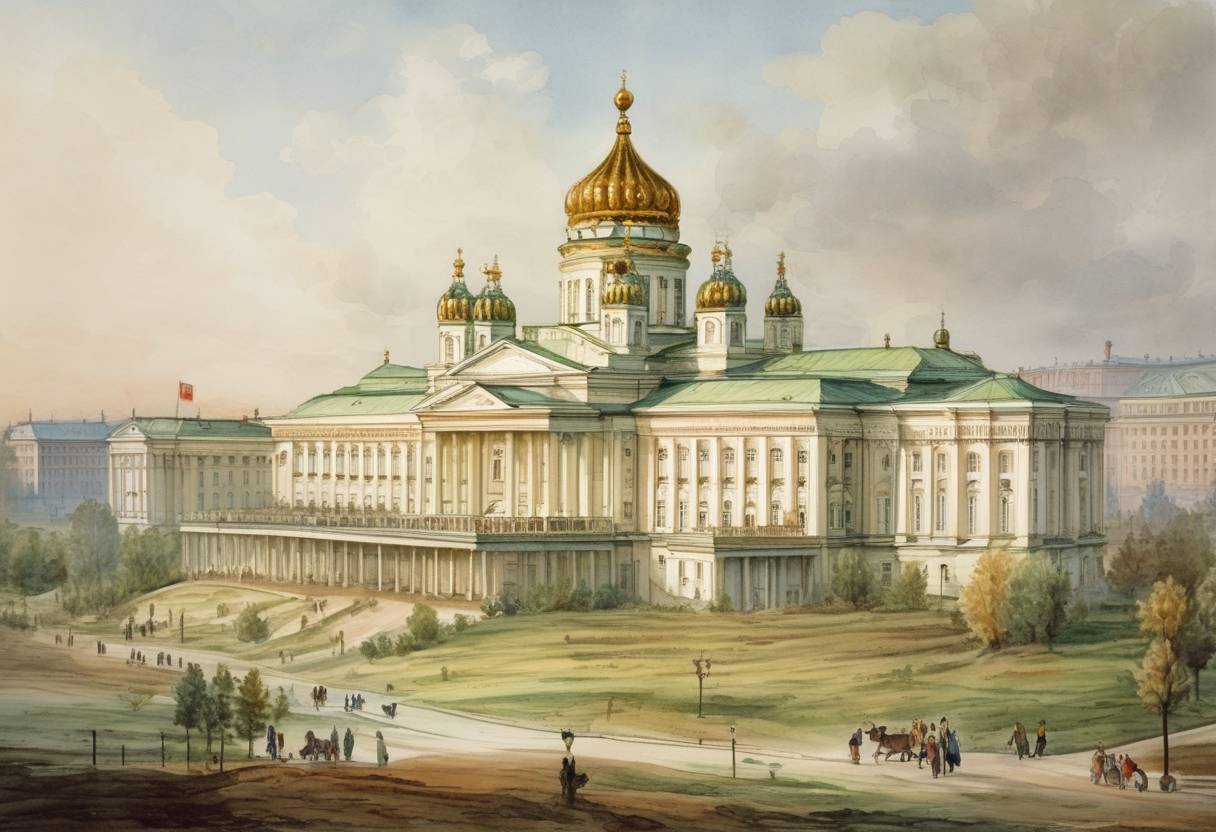
On January 25, 1755, Moscow University, now known as Lomonosov Moscow State University, was officially established. This date coincides with Tatiana Day, a significant day in Russian culture, celebrated as Students’ Day in Russia.
18th Century Russia: During this period, Russia was undergoing significant transformations under the rule of Empress Elizabeth, the daughter of Peter the Great. The country was expanding its influence and modernizing its institutions, including education.
Educational Reform: The establishment of a university in Moscow was part of a broader effort to enhance educational opportunities and intellectual development in Russia. Prior to this, the only major institution of higher learning was the University of St. Petersburg.
Ivan Shuvalov: A prominent Russian nobleman and the first Russian Minister of Education, Shuvalov played a crucial role in the founding of Moscow University. He was a patron of the arts and sciences and a close advisor to Empress Elizabeth.
Mikhail Lomonosov: A polymath and one of Russia’s most distinguished scientists, Lomonosov was instrumental in the university’s establishment. His contributions to science and education were pivotal in shaping the institution’s academic direction.
Charter and Approval: The official decree to establish the university was signed by Empress Elizabeth on January 25, 1755. The date was chosen to honor Shuvalov’s mother, Tatiana, whose name day is celebrated on this date.
Initial Structure: The university initially comprised three faculties: Philosophy, Law, and Medicine. It was designed to provide a comprehensive education that would cultivate a new generation of scholars and professionals.
Cultural Significance: Tatiana Day, named after Saint Tatiana, a Christian martyr, has been celebrated in Russia since the 18th century. It became associated with students and academia due to the university’s founding on this day.
Students’ Day: Over time, Tatiana Day evolved into a celebration for students across Russia, marked by various festivities and traditions within academic institutions.
Impact on Russian Education: The establishment of Moscow University marked a significant milestone in the development of higher education in Russia. It laid the groundwork for the country’s intellectual and cultural growth.
Legacy: Today, Lomonosov Moscow State University is one of the leading universities in Russia and the world, renowned for its research and academic excellence.
The founding of Moscow University on Tatiana Day reflects the intersection of cultural tradition and educational advancement, highlighting the importance of academia in Russia’s historical narrative.
Source: en.wikipedia.org