Violeta Chamorro Sworn in as President of Nicaragua
1990 · Managua, Nicaragua
Violeta Chamorro is sworn in as the first female President of Nicaragua, ending over a decade of Sandinista rule.
October 5, 1986
The Sandinista National Liberation Front won the Nicaraguan general elections, maintaining their hold on power during the Nicaraguan Revolution.
Managua, Nicaragua | Sandinista National Liberation Front
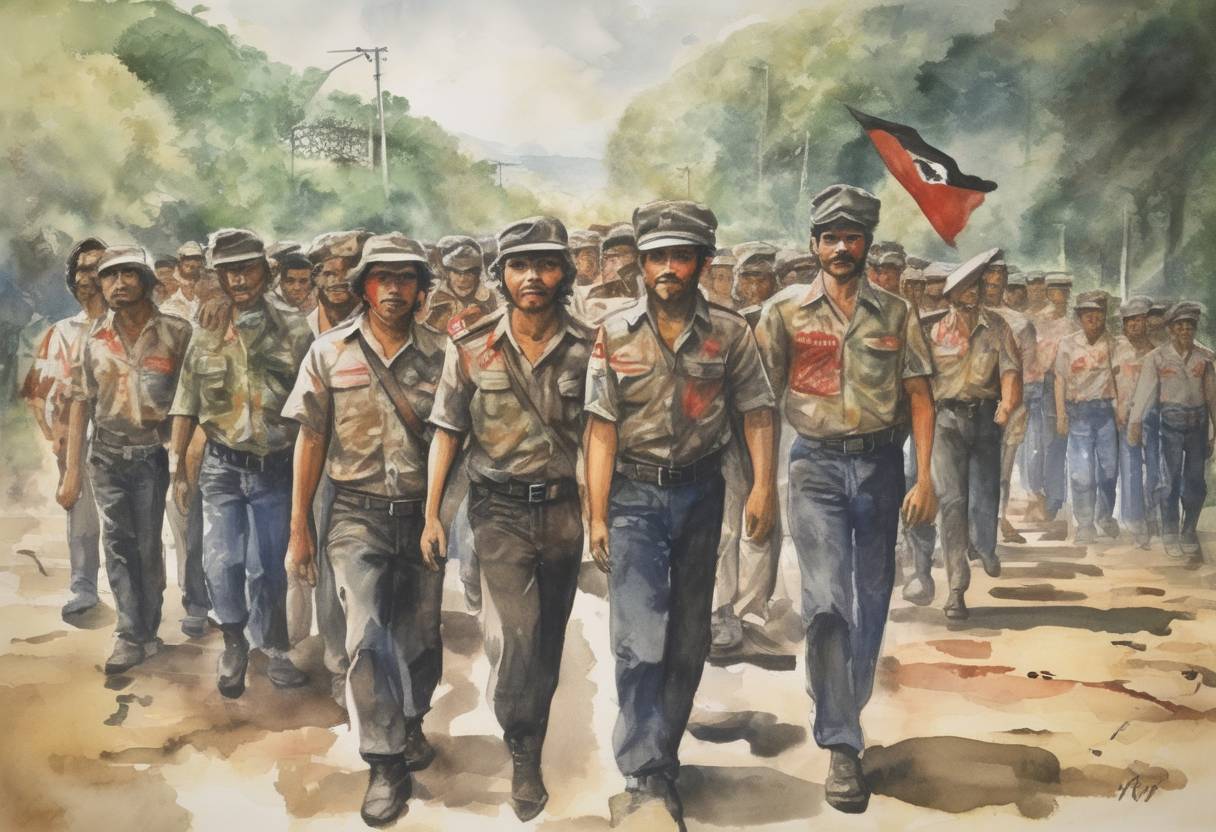
On October 5, 1986, the Sandinista National Liberation Front (FSLN) was not involved in a general election. However, it is important to note the context of the Sandinista’s political activities during the Nicaraguan Revolution, particularly focusing on the general elections held on November 4, 1984.
The Sandinista National Liberation Front, a socialist political party in Nicaragua, came to power after the overthrow of the Somoza dictatorship in 1979. The FSLN’s rise was part of a broader revolutionary movement that sought to implement social reforms and reduce foreign influence, particularly that of the United States.
The 1984 general elections were significant as they were the first elections held after the Sandinistas took power. These elections were part of the FSLN’s efforts to legitimize their government and demonstrate a commitment to democratic processes, despite ongoing conflict with Contra rebels, who were funded and supported by the U.S. government.
The 1984 elections were crucial in solidifying the Sandinista’s hold on power during a turbulent period marked by the Contra War. The FSLN’s victory allowed them to continue implementing their socialist agenda, which included land reforms, literacy campaigns, and health care improvements.
However, the elections did not end the conflict. The U.S. continued to support Contra forces, leading to prolonged violence and economic challenges for Nicaragua. The Sandinista government faced significant internal and external pressures, which eventually led to their electoral defeat in 1990.
While the specific date of October 5, 1986, does not correspond to an election, the period was marked by ongoing struggles and the Sandinista’s efforts to maintain power amidst external opposition. The 1984 elections remain a pivotal moment in Nicaraguan history, reflecting the complexities of revolutionary governance and Cold War geopolitics.
Source: en.wikipedia.org