Dissolution of the Soviet Union: December 26, 1991
1991 · Moscow, Russia
The Supreme Soviet of the Soviet Union formally dissolved the Soviet Union, marking the end of the Cold War.
October 25, 1990
The Soviet Union's Supreme Soviet passes a law allowing for private ownership of businesses, a significant step towards economic reform and the eventual dissolution of the USSR.
Moscow, Soviet Union | Supreme Soviet
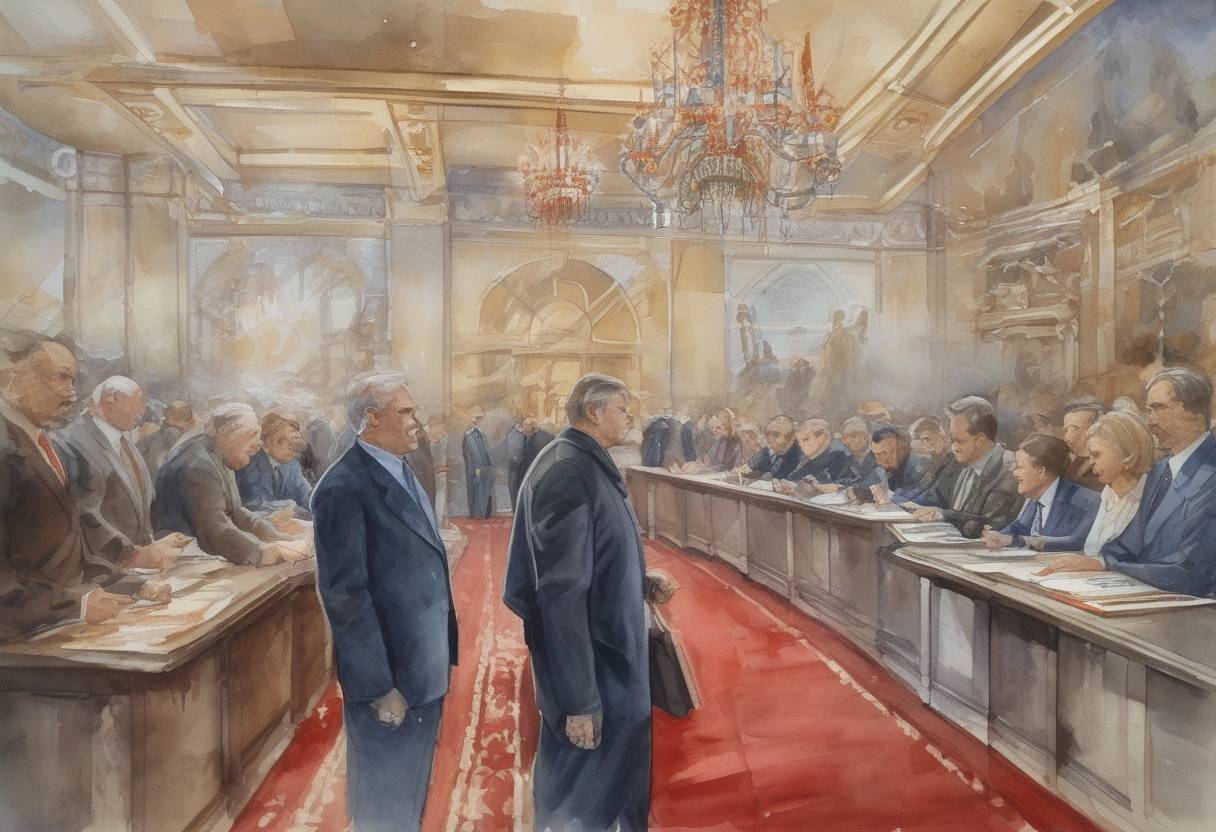
On October 25, 1990, the Supreme Soviet of the Soviet Union passed a landmark law that allowed for private ownership of businesses. This pivotal legislation marked a significant shift in the Soviet economic landscape, traditionally characterized by state ownership and central planning. This move was part of broader economic reforms aimed at revitalizing the stagnating Soviet economy and was a crucial step towards the eventual dissolution of the USSR.
The Soviet Union, under the leadership of Mikhail Gorbachev, was undergoing a period of significant transformation during the late 1980s and early 1990s. Gorbachev’s policies of perestroika (restructuring) and glasnost (openness) sought to address the inefficiencies and rigidities of the Soviet system. The economy was in dire straits, plagued by shortages, low productivity, and a lack of innovation.
Perestroika Initiatives: Introduced in 1985, perestroika aimed to decentralize economic control and introduce market-like reforms within the socialist framework. However, initial efforts were limited and faced resistance from hardliners within the Communist Party.
Economic Challenges: By the late 1980s, the Soviet economy was in crisis, with declining growth rates and increasing consumer dissatisfaction. The need for more radical reforms became apparent.
Political Changes: The political landscape was also shifting, with increased calls for democratization and political pluralism. These changes created an environment where economic reforms could be more aggressively pursued.
The law passed on October 25, 1990, was a groundbreaking development in Soviet economic policy. It allowed individuals and cooperatives to own and operate businesses, a stark departure from the state-controlled economy that had dominated since the Bolshevik Revolution in 1917.
Private Enterprises: The law permitted the establishment of private enterprises in various sectors, including services, manufacturing, and trade.
Foreign Investment: It also opened the door for foreign investment, which was seen as a way to bring in much-needed capital and expertise.
Legal Framework: The legislation provided a legal framework for private business operations, including property rights and contractual obligations.
The introduction of private ownership was a critical step in the transition from a command economy to a more market-oriented system. However, the reforms were met with mixed results:
Economic Impact: While the law encouraged entrepreneurship and led to the emergence of small businesses, the broader economy continued to struggle with inflation, unemployment, and a lack of infrastructure to support a market economy.
Political Repercussions: The reforms contributed to the weakening of central control, fueling nationalist movements and demands for greater autonomy among Soviet republics.
Dissolution of the USSR: The economic and political changes set in motion by these reforms played a significant role in the eventual dissolution of the Soviet Union in December 1991.
The passage of the law allowing private ownership was a crucial moment in the history of the Soviet Union and the global Cold War context. It symbolized the shift away from rigid communist economic policies and highlighted the challenges of transitioning to a market economy. This period of reform and the subsequent dissolution of the USSR had profound implications for global geopolitics, leading to the end of the Cold War and the emergence of new independent states in Eastern Europe and Central Asia.
Source: en.wikipedia.org