The Gutenberg Bible: A Milestone in Printing History
1455 · Mainz, Holy Roman Empire
The traditional date for the publication of the Gutenberg Bible, the first Western book printed with movable type.
August 24, 1456
The printing of the Gutenberg Bible is completed.
Mainz, Germany | Gutenberg Press
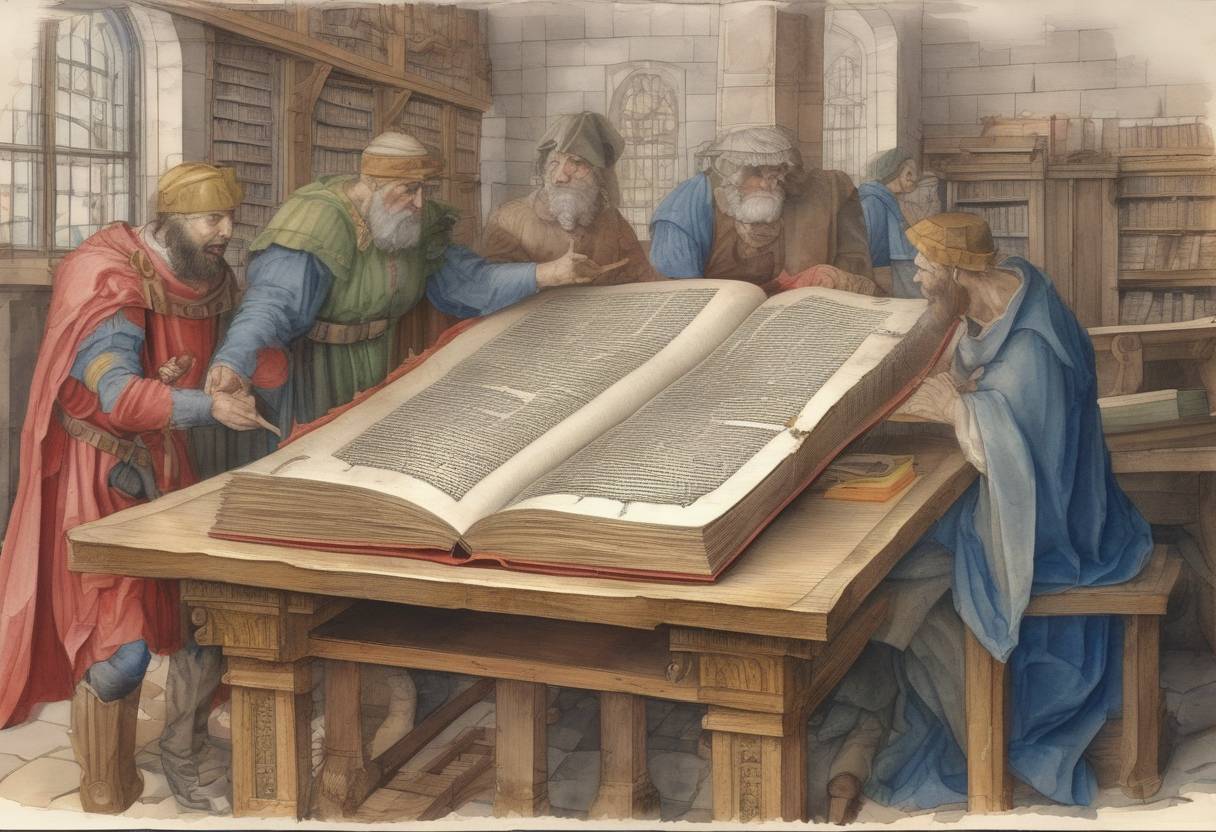
The completion of the Gutenberg Bible’s printing on August 24, 1456, marks a pivotal moment in the history of the written word and the dissemination of knowledge. This event is widely regarded as the beginning of the “Gutenberg Revolution” and the age of the printed book in the West.
Johannes Gutenberg: Born around 1400 in Mainz, Germany, Gutenberg was a blacksmith, goldsmith, printer, and publisher. He is credited with the invention of movable-type printing in Europe, a revolutionary development that transformed the production of books.
Movable-Type Printing: Before Gutenberg’s innovation, books were laboriously copied by hand, usually by monks in monasteries. Movable-type printing involved the use of individual letters and characters that could be rearranged and reused, drastically reducing the time and cost of book production.
Production: The Gutenberg Bible, also known as the 42-line Bible, was the first major book printed using mass-produced movable metal type. The project began in the early 1450s and was completed in 1456.
Design and Features: The Bible was printed in Latin and consisted of two volumes. It is renowned for its high aesthetic and technical quality, featuring 42 lines of text per page, with some copies illuminated by hand to resemble the manuscripts of the time.
Number of Copies: It is estimated that around 180 copies of the Gutenberg Bible were produced, with approximately 49 complete copies known to exist today. These are held in libraries, universities, and museums around the world.
Spread of Knowledge: The completion of the Gutenberg Bible marked the beginning of the mass production of books, making literature and scholarly works more accessible to a broader audience. This democratization of knowledge played a crucial role in the spread of literacy and education.
Impact on Religion: The ability to produce Bibles more efficiently and affordably facilitated the spread of religious texts, contributing to the Reformation and the rise of Protestantism in the 16th century.
Cultural and Scientific Advancements: The printing revolution spurred the dissemination of new ideas and scientific discoveries, fueling the Renaissance and the Scientific Revolution.
Economic and Social Changes: The printing press had profound economic and social impacts, leading to the growth of a literate middle class and the rise of a print-based culture.
Enduring Influence: Gutenberg’s invention is often cited as one of the most important developments in human history, laying the foundation for the modern knowledge-based economy and the information age.
In summary, the completion of the Gutenberg Bible on August 24, 1456, represents a landmark achievement in the history of printing and communication, with far-reaching consequences that continue to influence society today.
Source: en.wikipedia.org