The Fall of Kabul: August 15, 2021
2021 · Kabul, Afghanistan
The Taliban captured Kabul, leading to the collapse of the Afghan government and the end of the U.S.-led war in Afghanistan.
September 27, 1996
The Taliban capture the Afghan capital, Kabul, establishing the Islamic Emirate of Afghanistan.
Kabul, Afghanistan | Taliban
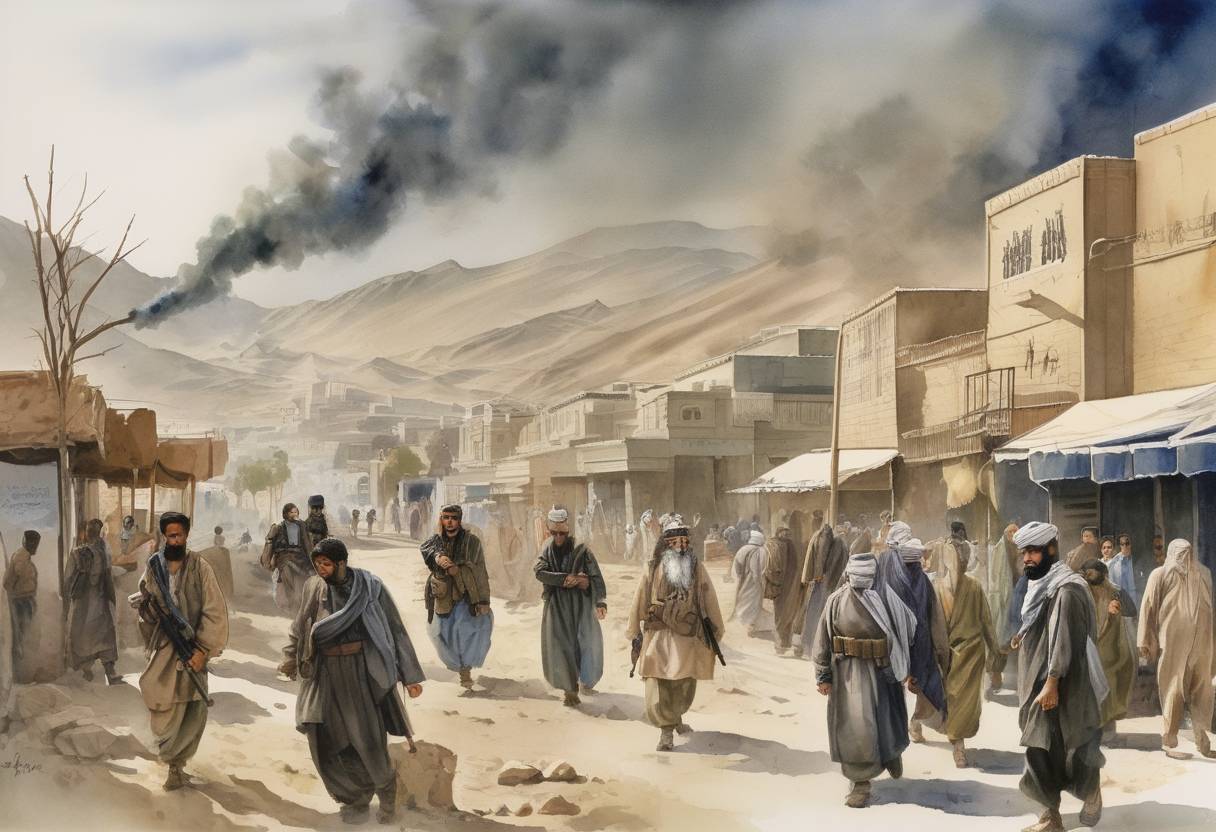
On September 27, 1996, the Taliban, an Islamic fundamentalist political and military organization, captured the Afghan capital, Kabul. This event marked a significant turning point in Afghanistan’s tumultuous history, leading to the establishment of the Islamic Emirate of Afghanistan.
The rise of the Taliban can be traced back to the early 1990s, following the withdrawal of Soviet forces from Afghanistan in 1989 and the subsequent collapse of the Soviet-backed Afghan government in 1992. The country descended into a brutal civil war as various mujahideen factions vied for control. Amidst this chaos, the Taliban emerged in 1994, initially gaining support in southern Afghanistan, particularly among the Pashtun population.
The Taliban, led by Mullah Mohammad Omar, promised to restore order and enforce a strict interpretation of Sharia law. Their rapid military successes were partly due to the disillusionment of the Afghan people with the existing warlords and the support they received from Pakistan.
By 1996, the Taliban had gained control over significant portions of Afghanistan. On September 27, they entered Kabul with little resistance, as the forces of President Burhanuddin Rabbani and his defense minister, Ahmad Shah Massoud, retreated to the north. The fall of Kabul effectively ended the rule of the Islamic State of Afghanistan, which had been established by the mujahideen factions in 1992.
Following their capture of Kabul, the Taliban declared the establishment of the Islamic Emirate of Afghanistan. They imposed a strict interpretation of Islamic law, which included severe restrictions on women’s rights, the banning of music and television, and the enforcement of harsh punishments for various offenses.
The Taliban’s rule was characterized by its isolation from the international community, with only a few countries, including Pakistan, Saudi Arabia, and the United Arab Emirates, recognizing their government.
The Taliban’s control over Afghanistan lasted until 2001, when the United States and its allies launched a military campaign in response to the September 11 attacks, which were orchestrated by al-Qaeda, a group harbored by the Taliban. The U.S.-led invasion resulted in the ousting of the Taliban from power, although they remained a significant insurgent force in the region.
The capture of Kabul in 1996 and the subsequent establishment of the Islamic Emirate of Afghanistan had profound implications for the country and the region. It set the stage for years of conflict and instability, influencing global geopolitics and contributing to the complex dynamics of international terrorism and counterterrorism efforts.
The events of September 27, 1996, remain a pivotal moment in Afghan history, reflecting the challenges of governance, the impact of ideological movements, and the enduring struggle for peace and stability in the region.
Source: en.wikipedia.org