Joseph Bonaparte Proclaimed King of Spain
1808 · Madrid, Spain
Joseph Bonaparte, elder brother of Napoleon Bonaparte, enters Madrid and is proclaimed King of Spain by Napoleon.
May 2, 1808
The Dos de Mayo Uprising occurred in Madrid, Spain, marking the beginning of the Peninsular War against Napoleonic France. Spanish citizens rose against the French occupation, leading to a brutal suppression by French forces.
Madrid, Spain | Spanish Resistance
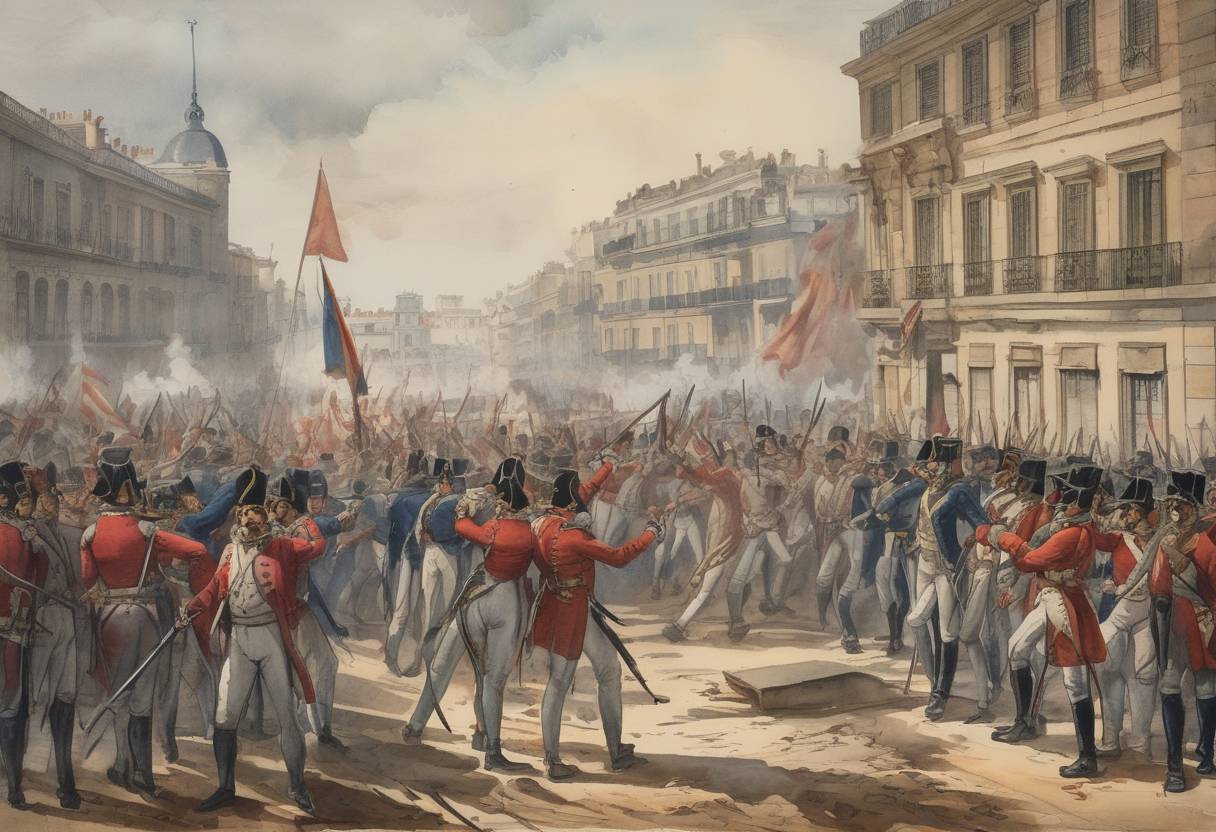
The Dos de Mayo Uprising was a pivotal event in Spanish history, marking the beginning of the Peninsular War against Napoleonic France. On May 2, 1808, the citizens of Madrid rose against the French occupation, leading to a brutal suppression by French forces.
Napoleonic Expansion: By the early 19th century, Napoleon Bonaparte had expanded French influence across much of Europe. In 1807, under the guise of an alliance, French troops entered Spain to invade Portugal, which was allied with Britain.
Political Instability in Spain: Spain was experiencing internal turmoil, with King Charles IV abdicating in favor of his son, Ferdinand VII. However, both were coerced into renouncing the throne in favor of Napoleon’s brother, Joseph Bonaparte, leading to widespread discontent.
Triggering Event: On the morning of May 2, 1808, rumors spread that the French intended to move the remaining members of the Spanish royal family to France. This incited the people of Madrid to take action.
Popular Revolt: Citizens, including civilians and some Spanish military personnel, gathered at the Royal Palace and across the city to resist the French troops. The uprising was characterized by spontaneous and fierce street fighting.
French Response: Marshal Joachim Murat, commanding the French forces, responded with overwhelming force. The French military, equipped with artillery, brutally suppressed the revolt by the end of the day.
Repression and Executions: Following the uprising, French forces executed many of the captured insurgents. The most notable executions occurred on May 3, 1808, and were famously depicted by the Spanish painter Francisco Goya in his painting “The Third of May 1808.”
Catalyst for Wider Resistance: The Dos de Mayo Uprising ignited a broader resistance across Spain, leading to the Peninsular War. This conflict became a significant drain on French resources and contributed to the eventual downfall of Napoleon.
National Symbol: The uprising is commemorated annually in Spain as a symbol of national resistance and unity against foreign domination.
Peninsular War: The war lasted until 1814 and involved a coalition of Spanish, British, and Portuguese forces against the French. It played a crucial role in weakening Napoleon’s empire.
Spanish Nationalism: The uprising and subsequent war fostered a sense of Spanish nationalism and identity, influencing the country’s future political landscape.
The Dos de Mayo Uprising remains a significant event in Spanish history, symbolizing the struggle for sovereignty and resistance against oppression.
Source: en.wikipedia.org